





Stretch It Body Jewellery
SIBJ is one of the world's leading online specialist retailers and wholesalers in ear stretching kits, plugs, aftercare and body jewellery. We have over 10 years of experience in selling high-quality, unique ear stretching jewellery providing the knowledge, expertise and tools to stretch up confidently and safely.
"The information is out there. The body mod community is properly supportive. And the common ear stretching methods are well known and understood. Accordingly, there’s no excuse for not safe ear stretching in 2026 - if you're willing to be patient."
Safe ear stretching is a priority when you've decided to stretch your ears, because who goes into it to intentionally cock it up? So, you go down a rabbit hole. You spend hours on TikTok watching people slide beautifully symmetrical plugs into juicy lobes. And you want in badly.
But the Insta reels don’t mention the difference between a plump-a-licous stretched lobe and a gnarly, ear-stretching blowout or paper-thin disaster.
And truthfully, safe ear stretching is almost entirely down to these specific factors:
- Ear stretching methods
- The pace you stretch at
- Whether you listen to your body or just bulldoze through because you want to hit 10mm before summer
This guide breaks down the three most common ear stretching methods:
- Dead stretching ears
- Tapers for ear stretching
- Taping method of ear stretching
Plus, we’ll go into:
- What each one involves
- Which one's a safe ear stretching bet in 2026
- The three big ear stretching mistakes to avoid - blowout, ear stretching thinning the lobes, and the dreaded cat butt
Let’s do this.
Discussed In This Post
What are the Main Three Ear Stretching Methods?

First up, a quick rundown for the uninitiated:
Dead stretching ears -
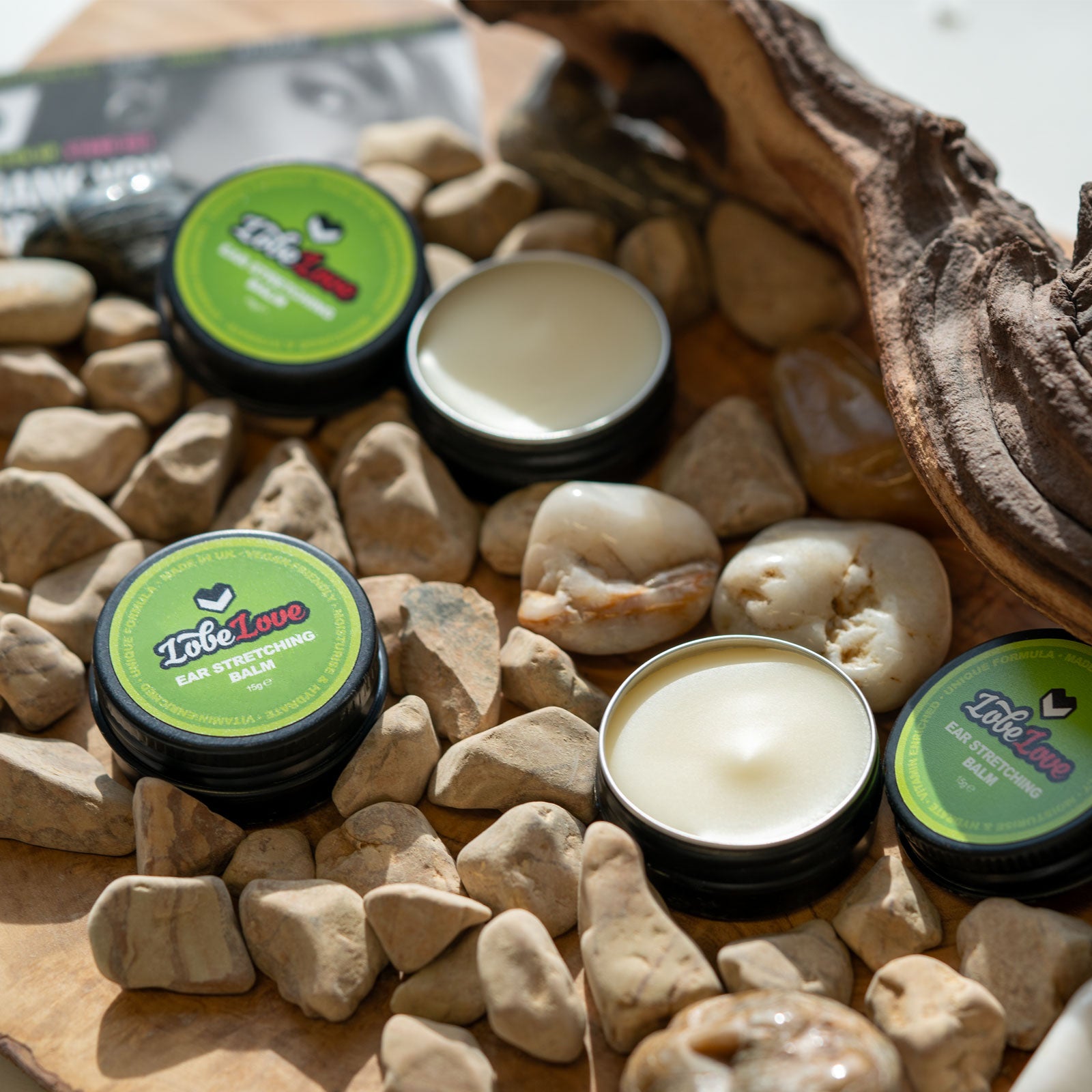
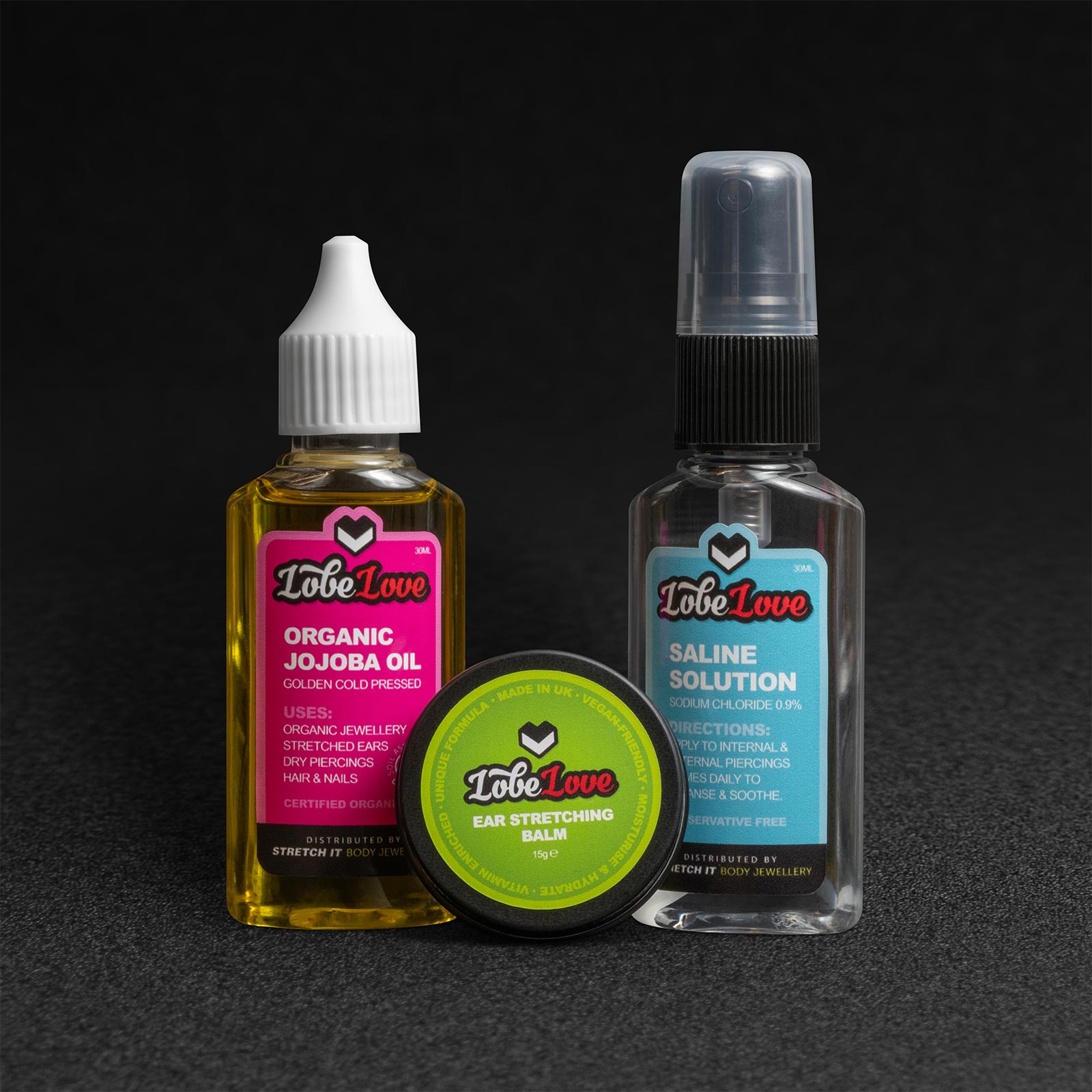
This is the slow lane, but the smart slow lane. You wait. You massage. You let your lobe tell you when it's ready. And only then do you gently size up, with patience and LobeLove™ Premium Ear Stretching Balm - and mercifully, without tools, force, or drama.
Tapers for ear stretching -
Tapers are cone-shaped tools, pointed at one end and wider at the other. You insert the thin end and slowly push through to gradually open up the piercing. They're everywhere, they're marketed to beginners, and they're also the most commonly misused of the ear stretching methods.
Taping method of ear stretching -
Taping falls somewhere in the middle in terms of safe ear stretching. You wrap layers of skin-safe SIBJ™ Premium Ear Stretching Tape - not electrical tape, not duct tape, not whatever's at the bottom of your useful box - around your current jewellery. This slowly and incrementally increases the diameter.
Now let's talk about what goes wrong.
Ear Stretching Blowout
An ear stretching blowout happens when you stretch too fast, too soon, and the inner tissue of your piercing gets forced out through the back of the hole.
The result? A ring of angry skin poking out from the rear of your lobe, like it’s been turned inside out. It’s uncomfortable, unflattering, and it’s definitely not a sign of safe ear stretching.
Blowouts are almost always caused by forcing a stretch before the lobe’s ready, including:
- Jamming a taper through when there's resistance
- Skipping gauge sizes in impatience
- Stretching again before the previous size has fully healed
Can you fix a stretched ear blowout?
Often but not always. In any event:
- Stop
- Let it rest
- Downsize by a millimetre or two and give your lobe actual time to recover
Mild blowouts can self-correct with patience, massage, and good stretched ear aftercare.
Conversely, severe ones might warrant the help of a medical professional or even a plastic surgeon.
When Ear Stretching Means Thinning Lobes
The slow creep of ear stretching thinning the lobes is sneakier than a blowout.
It happens gradually. Your lobe starts losing structural integrity at the top or sides. It becomes papery and fragile where it should be thick and healthy. And it’s often a warning sign you’re flouting safe ear stretching rules.
Perhaps you’re moving too fast. Or you might be wearing heavy jewellery while you’re actively stretching, which puts constant pressure on healing tissue.
So, what’s the best thing for a thinning lobe? It needs:
- Rest
- Downsizing
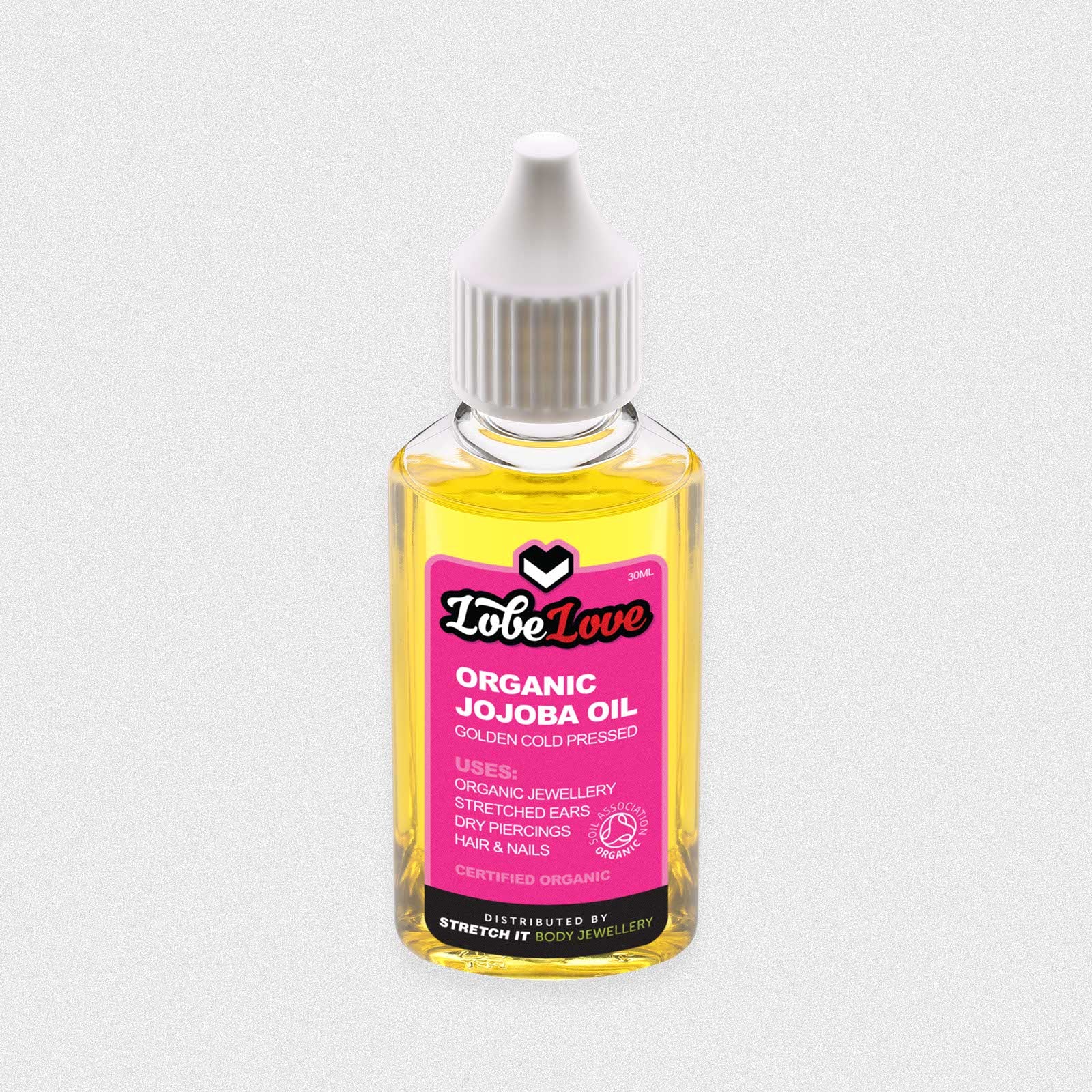
- Massage with LobeLove™ Organic Golden Jojoba Oil to encourage circulation and skin thickness
Prevention is easier than repair. So, treat it as a full stop if you notice your lobe looking a bit translucent and gossamer thin.
Cat Butt Through Ear Stretching
Cat butt ear looks exactly like it sounds. The front of the lobe puckers and wrinkles around the jewellery for the following reasons:
- Going too big too fast
- Wearing the wrong jewellery style for your stage of stretching
- Not allowing the tissue enough time to settle at each size
As a result, you end up with a crinkled, uneven, cat’s backside of a hole instead of the clean, round, symmetrical stretch you earn with safe ear stretching.
It’s a similar scenario to ear stretching thinning the lobes. Cat butt ear is your lobe warning you to:
- Downsize
- Rest
- Massage
- Slow the f**k down
Dead Stretching Ears = The Gold Standard of Safe Ear Stretching
The dead stretching process is simple yet superior. And it goes like this:
- Wait until your current jewellery fits loosely and comfortably, so you can rotate it without resistance, pull or tension
- Take a warm shower or bath before dead stretching ears, which increases elasticity and reduces the risk of tearing
- Massage with a leading body-safe oil like the ones we’ve flagged in this article
- Attempt to insert the next size up
Your body will thank you for safe ear stretching when your plug glides in smoothly. You might experience gentle pressure and a slight sensation of tightness. But this is normal. The tissue is being asked to expand, which is the whole point.
But stop immediately if there's resistance, pain, or you have to push or force the jewellery through. These are red flags that your lobe isn’t ready. You need to respect it and come back in a few days or weeks.
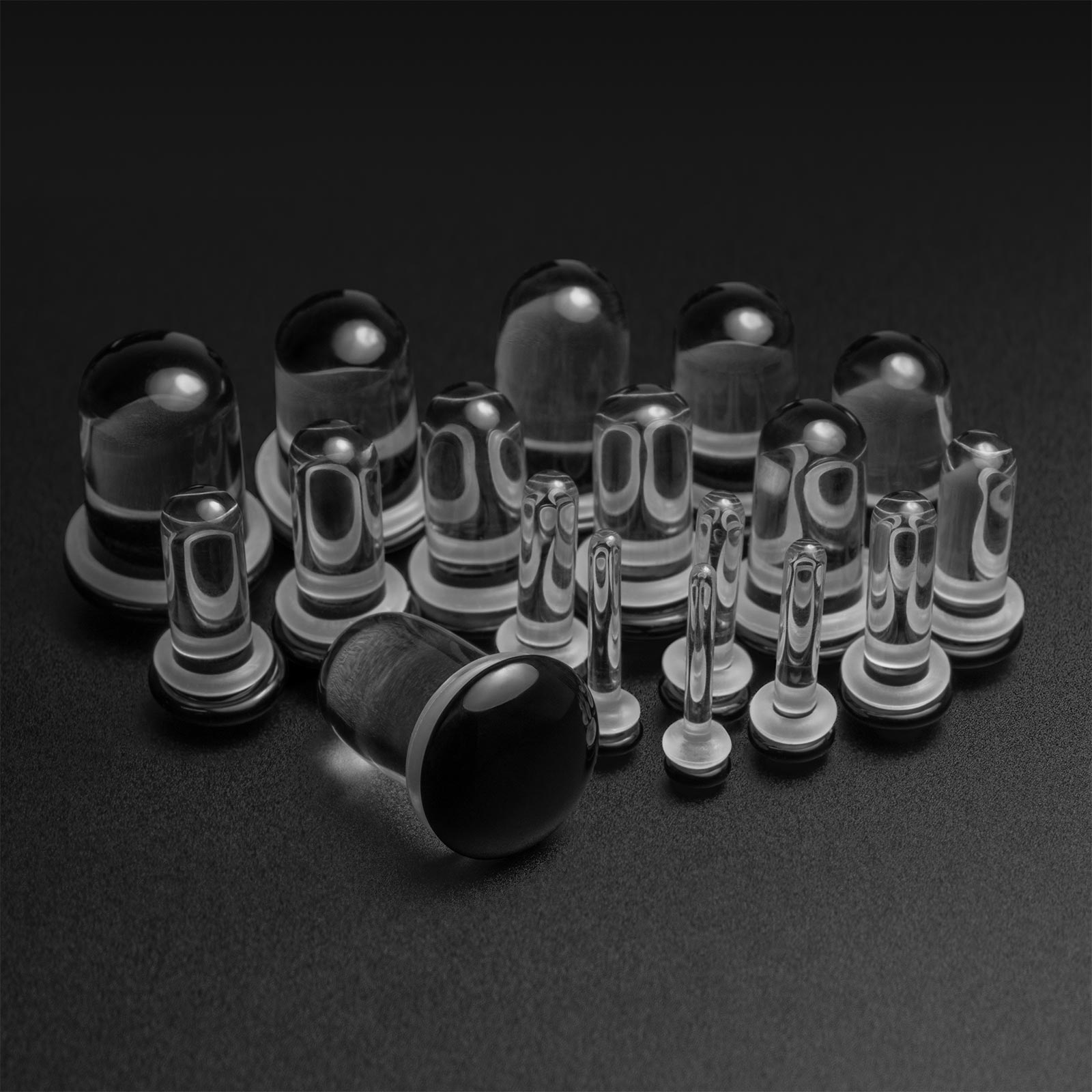
The ideal jewellery is single-flare plugs for stretching, in ASTM F-136 Titanium or implant-grade surgical steel. Non-porous, smooth glass is also brilliant, although it’s more prone to breakage for noobs.
Also, there are a couple of ear-stretching mistakes to avoid when choosing your jewellery:
- Avoid organic materials like wood until your stretch is fully healed
- Don’t use double flares for active stretching because the flanged edges cause unnecessary trauma to fresh tissue
Ultimately, dead stretching ears takes longer. But this is the only downside. And the upsides? Dead stretched ears tend to look healthier, stretch more evenly, and hold their shape over time.
Tapers for Ear Stretching = Useful Tool, Chaotic in the Wrong Hands
Tapers for ear stretching aren't villains. They're a legitimate stretching tool when used correctly, for the right size range, at the right pace.
The problem is they're almost universally misused by beginners who don't fully understand what this all means.
Fundamentally, they’re for guiding a gentle stretch in the earlier, smaller gauges up to around 10mm / 00g. And this is how to use them properly:
- Insert the thin end into a ready, warmed-up, lubricated piercing
- Slowly ease it through
- Immediately follow the wide end with a plug of the same size so the piercing doesn't snap back (which is the bit people rush)
And the don’ts?
- Don’t sleep in tapers
- Don’t leave tapers in as jewellery
- Don’t use a taper to skip sizes
The biggest danger with tapers for ear stretching is the false sense of safe ear stretching they create. But it doesn't mean your lobe’s ready to size up because you can physically push a taper through.
Tapers can mechanically force a stretch the tissue wasn't prepared for. And this is exactly how you end up with ear stretching blowout, tears, and scar tissue buildup.
By all means, use tapers carefully and sparingly. But never as a shortcut. Dead stretching ears serves most people better in the long run.
Taping Method of Ear Stretching = the Underrated Middle Ground
The taping method of ear stretching doesn't get the credit it deserves. It’s a shame because taping is safe for slow, controlled stretching, especially when the jump between gauges feels a bit much.
For this reason, taping is a safe ear stretching method for the later sizes, when gauge jumps are larger, and the tissue needs a more gradual approach.
The process is simple:
- Wrap one or two layers of skin-safe tape around your current plug or tunnel
- Add a thin smear of oil
- Reinsert
- Add layers gradually over days or weeks to gently encourage the lobe to expand over time, but not enough to be traumatic
- Clean the jewellery and replace the tape regularly for good stretched ear aftercare
- Swap to proper jewellery when you've built up enough layers to match the next gauge size
Warning! Don’t even think of using duct tape, electrical tape, masking tape, sellotape, or anything with adhesive and chemical properties. They can be highly problematic for skin.
The Safe Ear Stretching Rules People Don’t Follow Until It’s Too Late
There are typical ear stretching mistakes to avoid if you know what’s good for you. And they all apply to dead stretching ears, taping, or using tapers for ear stretching:
Always half a size at a time -
Skipping sizes is an open invitation to an ear-stretching blowout. The tissue needs to adapt incrementally. Jump from 6mm to 10mm in one move, and you’re asking for it.
Be mindful of ear stretching healing time between sizes -
Minimum eight weeks between stretches is a common starting point. But many experienced stretchers recommend longer, particularly at larger sizes. Your lobe should be back to normal, itch-free, and with no soreness before you think about sizing up.
Oil massage is not an option -
Massage your lobes daily with SIBJ’s jojoba oil or ear stretching balm. It keeps the tissue pliable, supports circulation, and minimises the risk of ear stretching thinning the lobes.
Never stretch through pain -
A slight tight sensation is fine. But actual pain is a hard no.
Jewellery material matters -
Implant-grade steel, titanium, and glass are your besties for active stretching. Acrylic, mystery metals and organic materials are cool for healed lobes. But they’re tempting infections and allergic reactions for unhealed stretches.
FAQs About Safe Stretching
Q. Is dead stretching really safer than tapers for ear stretching, or is it just internet opinion?
A. It’s well-established how dead stretching ears put the least stress on lobe tissue. It supports safe ear stretching and lowers the risk of ear stretching blowout and scarring. This is because you only insert jewellery when the lobe is truly ready. Tapers for ear stretching can be safe. But the margin for error is much smaller.
Q. My ear looks a bit puckered around the front of my plug. Is it a cat butt ear stretching issue?
A. Yeah, it sounds like it. Crinkled or uneven skin around the plug usually means you've moved up too quickly or the jewellery style isn't agreeing with your lobe. Downsize, massage, and take it slower.
Q. Can you fix a stretched ear blowout without seeking professional help?
A. Minor blowouts can improve with downsizing and good stretched ear aftercare. But severe blowouts might need professional help. Either way, stop stretching immediately and don't try to push through it.
Q. What oil should I use for ear massage?
A. Lightweight and nourishing LobeLove™ Organic Golden Jojoba Oil is a community favourite. LobeLove™ Premium Ear Stretching Balm is sick too. Avoid anything with fragrance, alcohol, or additives near healing tissue.
Go Slow, Smooth, and Safely Stretched in 2026
The information is out there. The body mod community is properly supportive. And the common ear stretching methods are well known and understood.
Accordingly, there’s no excuse for not safe ear stretching in 2026 - if you're willing to be patient. So, to recap:
- Dead stretching ears is the safest route.
- The taping method for ear stretching is a solid, controlled alternative.
- Tapers for ear stretching are a tool, not a shortcut. They need to be used with serious respect for what they can do wrong as much as what they can do right.
Bear in mind, your ears will carry this journey for life. Healthy, well-stretched, cared-for lobes look stunning for decades. As for the ones you rushed? Less so.
You Know the Methods and Risks, Now Go Win Your Lobe Game
Stretch It Body Jewellery is your one-stop shop for safe ear stretching in 2026, from stretching kits and tape to plugs, tunnels, and aftercare essentials.
Just starting out and sizing up from a standard lobe piercing? Longstanding member of the stretched ear community? Shopping for your next set of statement plugs? This is where your people are. Come join us.
Subscribe To Our Awesome Mailer
No spam. Just discounts, exclusive promotions and ear stretching tips & tricks you won't want to miss.
Our Best Selling Products
Our Favourite Products
Ear Stretching Inspo