







Stretch It Body Jewellery
SIBJ is one of the world's leading online specialist retailers and wholesalers in ear stretching kits, plugs, aftercare and body jewellery. We have over 10 years of experience in selling high-quality, unique ear stretching jewellery providing the knowledge, expertise and tools to stretch up confidently and safely.
"Yes, it’s annoying to have to remove your jewellery. And it’s a pain to be worrying about shrinkage. But planning ahead with the right jewellery retainers for MRI makes things manageable."
Getting an MRI with piercings is a thorny issue if you’ve got more metal in you than a toolbox. But, take a deep breath and rest assured you’re far from the first pierced human to panic-Google “MRI with piercings” the night before a scan.
All the same, you’re right to question MRI piercing safety, because MRIs use wildly powerful magnets. As in don’t approach with metal powerful.
This doesn’t mean your painstakingly curated ear stack is doomed. But it does mean you need a plan.
This guide to MRI with piercings breaks down:
- What actually happens during an MRI scan
- Are titanium piercings MRI safe?
- Can you wear piercings during an MRI?
- How to keep piercings open
- The best jewellery retainers for MRI situations
Let’s get into what needs taking out.
But first things first.
Discussed In This Post
What Is An MRI Scan?
MRI stands for Magnetic Resonance Imaging. It uses:
- Strong magnetic fields
- Radio waves
- A giant sci-fi-looking tube you’re slid into, like you see in the films
You lie still inside the scanner while it takes detailed images of soft tissue, joints, organs, brain, spine, the works.
Any metal in your body is an issue because magnets are involved. So, you’re dictated by the laws of physics. And when it comes to MRI with piercings, medical science doesn’t hold space for aesthetics and vibes.
Do I Need to Remove Piercings for MRI?

Most hospitals, especially in the UK, follow strict rules in this area. All metal piercings must be removed before entering the scan room, including:
- Stretching plugs and tunnels
- Nose rings
- Tongue bars
- Belly bars
- Nipple jewellery
- Cartilage piercings
- Dermals
Policies vary slightly by hospital and the body part being scanned. But assume it needs to come out if you’re unsure. Or ask your radiology team in advance.
To be clear, failure to remove jewellery can mean a cancelled scan. And who wants that when it’s your health on the line?
Yet medical jargon can be confusing. And the different types of scans don’t help with making it much plainer.
What are the Differences Between MRI vs X-Ray vs CT vs Ultrasound?
Here’s how the main scan types differ when it comes to their relationships with bodily metal:
Scan Type |
Strong Magnet? |
Heating Risk |
Image Distortion |
Typical Jewellery Policy |
| MRI Scan | Yes, very | Possible | High | Remove all metal |
| CT Scan | No | No | Some distortions | Often removed if in the area |
| X-Ray | No | No | Can block image | Remove if in the area |
| Ultrasound | No | No | None | Usually fine |
Bear in mind, your piercing might still need to be removed even if it’s technically safe, to avoid image distortions that don’t represent actual anatomical features.
At the end of the day, even a tiny septum clicker or cartilage stud can blur a scan.
So, when people ask, “Do I need to remove piercings for MRI?”, the common-sense answer is usually yes, even if you think your jewellery material has got your back.
Are Titanium Piercings MRI Safe?
Invested in ASTM F-136 implant-grade titanium jewellery? You’re wearing one of the safest metals available.
This is because:
- Titanium is non-ferromagnetic
- It won’t get violently pulled by the scanner’s magnet
- It’s widely used in surgical implants
So technically, yes, implant-grade titanium should comply with MRI piercing safety standards from a magnetic standpoint.
But there are a few small catches.
Titanium won’t fly across the room, which is always a bonus. But it might:
- Cause mild heating
- Distort images
- Trigger removal rules, depending on hospital policies
So, when you’re looking up “are titanium piercings MRI safe?”, the answer isn’t definitive.
Titanium body jewellery:
- Is safe from pulling
- Often still needs to be removed for image clarity and policy compliance
Similarly, most UK hospitals will also ask you to remove 316L surgical steel and gold jewellery.
Can You Wear Piercings During MRI If They’re Tiny and Non-Intrusive?
Here’s what the MRI team’s thinking about when patients are having an MRI with piercings:
Heating and burns
Even the diddiest metal pieces can warm up during a scan, to the extent of causing skin burns in rare cases.
Magnetic pull
Metals containing iron, nickel, or cobalt can be pulled by the magnetic field.
Image distortion
Metal distorts the magnetic field and shows up as blurry streaks or shadowing on the scan.
If you’re having:
- Brain or sinus imaging - Remove nose, septum, oral, and ear piercings
- Neck or spine imaging - Remove everything in that zone
- Shoulder scans - Cartilage and tragus probably need to come out
- Abdominal scans - Navel jewellery should be removed
In any event, you’ll be given a full metal checklist, including hairpins, wigs with metal threads, glucose monitors, insulin pumps, medicine patches, and even metallic makeup.
This reflects how MRI piercing safety rules can be broken with even the most seemingly harmless piercing jewellery.
Can’t Remove It? Don’t Panic

Picture your appointment is fast approaching, but your piercing is:
- Brand new
- Stuck
- A dermal anchor
Call the department immediately.
They might:
- Use a magnet to test for ferrous content
- Tape down non-removable jewellery like surface dermals in the field of view
- Monitor it carefully during your scan
- Reschedule your appointment for a later date
- Cancel your appointment altogether if it’s unsafe to proceed
But never keep schtum, show up, hope no one notices, and expect to get away with an MRI with piercings.
It’s a serious medical procedure with potentially serious consequences, after all. Give it the respect it deserves, no matter how inconvenient it might be to take your piercings out.
Or find a suitable workaround.
Jewellery Retainers for MRI to Keep Your Piercing Open
This is where planning saves your sanity, thanks to plastic piercing retainers or glass alternatives for keeping your piercings from closing, especially if they’re fresh.
So, what are these lifesaving jewellery retainers for MRI?
In simple terms, they’re non-metallic placeholders made from the following materials:
- Bioflex with push-fit ends, or Bioplast with threaded or notched, push-in, or screw-on ends
- PTFE, with its low friction and high temperature resistance
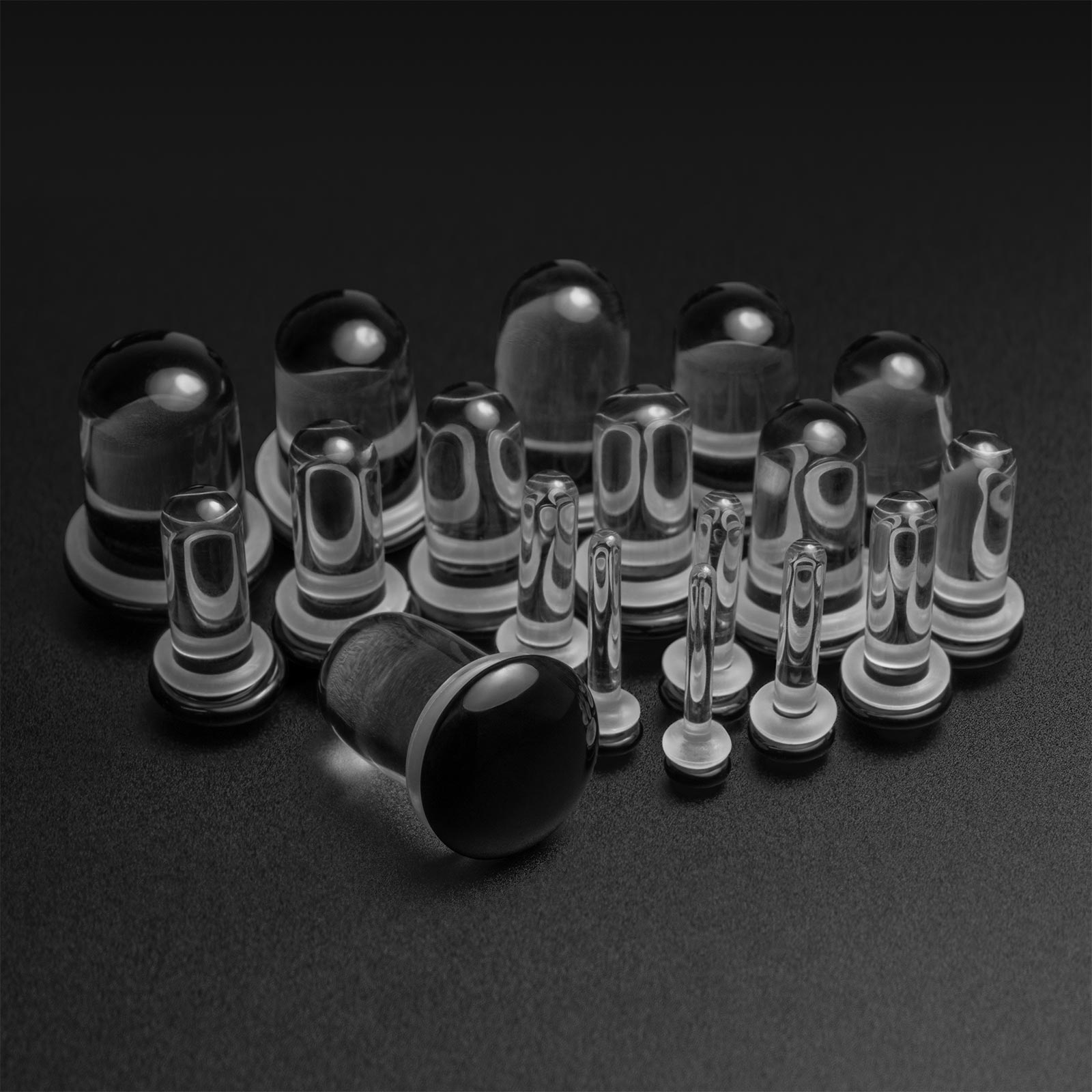
- Glass for its kindness to sensitive skin and initial or healing piercings, heat resistance, and overall good reputation for MRI with piercings
And the roles these clever little pieces play? They:
- Don’t react to magnets
- Prevent holes from shrinking
- Reduce risk of image distortion
As you can see, search terms like the following exist for a reason:
- Jewellery retainers for MRI
- Plastic piercing retainers
- Retainers for MRI with piercings
But as always, clear it with your hospital first, because some prefer absolutely nothing in the piercing, not even plastic retainers. It’s at their discretion.
How to Choose the Right Retainer
Here’s how to ensure you buy the right jewellery retainers for MRI for your piercing size and your skin type:
1. Match Your Gauge
The bar thickness must match your current jewellery. So, don’t suddenly insert 1.6mm if you normally wear 1.2mm.
The length can be slightly longer for short-term MRI piercing safety, which is fine.
Measure your current piece before ordering.
2. Pick the Right Material
- Bioflex or Bioplast - Extremely flexible, hypoallergenic, nickel-free and comfortable. But mostly plain and fewer colour choices. This isn’t usually an issue, because pigment reduces bend. So, it’s actually best to sacrifice colour for flex when you’re having an MRI with piercings
- PTFE - Flexible, safe, and ideal for temporary wear
- Glass - Completely non-metallic, great for nostrils and labrets, and more rigid than plastic
Any MRI Piercing Safety Measures for Stretched Lobes?
How about if you’ve got stretched ears? Here’s what to do:
- Remove heavy plugs and tunnels
- Don’t assume non-metallic jewellery’s allowed
- Expect the requirement for full removal, and anything less is a bonus
Truthfully, having to take your jewellery out isn’t the end of the world, because your lobes will survive a short scan.
But if it calls for longer-term removal? Ask if glass or silicone jewellery retainers for MRI are permitted.
Minimise the Stress Factor of Fresh Piercings
Fresh piercings can shrink fast. So, it’s a good idea to call ahead if your piercing’s:
- Less than 6 - 8 weeks old
- Recently stretched
- Newly downsized
You might be advised to:
- Swap to a retainer ahead of time
- Reschedule for greater MRI piercing safety
- Briefly remove your jewellery during your scan, and re-insert it straight after
And never get a brand new piercing if you know you’re going to be having a scan, given an MRI with piercings is hardly a match made in heaven.
What To Do Before Your MRI Appointment
Be proactive to maximise MRI piercing safety both before and during your appointment:
- Call radiology and list all your piercings
- Ask specifically about jewellery retainers for MRI
- Bring spare O-rings
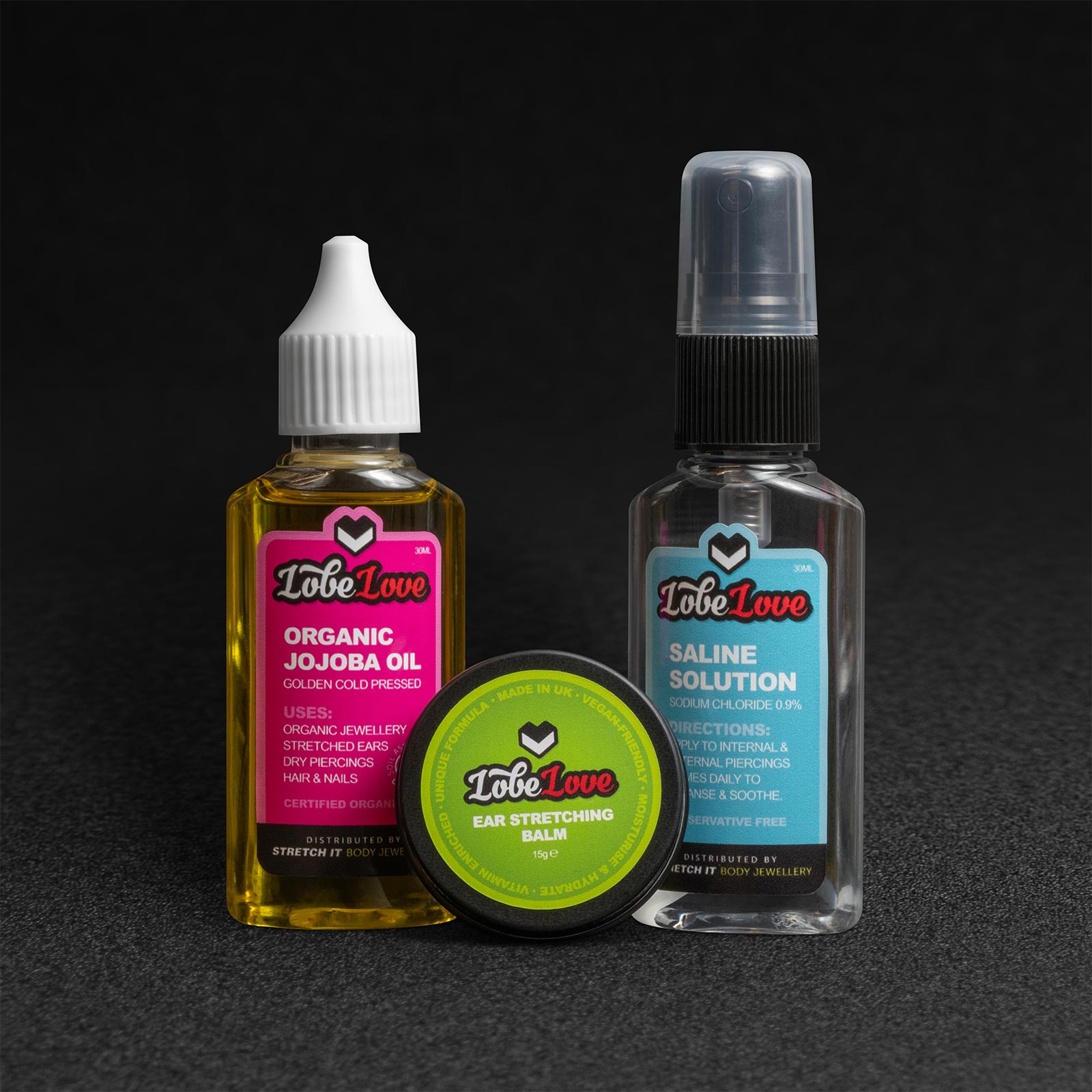
- Clean the piercing area with LobeLove™ Professional Saline Piercing Spray, and take it with you for another spritz before and after your scan
- Avoid metallic makeup
- Remove hairpins and metal accessories
- Remove nicotine patches or insulin pumps
What Actually Happens On the Day?
When you’re called through for your scan, you’ll:
- Be given a gown to change into
- Store your clothes and belongings in a locker
- Answer safety questions
- Possibly have your jewellery double-checked
And during the scan:
- You’ll wear ear protection
- You must lie really still, with as little movement as possible apart from soft breathing
- The machine makes loud knocking sounds
- The scan can last 15 minutes to an hour, depending on the nature of the investigation
And fear not. It can feel claustrophobic in there. So, you’re given an emergency button to press if anything feels warm, tugging, or uncomfortable.
When it’s done, go ahead and:
- Wash your hands
- Re-insert clean jewellery
- Use your saline spray again to help prevent irritation
- Check for any swelling
Mild redness is normal for an MRI with piercings. Pain or blistering isn’t. Speak to the team immediately if you experience these symptoms.
FAQs
Q. Are titanium piercings MRI safe?
A. Implant-grade titanium is non-ferromagnetic and generally safe. But most UK hospitals still require removal to avoid image distortion. Always confirm with the hospital staff first.
Q. Do I need to remove stretched ear plugs?
A. Usually yes. Even glass and silicone tunnels are often removed unless explicitly approved in advance, so plan ahead for this.
Q. Are plastic piercing retainers allowed?
A. Often, yes. Bioflex, Bioplast, PTFE, or glass jewellery retainers for MRI are common options. But some centres prefer no jewellery at all. Check beforehand.
Q. Will a septum clicker ruin the images?
A. It’s absolutely possible if you’re having head or sinus imaging, because even tiny metal pieces distort MRI images.
Q. I can’t remove a piercing. What now?
A. Call radiology immediately. They might test the jewellery, tape it down, or reschedule your appointment for after you’ve had your jewellery taken out.
Protect Your Health and Your Piercings
Ultimately, two things matter most when it comes to MRI with piercings:
- Your welfare
- Clear diagnostic images
Yes, it’s annoying to have to remove your jewellery. And it’s a pain to be worrying about shrinkage. But planning ahead with the right jewellery retainers for MRI makes things manageable.
At least now you know the answer is almost always yes if you’ve got a scan coming up and you’re frantically ChatGPT-ing “Do I need to remove piercings for MRI?”
But the good news is, MRI piercing safety doesn’t have to sacrifice your piercing progress.
At Stretch It Body Jewellery, you can browse by piercing type, match your gauge properly, and keep everything happy while you handle your health responsibly.
Check us out and shop jewellery retainers for MRI, superior titanium pieces, and professional aftercare essentials.
It’s the only place to be for keeping your MRI with piercings drama-free and your holes open for business as usual afterwards.
Subscribe To Our Awesome Mailer
No spam. Just discounts, exclusive promotions and ear stretching tips & tricks you won't want to miss.
Our Best Selling Products
Our Favourite Products
Ear Stretching Inspo