





Stretch It Body Jewellery
SIBJ is one of the world's leading online specialist retailers and wholesalers in ear stretching kits, plugs, aftercare and body jewellery. We have over 10 years of experience in selling high-quality, unique ear stretching jewellery providing the knowledge, expertise and tools to stretch up confidently and safely.
"The titanium vs surgical steel debate isn’t cut and dried. But it’s better to be safe than sorry when you’re putting piercings in your body."
It’s the titanium vs surgical steel showdown… The sparring match of the metals you’ve been waiting for if you’ve ever had a piercing refuse to heal right.
You’ll already know there’s nothing more infuriating when you’ve done everything the piercer said. You’ve cleaned it, not slept on it, and even resisted the urge to twist and poke it. But it’s still red, crusty, maybe even weeping a bit (urgh).
Well, lay off the doom scroll just yet while we talk about something most people forget to think about - the material in your jewellery.
The thing is, that shiny little hoop or stud might look harmless. But it could be the reason your piercing is being a drama queen, or worse.
In this article, we’re delving into burning questions like:
- What makes these two metals tick (or itch)
- Are surgical steel and titanium piercing jewellery safe for healing
- Is titanium and surgical steel jewellery safe for fresh piercings?
- Whether to go for titanium vs surgical steel if you’ve got sensitive skin.
- How to pick jewellery that won’t make your ears hate you.
Ready? Let’s get under the surface.
Discussed In This Post
Why the Metal You Wear Makes All the Difference

You might think, “It’s metal. It’s shiny. What could go wrong?” But here’s the sucker punch…
Your body doesn’t just shrug and accept whatever sparkly thing you shove through your nose, nipple, or navel. It’s got standards, especially if you’ve got nickel sensitivity (which, a lot of people do without even realising it).
As a result, the wrong kind of jewellery is often responsible for:
- Metal allergies
- Slow healing
- Piercing rejection
Some piercers still pop in surgical steel by default, usually because it’s cheaper. But your skin might disagree. It’s harsh. Especially if you’re fresh off the needle.
Why Implant Grade Titanium is Considered the Gold Standard
Implant grade titanium (look for ASTM F136), is the metal equivalent of a dreamy first date who texts back, doesn’t ghost you, and comes free from emotional baggage - or nickel, in this case.
In terms of the titanium vs surgical steel debate, titanium is completely nickel-free, hypoallergenic, lightweight, and so biocompatible it’s used in medical implants like hip replacements and dental screws.
So, think of it like this. If it’s good enough for your skeleton, it’s good enough for your septum.
It’s also seriously strong, resists corrosion, and doesn’t tarnish.
Plus, it can be anodised into different colours without losing any safety points. This is a brilliant bonus if you want rainbow ends or black clickers.
Titanium: Pros & Cons
What about the good, bad and ugly of implant grade titanium?
Pros of titanium vs surgical steel jewellery:
- Nickel-free and hypoallergenic
- Super lightweight and good for healing
- Strong AF and corrosion-resistant
- Can be anodised into fun colours
Cons of titanium vs surgical steel jewellery:
- Pricier than surgical steel
- Slightly darker in colour (if that bothers you)
- Can be harder to find in budget ranges
In short, titanium is your bestie for getting a new piercing or when you’ve got sensitive skin.
What is Surgical Steel - and is Surgical Steel Jewellery Safe?
It sounds like something a surgeon might use to fix a broken femur, doesn’t it? Well, it kind of is. But not quite.
Surgical steel usually refers to a type of stainless steel commonly known as 316L. It’s strong, shiny, corrosion-resistant, and doesn’t rust, so there’s plenty going for it.
But here’s the catch. It still contains nickel.
Granted, it’s a low amount and the release rate is minimal. But it’s enough to cause irritation, inflammation, and sometimes a raging allergic reaction if you suffer with even mild nickel sensitivity.
And the end result if itchy, angry piercings that just won’t settle down.
Surgical Steel: Pros & Cons
You can consider surgical steel jewellery safe for tons of people with healed piercings. Although it’s not usually the best bet during the healing process.
Pros of surgical steel vs titanium for piercings:
- Affordable and widely available
- Strong and corrosion-resistant
- Great for healed piercings
Cons of surgical steel vs titanium for piercings:
- Contains nickel
- Heavier than implant grade titanium
- Not ideal for fresh piercings or sensitive skin
- Perfect for ear stretching if you aren't ultra sensitive to nickel
Think of surgical steel like the fast food of the jewellery world. It’s cheap, convenient, but not something you’d want to live on.
Titanium vs Surgical Steel Side by Side Comparison
Time to get nerdy with a snappy cheat sheet for the TL;DR crowd:
Feature |
Titanium |
Surgical Steel |
| Nickel Content | None | Low but present |
| Hypoallergenic | Yes | Not always |
| Ideal for Healing | Yes | No |
| Weight | Ultra-light | Heavier |
| Price | Higher | Budget-friendly |
| Magnetic | No | Yes |
| Colour Options | Anodised available | Standard silver only unless PVD coated |
When Should You Choose Titanium Instead of Surgical Steel?
The short and sweet answer is most of the time.
Here’s when titanium’s the better option:
- You’ve got a new piercing
- You have sensitive skin or known metal allergies
- You’ve had a piercing reject in the past
- You want to wear it forever and not think twice
Basically, it’s a no-brainer to go titanium, especially if your body’s just been punctured or you’ve ever experienced jewellery drama.
When Is Surgical Steel Jewellery Safe?

Choose surgical steel when:
- Your piercing is fully healed
- You don’t have nickel sensitivity
- You want cool designs without breaking the bank
- You switch up your jewellery regularly
- You’re ok with the extra weight
All the same, quality matters. For this reason, only use steel marked 316L and avoid anything sketchy, cheap, or sold in a 12-pack for £4.99!
So, Which Should You Ultimately Choose?
There are always exceptions to the rules when it comes to the titanium vs surgical steel debate. But do you really want to risk finding out you’re not one of them?
As a general guideline, implant-grade titanium is the first and only choice if you:
- Want the safest, most hassle-free healing
- Don’t want to risk reactions
- Are getting pierced
On the other hand, surgical steel is ok if:
- You’ve healed up nicely
- You don’t have allergies
- You want affordable options for everyday wear
- You are stretching a healed piercing
But always go titanium if you’re not sure or want to keep things drama-free.
Quality Titanium Jewellery You’ll Want to Try
Ready to make the switch? Here are a few bestsellers that’ll make your lobes, labrets or labia sing:
Flat backs = comfy as. Perfect for lip, tragus, conch piercings, and more.

Lightweight, hypoallergenic, and built to last. No crusty drama. All sleek sparkle.

Sturdy but stylish for septums, daiths, and nipples.

Easy to swap without tools or trauma, and available in a kaleidoscope of wild shapes and colours.

Shop all titanium body jewellery here. It would be rude not to.
What Can Go Wrong with Unhappy Piercings
Body mods are badass, but they’re still body modifications. This means your skin, immune system, and nerve endings are involved. Thankfully, most piercings are smooth sailing. But sometimes it can go sideways.
Here’s what can go Pete Tong and how to dodge the drama:
Infections
Redness? Swelling? Gunky ooze (or oozy gunk)? These are all signs bacteria’s gatecrashing the party. And they can range from annoying to properly dangerous.
Allergic reactions
If there’s a compelling case for titanium vs surgical steel, this is it. Because the nickel in surgical steel can be as problematic as a snide ex. This is why itchy, rashy, red piercings are often down to your jewellery, not your hygiene.
Scarring and keloids
These raised, thickened scars can form around the piercing site, and they can be even more radical if you’re genetically prone.
Nerve damage
It’s rare, but badly done or poorly placed piercings can hit a raw nerve, causing pain or numbness.
Trauma, tears and tugs
Catching your piercing on your towel, top, or backpack strap is no laughing matter. And beware, stretched holes, torn tissue, and excessive bleeding are greater risks when larger gauge jewellery is involved.
Tongue terror
Oral piercings gone bad can mess with your speech, your teeth, and your snacks. The risk is real, because the mouth’s moist environment is a haven for bacteria, so infections love it in there.
Thankfully, it doesn’t have to be like this.
How to Not End Up at Your Local Surgery
There are certain golden rules it’s best to abide by, no matter where you stand on the titanium vs surgical steel scale. They include:
- Pick a piercer like your life depends on it - Read their reviews, stalk their Instagram, check their hygiene certifications, and make sure their gear doesn’t look like it came from a garage sale.
- Use the right jewellery from the start - Nickel-free implant grade titanium is the gold (well, silver) standard.
- Nail your aftercare - Clean, dry, hands off, religiously. Speaking of which...
Meet the Lynchpin of Your Aftercare Routine
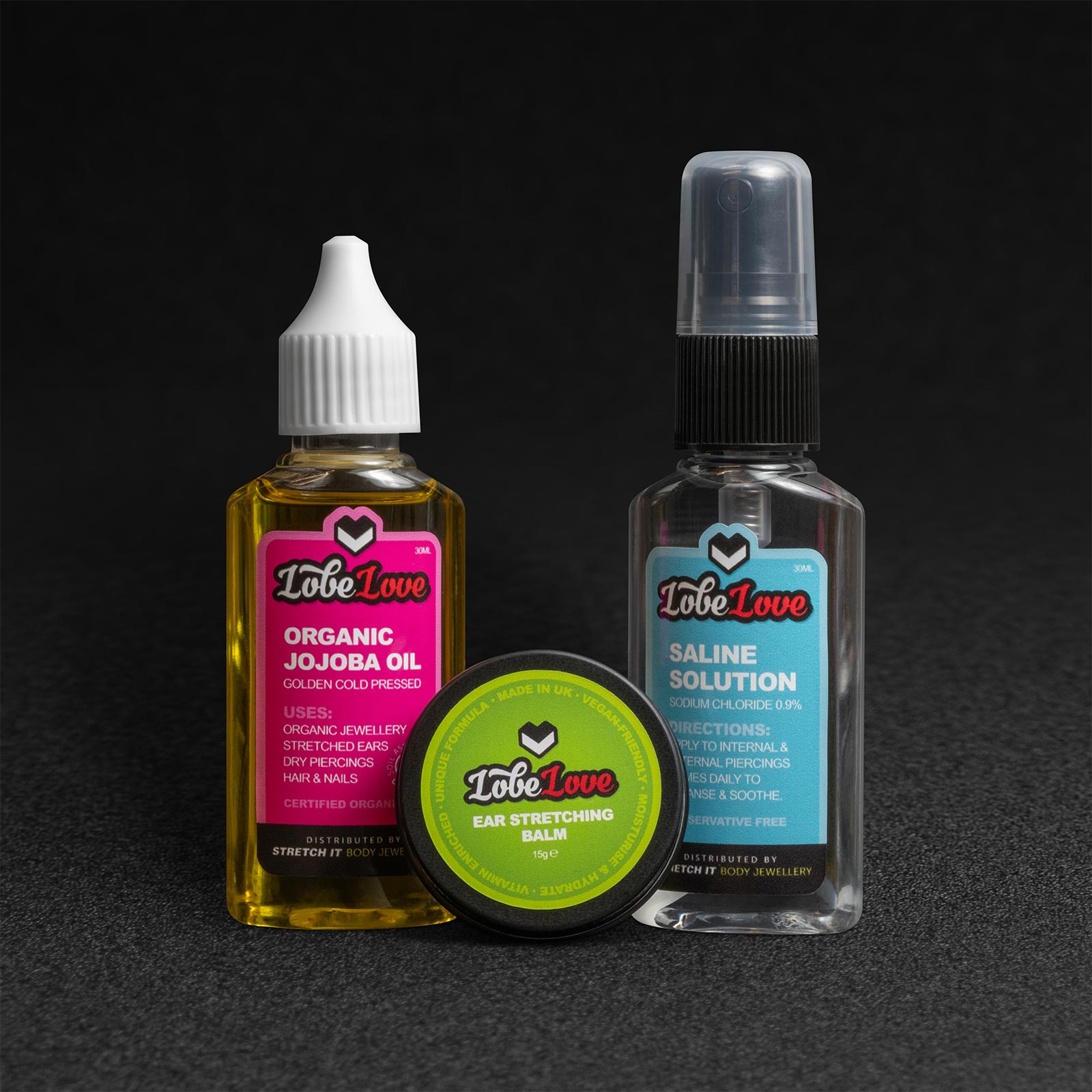
LobeLove™ Saline Piercing Spray is pro-grade product in a no-fuss, no-mess, non-aerosol spray bottle that slips in your bag or back pocket.
The good news is it’s perfect for both standard piercings and problematic stretched lobes. So, you can confidently flush out crusties, soothe any irritation, and keep your piercings in check, without preservatives, alcohol, or harsh vibes.
Just mist, wait, and let it work its magic. No drama. No stinging. No excuses.
Best get your hands on some to give your new conch, septum, or stacked lobe some serious healing power.
FAQs - Your Jewellery Safety Questions Answered
Q. Is surgical steel jewellery safe in a new piercing?
A. Technically, yes. But it’s not ideal, especially if you have nickel sensitivity or want to avoid irritation. For all these reasons, implant-grade titanium is a better choice for new piercings.
Q. Titanium vs surgical steel jewellery - which is most expensive?
A. Titanium costs more upfront. But it’s built to last. Think of it as investing in your skin’s happiness.
Q. How can I tell if I’m allergic to the nickel in surgical steel jewellery?
A. Redness, itching, bumps, or a rash around your piercing are all signs your piercing’s not a happy bunny. And if you’ve ever had a reaction to costume jewellery, you’re probably nickel-sensitive.
Q. Is titanium magnetic?
A. No. But it’s a cool party trick to tell it apart from steel. Stick a fridge magnet to it and see for yourself. No pull = titanium.
Choose What’s Best for the Skin You’re in
At the end of the day, your piercing deserves better than mystery metal. And your skin? It’s got enough pollution, stress, and sun damage to deal with, without adding more aggravation into the mix.
The titanium vs surgical steel debate isn’t cut and dried. But it’s better to be safe than sorry when you’re putting piercings in your body.
So, don’t go cheap with the metal. Instead, opt for the real deal that’s safe, sleek, and built to last when stretching your lobes, adding to your constellation, or going bold with a septum spike.
At Stretch It Body Jewellery, the choice is yours. Browse our safest titanium options and treat your piercings to jewellery that won’t let you down. Or go for surgical steel if you’re sure you’re not nickel-sensitive or your piercing is fully healed.
Because everything else is more likely to fall into place when your jewellery’s solid.
Subscribe To Our Awesome Mailer
No spam. Just discounts, exclusive promotions and ear stretching tips & tricks you won't want to miss.
Our Best Selling Products
Our Favourite Products
Ear Stretching Inspo


