







Stretch It Body Jewellery
SIBJ is one of the world's leading online specialist retailers and wholesalers in ear stretching kits, plugs, aftercare and body jewellery. We have over 10 years of experience in selling high-quality, unique ear stretching jewellery providing the knowledge, expertise and tools to stretch up confidently and safely.
"The tragus piercing is ultimate proof that minor details make major statements. It’s subtle, versatile, endlessly stackable, and looks good on anyone when done expertly."
Let’s talk about the tragus piercing - a small piercing with big attitude and massive style potential, thanks to a tiny cartilage nugget.
But first things first. What even is a tragus piercing?
The tragus is the small flap of cartilage right in front of your ear canal. And when you get it pierced, tragus earrings are subtle, stackable, and criminally underrated.
In fact, the tragus piercing suits most personal styles. It’s just as cool for minimalist low-key tragus ear studs or a full-on stack of different tragus jewellery like hoops, chains, and gems.
Celebs like Zoe Kravitz, Rihanna, Scarlett Johansson, Chrissy Teigen, and Pink have been rocking tragus ear jewellery for years.
This says everything you need to know about being edgy without trying too hard. This guide covers:
- What a tragus piercing is and what the process entails
- Pain, healing, and weird popping sounds
- Tragus jewellery materials, sizes, and styles
- Aftercare Anti-tragus piercing, surface tragus piercing, and combo stacks
- FAQs you’re going to ask ChatGPT or Google anyway
So, don’t go anywhere. You’re already in the right place to shop, heal, style, or just lurk before committing to a tragus piercing.
Discussed In This Post
Getting a Tragus Piercing

A tragus piercing goes through the small cartilage flap that partially covers your ear canal. Yes, we said cartilage. But the good news is the tragus isn’t the thickest, angriest kind.
How it’s pierced
- Needle only, always. No piercing guns ever.
- Done by an experienced piercer who understands cartilage angles.
- Usually pierced front to back, keeping the tragus earrings sitting flat and comfy.
Do Tragus Piercings Hurt?
The short answer is yes, for a minute or two. But it’s generally mild to moderate. Most people describe it as pressure, rather than agony.
Notably, there’s often a weird popping sound as the cartilage crunches. It sounds savage. But it’s totally normal, only mildly unsettling, and over in an instant.
Tragus piercings score around a 4-5/10 on the piercing pain-o-meter. This puts a tragus alongside a helix, but less spicy than a rook, to put it into context. So, don’t believe the hype, given that people describe the sensation as:
- A sharp pinch
- A moment of pressure
- A quick warm throb
Although the following factors can switch up or dial down pain levels:
- Thickness of your tragus
- Skin hydration (this is why it’s vital to drink plenty of water before and after)
- Stress levels
- Menstrual cycle
- Piercer skill
In addition, there are small self-help measures you can take on the day to make the experience as drama-free as possible:
- Eat beforehand
- Hydrate
- Avoid caffeine and alcohol
- Bring calming music or headphones (the over-ear type)
Healing Timeline & Aftercare
The average healing time for a tragus piercing is three - six months. But cartilage does what it wants. As a result, some heal faster, while some take longer.
Tragus healing isn’t finicky. But it calls for bucketfuls of patience and restraint. To be clear, this isn’t the time for over-cleaning, twisting, or poking to check.
So, what can you expect of your piercing and tragus earrings during the healing period?
Ground zero to two weeks - The spicy phase
- Swelling, tenderness, warmth
- Clean twice daily with sterile saline (more on our most wanted product in the next section)
- Don’t sleep on it
- Don’t touch it with unwashed hands
- Don’t rotate your tragus jewellery
Weeks three to eight - The crusty but calm phase
- Swelling reduces
- Crusting is normal, if a bit gross
- Gentle saline rinses only
- Still no twisting or swapping tragus earrings just yet
Months three to six+: The “Is it healed?” phase
- Less tenderness
- No discharge
- Usually the right time to downsize your tragus ear jewellery when everything’s calmed down and adjusted. Plus, well-timed downsizing has the added bonus of reducing irritation bumps and snagging
Just like other piercings, there are red flags to watch out for. Ask for help if you notice:
- Hot, spreading redness
- Pulsing pain
- Thick yellow or green discharge
- Fever
And stick to the common-sense hard nos to help your new tragus piercing heal like a dream. This means avoiding the following things:
- Pools, hot tubs, lakes early on
- Makeup on the piercing
- Harsh soaps or disinfectants
- Sleeping directly on it
How to Clean a Healing Piercing Without Winding It Up

There’s already a lot going on behind the scenes of a fresh or irritated piercing. Your body’s repairing tissue, reducing inflammation, and trying to keep bacteria in check. And it’s your aftercare product’s job to support the process.
This is why a professional saline piercing cleanser makes a difference.
It gently rinses away sweat, dead skin, and everyday grime, without drying the skin out or shocking it into submission. You simply mist, it flushes, and the area settles, without scrubbing, twisting, and an angry knee-jerk reaction an hour later.
You can expect to notice subtle but crucial shifts, like:
- Piercings feel less sore and tight
- Redness doesn’t linger as long
- Crusties soften and rinse away instead of building up
- Your tragus piercing feels less demanding
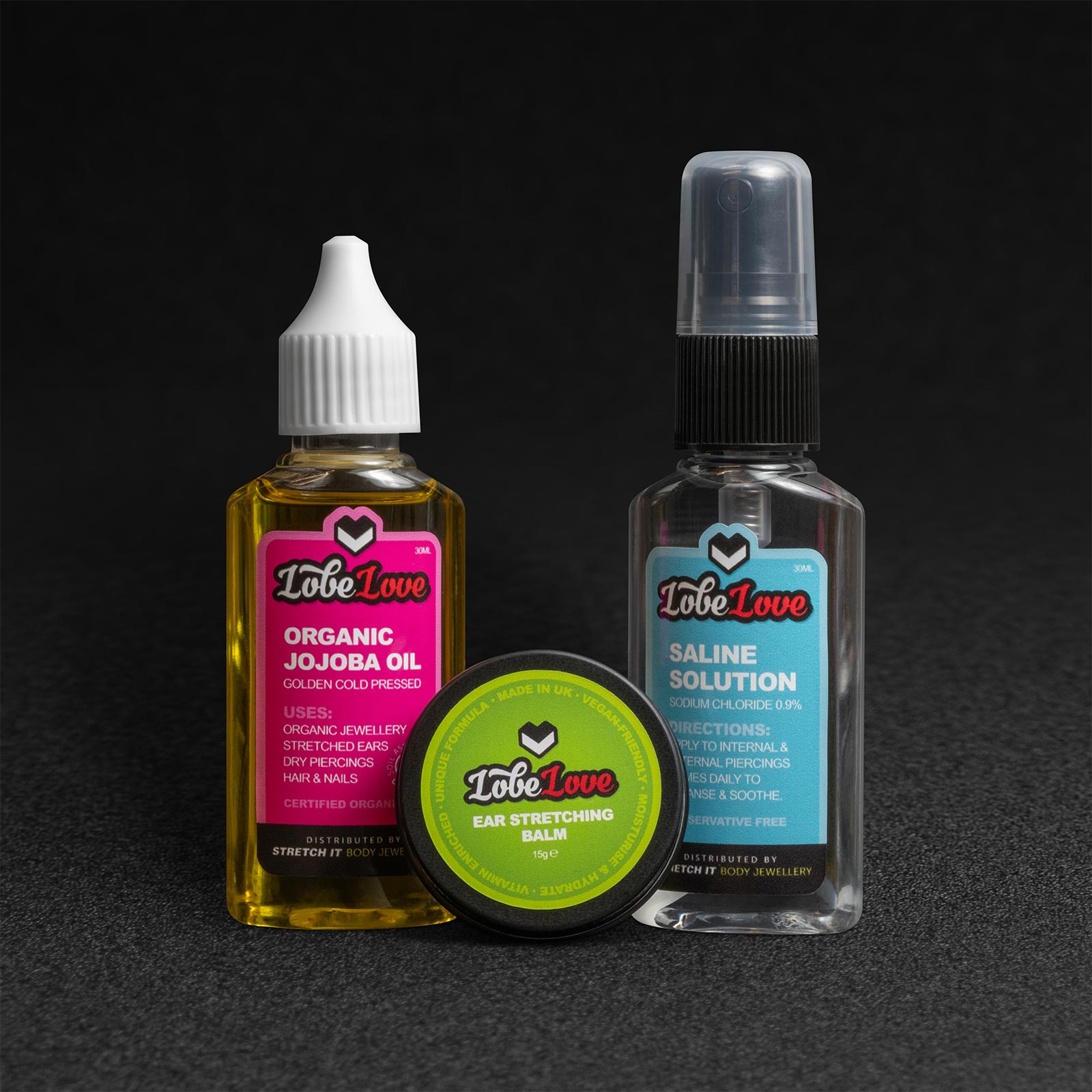
LobeLobe™ Saline Piercing Spray is alcohol- and preservative-free, preventing against any dry, itchy aftermath. In turn, the tissue stays comfortable, meaning you’re far less likely to panic clean or poke if something feels off.
It also fits into real life, where piercings get knocked, headphones touch them, hoodies catch, and you get sweaty.
A quick saline spritz works brilliantly in the following scenarios:
- After the gym
- When travelling
- If you accidentally snag your tragus earrings
- Any time irritation starts creeping in and you want to nip it in the bud
This low effort high impact care compounds over time, as your piercings steadily heal. Even if you’re unlucky enough to suffer irritation or infection flare-ups, you’ll often notice things finally turning a corner once you start cleansing properly.
This superior pro-grade saline spray helps make it so.
What to Wear - Tragus Stud Earrings or Hoops?
Choosing the right tragus jewellery is half the battle. So choose carefully, because the wrong piece can cause histrionics.
Here are the golden rules for keeping it calm and comfortable:
Tragus stud earrings for healing holes
- Stay in your lane when you’re freshly pierced, with flat back 1.2 mm gauge tragus stud earrings with small, low-profile tops, because bigger isn’t better here.
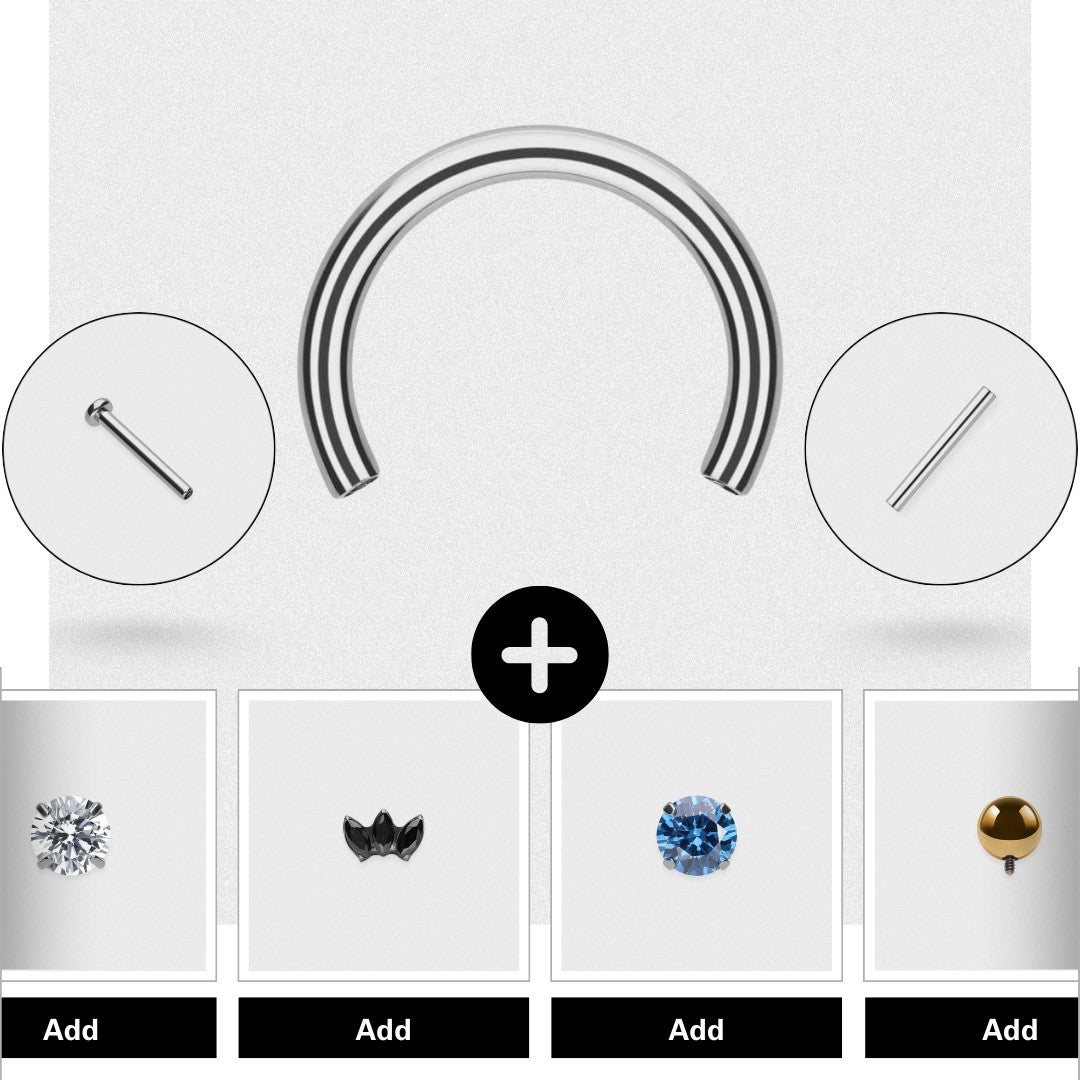
- Threadless labret tragus jewellery supports smooth insertion and less twisting. Plus, it’s easy to swap once healed. Threaded tragus earrings are also a solid option when done properly.
- Implant-grade titanium comes first. You can get more adventurous with other jewellery materials once healed.
Hoops and clickers for healed holes
- Hoop-style tragus ear jewellery is stunning. But not straight away. Hang fire, because rotation can irritate healing cartilage, causing swelling and unnecessary drama.
- The sky’s the limit once you’re fully healed and ready to dive into the sickest ranges of seamless rings and hinged clickers.
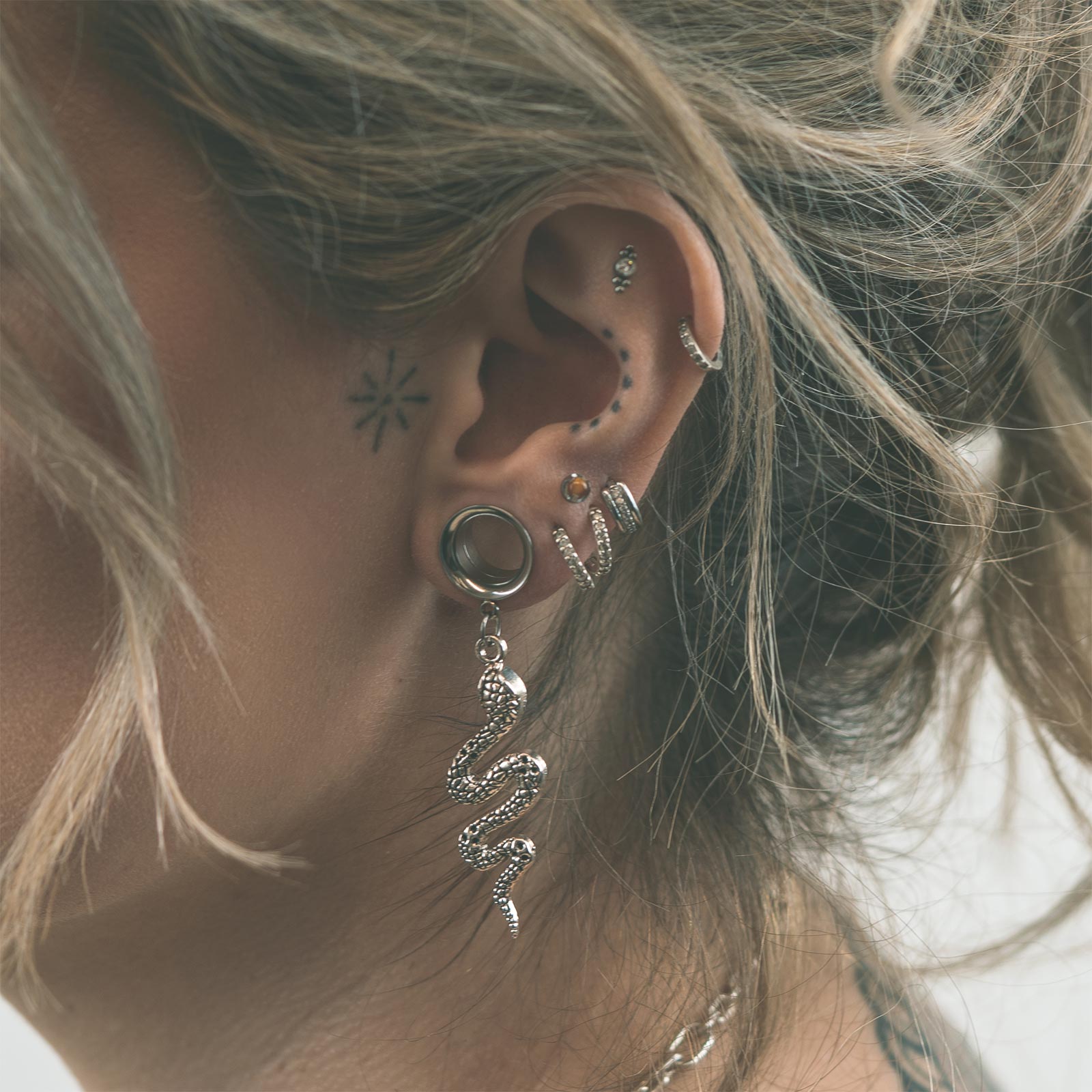
- Pro styling tip - Keep tragus earrings light, and avoid heavy or dangly designs which can cause tearing, even when your piercing’s fully healed.
Sizing Cheat Sheet for Tragus Earrings
The thickness of cartilage and placement of tragus ear jewellery call for different jewellery choices. Plus, everybody’s anatomy varies, too. So, ask your piercer when in doubt. And shop somewhere that explains sizing in plain English.
In the meantime, here’s the general guideline to work with:
Gauge
- Standard - 1.2 mm (16g)
- Sometimes - 1.0 mm (18g) if your piercer thinks it’s necessary for an anatomical reason
Post length for tragus ear studs
- Initial - 6-8 mm
- Healed - 5-6 mm
Hoop inner diameter
- Typical - 6- 8 mm
Stack Styling Ideas

The tragus piercing takes centre stage when you combine and contrast it with other cartilage piercings to form stacks. There’s almost no end to the sheer variety of interesting ways to reflect your statement style. For example:
- Intentionally Minimal - Create a clean, sharp, no fuss aesthetic with matching or clashing tiny helix and tragus ear studs.
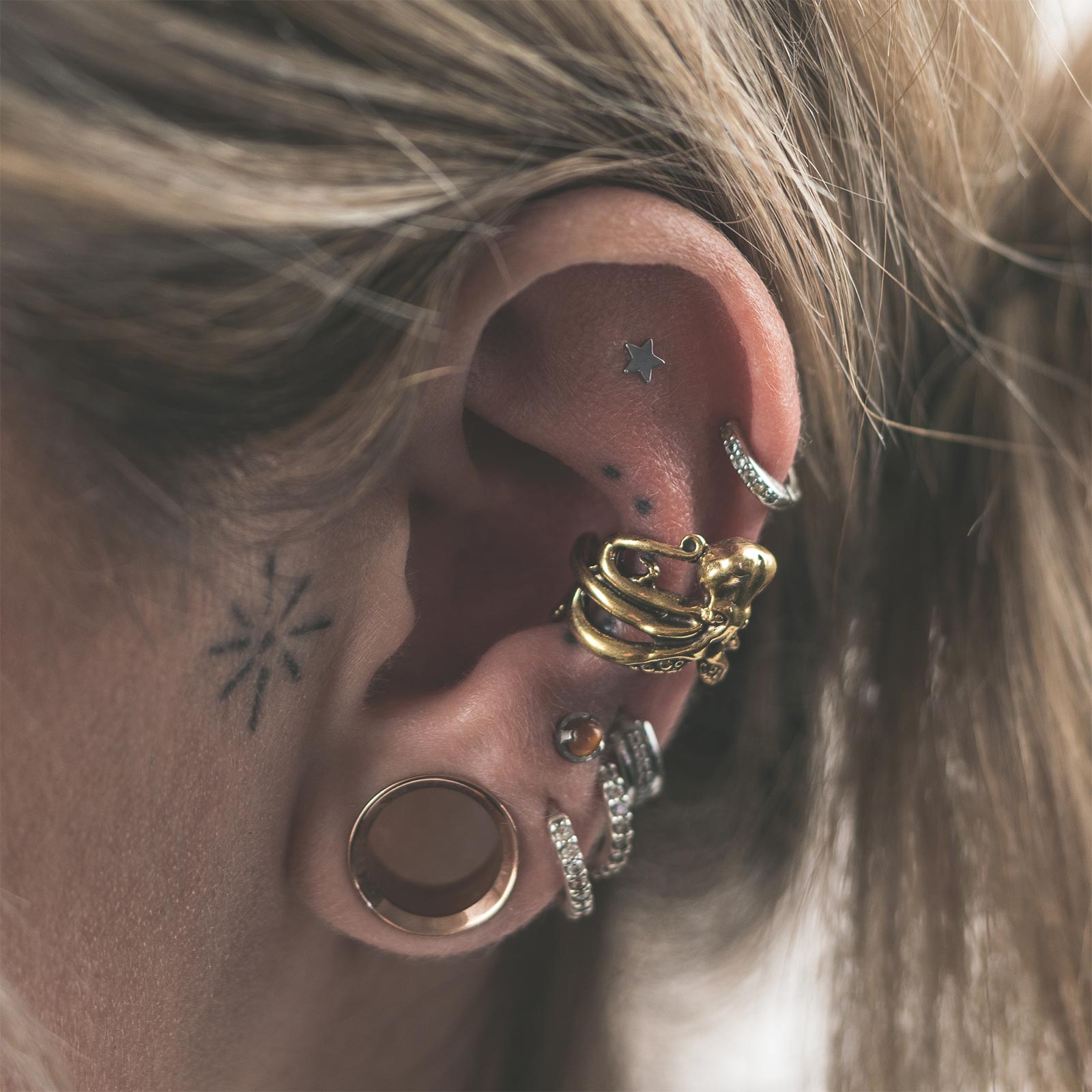
- Showstopping stack - Get them talking about your gem cluster tragus ear jewellery, conch hoop, and upper helix ensemble.
- Mixed metals - Pair titanium tragus earrings with something gold, copper or bronze in the helix.
- Neutral masculine vibes - Titanium domes. Blackened bar tops. Enough said.
- Combo goals - Ever thought about an anti-tragus and tragus piercing together? The symmetry looks unreal.
Speaking of which, now’s as good a time as any to introduce the anti-tragus piercing into the convo in more detail.
Anti-Tragus Piercing vs Tragus
We’re talking different piercings with different energy. So, what’s different about an anti-tragus piercing? It:
- Sits on the ridge above the lobe
- Positioned opposite the tragus piercing = how the anti-tragus piercing got its name
- Often tougher and more painful to pierce
- Slightly longer average healing time of six - nine+ months
In terms of anti-tragus jewellery, it’s still recommended to start with flat back labrets. Alternatively, curved barbells are also ideal, given the shape of the cartilage area they’ll live in.
This is if you’re able to have an anti-tragus piercing. Not everyone has enough ridge. A good piercer will tell you honestly. But if you’re one of the lucky ones? An anti-tragus and tragus piercing together creates one serious ear look.
Surface Tragus Piercing
Proceed carefully if you’ve got your eye on a surface tragus piercing. This one needs a disclaimer, because it sits in front of the tragus, rather than through the cartilage.
As a result, it comes with greater risks, including:
- Higher rejection rates
- Constant pressure from phones and movement
- More likelihood of scarring
For all these reasons, surface tragus piercing is often not recommended for long-term wear. Talk to a highly experienced piercer first if you’re thinking about it. They’ll help you weigh up the pros and cons.
How Scaffold Piercing Plays with a Tragus
A scaffold piercing (also known as an industrial piercing) is loud and angular, whereas a tragus piercing creates subtle detail.
And the result? Two cartilage piercings + one long straight bar running diagonally across the upper ear = statement jewellery that isn’t whispering.
A scaffold piercing dominates the upper ear. So, tragus jewellery underneath acts like a visual anchor, with small flat back tragus ear studs or hoops creating contrast without overcrowding.
Scaffolds are a bigger commitment when it comes to healing, because you’re dealing with two cartilage piercings under constant tension. This is why they take longer, often 6-12 months. You’ll need a special pillow if you’re a side sleeper. And your aftercare must be on point.
Like the anti-tragus piercing, not every ear can support a scaffold. Anatomy dictates. But it’s clean, purposeful, and rebellious when it works and it’s paired with a smoking hot tragus.
Real Life Problems and How to Avoid Them
First world problems getting in the way of your tragus piercing? Here’s what to look out for and how to deal with them if they arise:
Headphones
- Swap in-ear buds to over-ear models during healing
- Clean everything that touches your ear
Phones
- Hold slightly away from your tragus earrings
- Swap sides
- Speaker mode is your NBF
Helmets and hats
- Minimise friction with less wear or looser fits
- Use soft liners in helmets if you have to wear them for travel or work
Sleep
- Get a travel or doughnut pillow
Your FAQs About Tragus Ear Jewellery
Q. How long until I can wear a hoop?
A. Usually three - six+ months once your piercing is fully healed.
Q. What’s the best metal for new tragus piercings?
A. Implant grade titanium every time, to shield even the most sensitive ears from discomfort and irritation.
Q. Can I wear earbuds?
A. It’s best to avoid in-ear buds early on. Go for over-ear headphones, rather than whipping earbuds in and out at close proximity to a fresh piercing.
Q. Do tragus piercings close?
A. Yes, they can shrink if you remove tragus earrings for long periods.
Q. Is a tragus piercing for everyone?
A. There’s no reason why it isn’t for most people. But anatomy has a say. You’ll find out for sure when your piercer assesses your ear.
Q. What’s the difference between an anti-tragus and tragus piercing?
A. Location, pain level, and healing time all differ.
Ready for a Tiny Piercing with Massive Impact?
The tragus piercing is ultimate proof that minor details make major statements. It’s subtle, versatile, endlessly stackable, and looks good on anyone when done expertly.
At Stretch It Body Jewellery, we’re here to help you skip the guesswork and get it right.
Take a look around to discover:
- Tragus stud earrings
- Clickers and hoops
- Implant-grade titanium threadless and threaded labrets
- Aftercare essentials
- And a community that knows ears with our eyes shut, standing on our heads
This is the place to level up your tragus game, for both cartilage piercings noobs and ear stack veterans. Ready when you are.
Subscribe To Our Awesome Mailer
No spam. Just discounts, exclusive promotions and ear stretching tips & tricks you won't want to miss.
Our Best Selling Products
Our Favourite Products
Ear Stretching Inspo