



Stretch It Body Jewellery
SIBJ is one of the world's leading online specialist retailers and wholesalers in ear stretching kits, plugs, aftercare and body jewellery. We have over 10 years of experience in selling high-quality, unique ear stretching jewellery providing the knowledge, expertise and tools to stretch up confidently and safely.
"Cartilage is tougher than lobe tissue and slower to heal , but it’s 100% worth the commitment."
Thinking about the best types of cartilage piercings to add to your lobes? Already well into your body mods, and wondering if there are any new types of cartilage piercings you haven’t got yet?
Either way, our latest and greatest ear cartilage piercing guide covers everything from helix piercing to cartilage earring types for that firm, shape-giving bit of your ear.
Cartilage is tougher than lobe tissue and slower to heal. But it’s 100% worth the commitment when you’re flashing those hoops, chains, and curated stacks.
And this ear cartilage piercing guide breaks down all the different types of cartilage piercings, so you can:
- Pick your perfect match
- Plan the bigger picture
- Compare cartilage piercing names
- Hunt down the best fit for your anatomy and your vibe
Discussed In This Post
What’s the Difference Between Inner and Outer Cartilage Piercing Types?
Brilliant starter question!
Outer cartilage -
The outer rim of your ear is prime real estate for both first-timers and stack addicts. Accordingly, cartilage earring types worn in these places are versatile, photogenic, and add your own unique energy.
Popular outer cartilage piercing types include:
- Helix piercing
- Forward helix piercing
- Flat
- Industrial
Inner cartilage -
Think of it like inside the inner shell of your ear, closer to your head. This is why these piercings are a little more tucked in and niche.
Popular inner cartilage piercing types include:
- Tragus
- Anti-tragus
- Daith
- Rook
- Conch
- Snug
Helix Piercing

The helix piercing is the poster child of cartilage piercings, nestled in the classic spot on the outer upper rim. It’s beginner-friendly, stack-tastic, and plays nice with every aesthetic.
- Healing - Slow and steady, 6 - 12 months for maximum comfort and safety
- Pain - Mild to moderate. Expect pressure and a sharp pinch
- Best helix earrings - Seamless hoops, threadless studs, and chains connecting to a lobe or second helix piercing
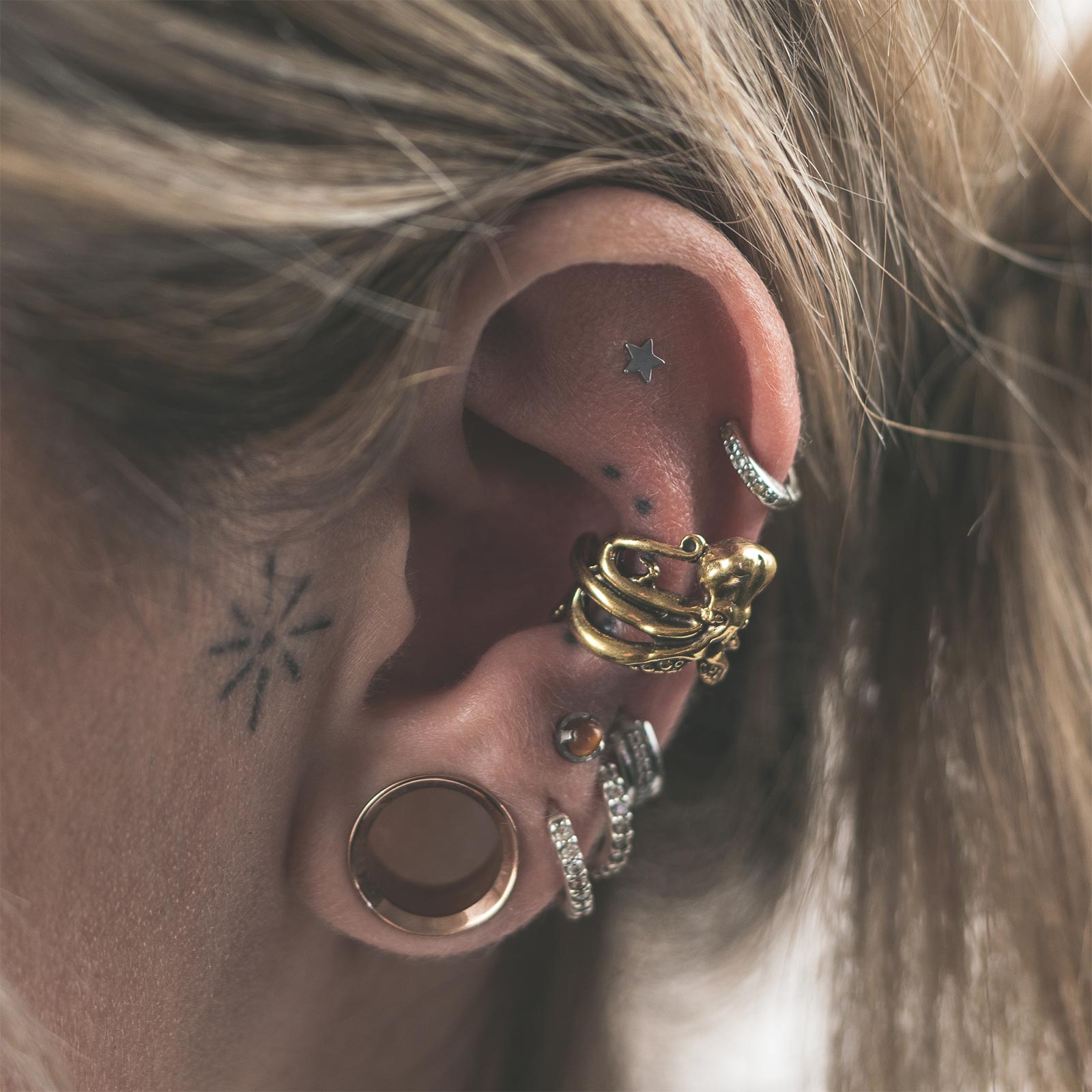
- Style helix types of cartilage piercings - Go single and dainty for everyday enchantment. Or build a double or triple helix piercing ladder for rich detail, and add an edgy chain for movement with a hint of menace.
Forward Helix Cartilage Piercing

The forward helix cartilage piercing sits on the front part of the rim closest to your face, right above the tragus. It’s subtle… until it isn’t.
- Healing - Six - nine months
- Pain - Moderate. The cartilage here is thin, plus the forward helix piercing area is tight
- Best forward helix earrings - Think flat back labret studs, teeny gems, or minimalist trios
- Style a forward helix cartilage piercing - A double or triple forward helix piercing looks like your ear’s gone haute couture by default. Try pairing it with a sleek conch stud to ramp up the front ear sparkle.
Flat Piercing

Flat piercings land on the smooth inner plane between your helix and rook, giving you loads of possibilities for constellations.
- Healing - 6 - 12 months
- Pain - Moderate. There’s more surface area, which means more pressure
- Best flat cartilage jewellery types - flat-back studs, discs, clusters, and multi-stone settings
- Style flat types of cartilage piercings - Create a mini galaxy of mismatched stones, a crescent moon, or rock a single iridescent disc.
Industrial Piercings

Two holes, one bar. Industrial piercings are ideal for making your ear a statement, not an afterthought.
- Healing - 9 - 12+ months. Be patient with two piercings healing as one unit
- Pain - Moderate to high. Twice the punctures = twice the ouch factor
- Best industrial cartilage earring types - Straight barbell for the classic look. Curved bars are generally unsuitable for initial industrial piercings
- Style industrial types of cartilage piercings - Keep the rest of the ear simple and let the bar do the talking.
Tragus Piercing

The tragus is the small flap in front of your ear canal. Lean into it for a discreet yet instant edge.
- Healing - 6 - 12 months
- Pain - Moderate. More pressure than sting
- Best tragus cartilage jewellery types - Threadless labret studs, micro hoops, and tiny gems
- Style tragus types of cartilage piercings - Pair a cute tragus stud with a helix hoop for a balanced inside and out lineup.
Anti-Tragus Piercing

The anti-tragus sits opposite the tragus, above the lobe. It’s less common and more anatomical, because not every ear suits this rare style. This makes it even more worthwhile if you can pull it off.
- Healing - 6 - 12 months, sometimes longer
- Pain - Moderate to high. Your cartilage is thicker here
- Best anti-tragus cartilage earring types - Curved barbells or snug hoops
- Style anti-tragus types of cartilage piercings - Let it shine, with a single curved bar in the anti-tragus accompanying a neat lobe stack, for an intentional, sassy look.
Daith Piercing

The daith goes through the inner fold of cartilage just above the ear canal. Its anatomical position makes it a favourite for hoops - and for attracting your fair share of “Oh wow, what’s that?” moments.
- Healing - 6 - 12 months
- Pain - Moderate to high, because it’s a tight area with firm cartilage
- Best daith cartilage jewellery types - Seamless hoops and captive bead rings
- Style daith types of cartilage piercings - A mirror finish hoop in a daith is understated but totally luxe. Try pairing it with a flat cluster above for balance.
Rook Piercing

Rook piercings go vertically through the ridge above your daith. It’s understated. But it’s also a showstopper when you tilt your head and it refracts the light.
- Healing - 6 - 12 months
- Pain - Higher side. That ridge is robust to get a needle through
- Best rook cartilage earring types - Curved barbells or small captive rings
- Style rook types of cartilage piercings - The vertical line of the rook adds structure to a soft, sparkly stack. Team a rook bar with a delicate inner conch stud and a forward helix gem, and see for yourself.
Conch Piercing (Inner and Outer)

The conch runs through the ear’s bowl (the central cartilage zone). It comes in two flavours:
- Inner conch - Pierces the middle bowl. Gorgeous with a flat back stud or an eye-catching disc
- Outer conch - Placed closer to the rim. Ideal if you dream of a decorative hoop hugging your ear
- Healing - 6 - 12 months
- Pain - Mid to high, because there’s more cartilage to get through
- Style conch types of cartilage piercings - One bold conch stud can anchor an entire curated ear. Or go maximalist, with an outer conch hoop circling the ear for high impact with zero apologies.
Snug Piercing (Also Known as Anti-Helix)
The snug runs horizontally through the inner ridge between the outer rim and conch. It looks fierce. But slow and steady wins the race in terms of the longest healing times.
- Healing - 9 - 12+ months and more temperamental than most
- Pain - High. No point sugar-coating the truth
- Best snug cartilage jewellery types - Short barbells or itsy bitsy huggie-style rings
- Style snug types of cartilage piercings - This piercing calls for advanced anatomy and advanced aftercare. So, the very fact you’ve got one deserves advanced cool points.
Helix vs Tragus: Which One First?
Quick compare if you can’t decide how to get started:
Vibe
- Helix piercing = visible, stackable, classic.
- Tragus piercing = discreet, elegant, ‘in with the in crowd.’
Healing
Similar ballpark of 6 - 12 months. Although a helix piercing is often easier to baby, because it’s less headphone adjacent.
Styling
- Helix earrings give you the opportunity to play around with ladders, chains, and hoops galore.
- Tragus earrings excel at minimal, knowing sparkle.
Which Cartilage Piercing Hurts the Most?
Spoiler alert. It’s subjective. But people love a ranking. So, here’s a general guide, from “not too bad” to “OMFG, never again!” (Well, not till next time anyway):
- Mild - Helix and forward helix
- Moderate - Inner and outer conch, tragus
- High - Daith, industrial, rook, snug
But pain levels are influenced by more than cartilage piercing names and placements. Other key factors include:
- Technique - A piercing gun is a hard pass for reputable piercers, who favour a needle’s sterility, precision, and kindness to tissue. Although even a great piercer can’t make the pain completely disappear. But they can help minimise it.
- Calm breathing - Help them to help you.
- High-quality jewellery - Implant-grade titanium tends to feel kinder during healing. And what’s not to love about an irritation- and drama-free cartilage piercing experience.
Essential Aftercare for Upper Ear Piercings
You’ll want to avoid the dreaded crunchy crusties at best - or painful infection at worst. And you can by following the basics:
Hands off unless cleaning -
Wash your hands before touching all types of cartilage piercings. And don’t twist to stop it sticking - a myth that invites trauma.
Clean smart -
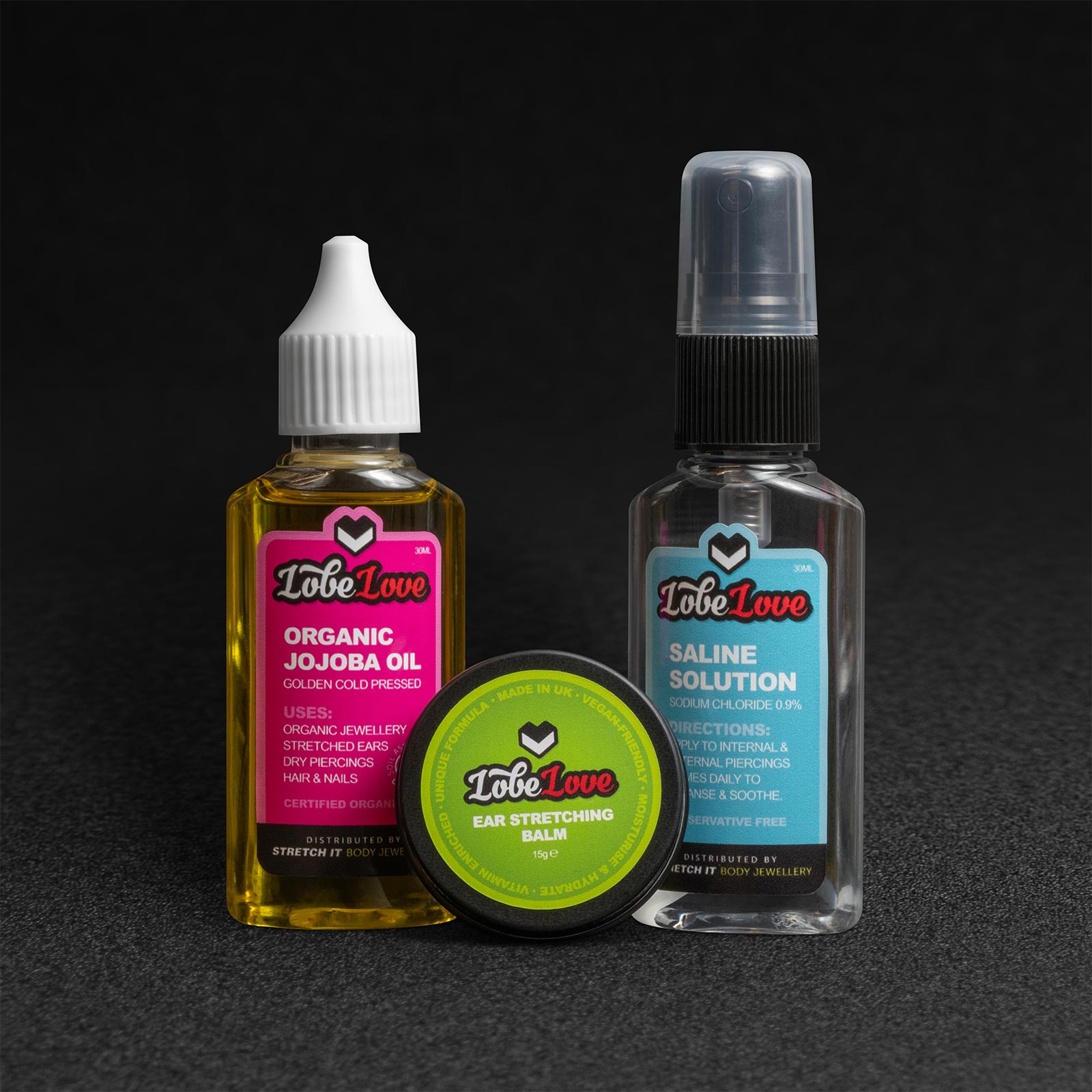
Clean twice daily with a piercer-approved rinse like LobeLove™ Saline Piercing Spray. This preservative-free, professional-grade saline helps flush out gunk and calm irritation, keeping cartilage piercings clean while healing. Simply mist the front and back, and pat dry with a clean paper towel.
Pillow politics -
Sleep on the other side of healing upper ear piercings. A travel pillow with the centre cut out is a godsend for this.
Keep it clean -
Wipe down phones, headphones, hats, and glasses arms. And be mindful when using hair products. They can cause chaos with fresh cartilage piercings, so shield the area when you spray.
Water watch -
Avoid pools, hot tubs, and wild swimming during early healing.
Wardrobe edit -
Dress mindfully to avoid snagging scarves, chunky knit hats, or high necks.
Book a checkup -
Swap to a shorter post with your piercer’s help when swelling settles. This reduces movement and irritation.
Choose the Right Cartilage Piercing for You
The multiple different types of cartilage piercings can make it tough to decide. Thankfully, a little strategy goes a long way for getting it right first time:
Anatomy first
Not every ear can host every piercing. For example, industrial and snug are especially anatomy-specific. A reputable piercer will say no when it matters. Respect that.
Lifestyle check
Side sleeper? Gym headphones? Hard hat at work? Start with placements that won’t turn your daily life upside down.
Style goals
Minimalist? Try tragus, forward helix, or a single inner conch stud. Statement maker? Go for an outer conch hoop, an industrial bar, or a rook and flat combo.
Patience plan
Healing takes months, not weeks. This means adding to your curated ear in phases.
FAQ: Your Cartilage Questions Answered
Q) What cartilage piercing hurts the least?
A) Most people rate helix and forward helix piercing at the lower end. They’re quicker and less grisly than some other types, due to relatively thin cartilage.
Q) How long does cartilage take to heal
A) Plan for 6 - 12 months. Although some piercings, like industrial and snug, can take longer. And bear in mind, feeling ok doesn’t necessarily mean you’re clinically healed. So, wait for your piercer’s green light before changing cartilage jewellery types.
Q) Can I get multiple cartilage piercings at once?
A) In theory, yes. But pace yourself with two to three max per session. This is because your immune system prefers small, well thought out projects to work on.
Q) Can I sleep on my cartilage piercing?
A) Eventually. But not during early doors. Sleep on the opposite side or use a doughnut travel pillow so nothing presses on it. After all, pressure and irritation cause longer healing.
Q) What material is best for new cartilage piercings?
A) Implant grade, hypoallergenic, low-irritation titanium is the ultimate for fresh piercings. You’ll have plenty of time to explore funkier stuff once healed.
Stack It, Style It, Own It
Cartilage is where your ear becomes a mood board, interwoven with clever styling ties. For these reasons, knowledge is power for:
- Smoother healing
- Smart jewellery choices
- Curating an ear you love dressing every morning
At Stretch It Body Jewellery, we’re ready, willing, and able to help you build your signature stack.
Visit our website for safe, stylish, implant-grade options for all types of cartilage piercings. You’ll find expert intel on processes and products, from appointment prep to sizing guides, plus cartilage jewellery types your skin won’t argue with.
Subscribe To Our Awesome Mailer
No spam. Just discounts, exclusive promotions and ear stretching tips & tricks you won't want to miss.
Our Best Selling Products
Our Favourite Products
Ear Stretching Inspo