




Stretch It Body Jewellery
SIBJ is one of the world's leading online specialist retailers and wholesalers in ear stretching kits, plugs, aftercare and body jewellery. We have over 10 years of experience in selling high-quality, unique ear stretching jewellery providing the knowledge, expertise and tools to stretch up confidently and safely.
"The threaded vs threadless jewellery debate rages on. But the truth is this. Both systems are brilliant in different scenarios."
Get pierced and you’ll soon find yourself neck deep in the threaded vs threadless body jewellery debate. This is because the body piercing community is basically divided into two rival factions, Team Threaded vs Threadless Jewellery. And both think they’re right.
You’ll already know why the threaded vs threadless body jewellery thing matters if you’ve ever:
- Dropped a threaded ball and watched it disappear into a floorboard crack
- Tried to screw a microscopic gem onto a barbell without a spotlight
- Tugged on your jeans and discovered your helix top has vanished without a trace
So, what are the key differences and issues you need to know to make informed choices?
Discussed In This Post
What Differentiates Threaded vs Threadless Body Jewellery?
Essentially, threaded and threadless body jewellery do the same job of keeping your cute little decorative ends securely attached to your body.
But they go about it completely differently:
Threaded body jewellery
Threaded piece uses a screw system, where the decorative top literally screws into a barbell or labret post. There are two types available -
- Externally threaded jewellery - Threads on the bar, which can pinch and snag
- Internally threaded jewellery - Threads inside the post, making it smoother, safer, and ideal for healing
Threadless body jewellery
This system uses a push-fit pin that locks in place using tension. So, there’s no twisting, micro threads, and panicking about whether it’s straight or not.
In this guide, we’ll break down all the pros, cons, and use cases. We mean the kind your piercer knows, your mates argue about, and your bank account begs you to understand before you buy another gem that ends up washed down the plughole.
And you’ll have a clearer idea which system suits your piercings, lifestyle, and tolerance for fiddling with teeny bits and pieces.
Externally and Internally Threaded Jewellery Explained

You could say threaded jewellery is where body mods started. The system couldn’t be simpler. A screw goes into a post, holds the end on, and off you go.
But let’s break it down properly:
Externally Threaded Jewellery
This is a no-go zone for many piercers and pierced, because of how the threads are on the outside of the post. Those exposed threads drag through your piercing channel like a miniature cheese grater. And this is why piercers think of them as outdated, potentially irritating, and not safe jewellery for new piercings, healing, or sensitivity.
But:
- They’re cheap
- They’re everywhere
- Budget retailers still love them
Our opinion on the internally vs externally threaded question? Only use externally threaded jewellery if your piercing is healed, you’re on the tightest budget, and it’s the last resort. But approach with caution.
Internally Threaded Jewellery
This is the good stuff. The threads are hidden inside the post, and the decorative end screws in via a tiny stem. So, the post glides smoothly through your piercing, without any snagging, scraping, or microscopic tissue damage.
Pros of internally threaded jewellery:
- Seriously secure - It’s not going anywhere once it’s properly tightened
- Ideal for larger, heavier pieces - Internally threaded all the way for dobbing statement pieces
- Great for thicker gauges - Go ahead with 14g, 12g, 6g and beyond
- A favourite for long term wear - Safe and comfortable long term for many piercing types, including nipples, industrials, and tongues.
Cons:
- Can be fiddly to screw on, especially tiny ends
- Ends can loosen if you don’t tighten them enough, or if low quality threads wear over time
- Not all threads are universal. Thread mismatch is a thing
- Curved jewellery can be a pain if the decorative end faces sideways when tightened
What About Threadless Jewellery?
Threadless body jewellery is the cool, rebellious younger sibling of externally and internally threaded jewellery.
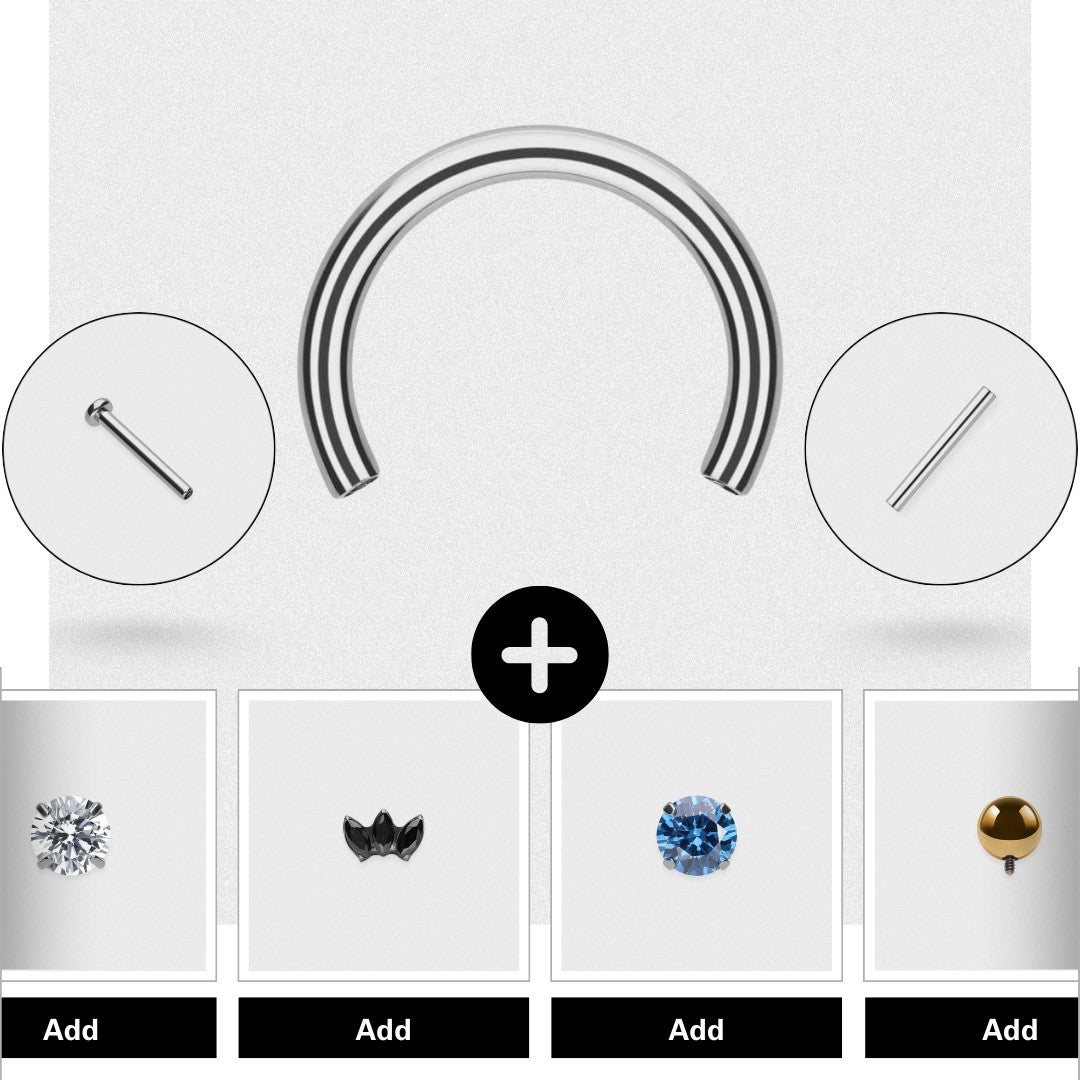
A tiny pin on the decorative top is bent just slightly, then pushed into a hollow post. The tiny bend creates tension, which holds everything together.
Additionally, it eradicates the need for the more niggling aspects of threaded systems, like twisting, tricky alignment, and threading tiny beads onto a bar while your hands shake.
Pros of threadless body jewellery:
- Ridiculously easy to insert - Slide the post in, push the top on, and you’re done
- Brilliant for small, delicate gems - Small is beautiful with threadless tops
- Perfect alignment - Unlike internally threaded jewellery, curved threadless jewellery always faces the right way
- Less tissue friction - This makes it the best jewellery for cartilage piercings like the helix, tragus, conch, flat and rook, besides threadless labret bars for nostrils and septums
- Universal tops - You’ll find threadless tops compatibility across most regular threadless post sizes up to around 12g
- Super secure - Nothing can slowly unscrew with wear
Cons:
- Pins can bend too much if you manhandle them
- Not great for very heavy pieces, because pins only take so much weight
- Not available in large gauge jewellery
- Not suitable for piercings where losing a top would be hazardous, for example, the tongue, some genital piercings, and microdermals
What Do Piercers Prefer for Comfort and Safety - and Why?
Professional piercers aren’t unanimous about everything. But they’re pretty aligned when it comes to safety.
Accordingly, internally threaded or threadless body jewellery are recognised as safe jewellery for new piercings. These styles protect healing tissue because:
Internally threaded jewellery -
- has smooth surfaces
- reduces micro tears
- minimises bacterial transfer
- provides stable hold during swelling phases
- is ideal for downsizing
- eliminates friction entirely
- equips piercers to easily change tops during check-ups
- is the best jewellery for cartilage piercings, where angles and pressure matter
- enable fuss-free downsizing
As for externally threaded jewellery? Credible piercers recommend it about as often as credible doctors recommend licking toilet bowls.
But let’s not forget materials also matter. And implant grade titanium always wins for healing, regardless of system, due to being hypoallergenic, lightweight, durable, and approved for long-term wear.
So, what’s safest overall?
- Internally threaded jewellery is most secure for heavy use, stretching, and high-movement piercings
- Threadless body jewellery is the best jewellery for cartilage piercings and easy styling
This is why we advise choosing based on your piercing’s needs rather than the aesthetic, especially when you’re in the market for safe jewellery for new piercings.
Understand the Day-to-Day Practicalities
Comfort becomes more about daily life than biology when your piercing is healed. So, here’s an idea of how the two systems behave in real-world chaos:
If you change your look a lot
Threadless body jewellery is a must-have, due to the convenience and speed of its push-fit fastening. Swapping threadless ends is a five-second job. By comparison, externally or internally threaded jewellery means shutting the door, laying out a towel, taking a deep breath, and hoping you don’t literally drop the ball.
If you’re active
Internally threaded jewellery shines here, thanks to its strength, stability, and durability. It’s a true hero if you’ve got a heavy manual job, enjoy mountain biking, weight lifting, or moshing.
If you’re looking for alignment
Threadless body jewellery always faces the direction you want, even on curves. Whereas you can tighten threaded jewellery and realise your moon charm is sideways – again!
If you’re travelling
Bring spares tops/ends - you just know they'll end up on the hotel floor, lost forever!
If you’re checking tightness
Gently squeeze the top of threadless jewellery, and adjust the pin bend if it wiggles. Or tighten threaded pieces until they’re firm, but not in a white knuckle grip.
Mix, Match and Contrast

This is where the two systems start behaving very differently:
- Threadless body jewellery is the mix-and-match champion - Most threadless ends fit most threadless posts, within reason. This means you can build a capsule jewellery wardrobe, where one post + many ends = infinite looks
- Threaded jewellery plays by more rules - Threaded compatibility depends on multiple factors like gauge size, thread pattern, jewellery type, and whether it’s internally or externally threaded. It’s not impossible. But it’s much trickier to shop for if you’re unsure exactly what you already have.
- Build your collection - Threadless offers maximum versatility for ear curation, tiny gems, and mix-and-match sets. On the other hand, threaded is a solid choice for big, bold pieces, stretched ears, or piercings that get a lot of movement.
Different moods. Different needs. This is why most experienced pierced people end up with some of each.
Which System for Which Piercing?
Feel the need for a no-nonsense piercing-by-piercing guide? We’ve got you:
Best jewellery for cartilage piercings -
Implant grade titanium threadless labret for helix, tragus, conch, rook, flat, etc, to support smooth insertion, low friction, and easy breezy downsizing.
Best jewellery for genital piercings
Go with threaded when security is paramount.
Best jewellery for industrial piercings -
Internally threaded long titanium barbells bring stability and durability.
Best jewellery for nipple piercings
The secure threads of internally threaded jewellery reduce movement and friction for optimal healing.
Best jewellery for nostril piercings
Opt for a threadless labret to support precise alignment, easy changes, and flat back comfort.
Best jewellery for septum piercings
A threadless labret or clicker guarantees alignment in curved jewellery.
Best jewellery for tongue piercings
Internally threaded straight jewellery, because you don’t want a top popping off mid-sandwich.
Best jewellery if you like to swap styles daily
Threadless body jewellery tops the chart every time.
Best jewellery for heavy decorative ends
Threaded takes the top spot for larger, weightier pieces, because a pin can only handle so much weight.
Best jewellery for large gauge or ear stretching
Internal threading offers more security, options, and stability.
Weigh Up Your Investment in Time and Money
Both systems vary cost-wise, based on materials, brand, and stone choice. But the typical breakdown is usually something like this:
Cost
- Threadless posts cost more upfront. But they represent great long-term value, because you reuse them again and again with new ends.
- Threaded pieces vary massively, especially at thicker gauges.
Durability
- Threaded jewellery is usually long-lasting. Although threads can wear if you buy cheaply.
- Threadless pins can fatigue if bent repeatedly.
Maintenance
Both threaded and threadless body jewellery call for:
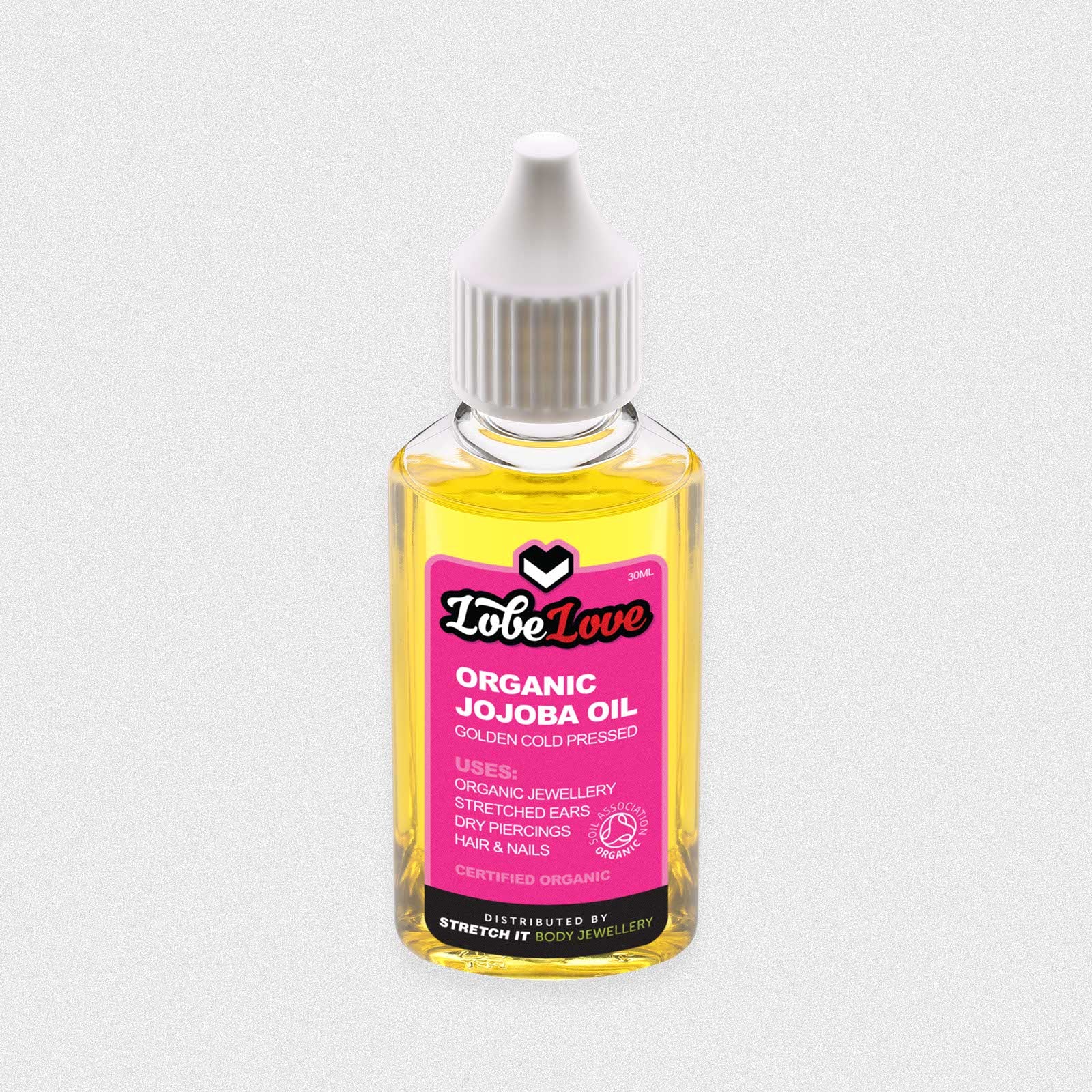
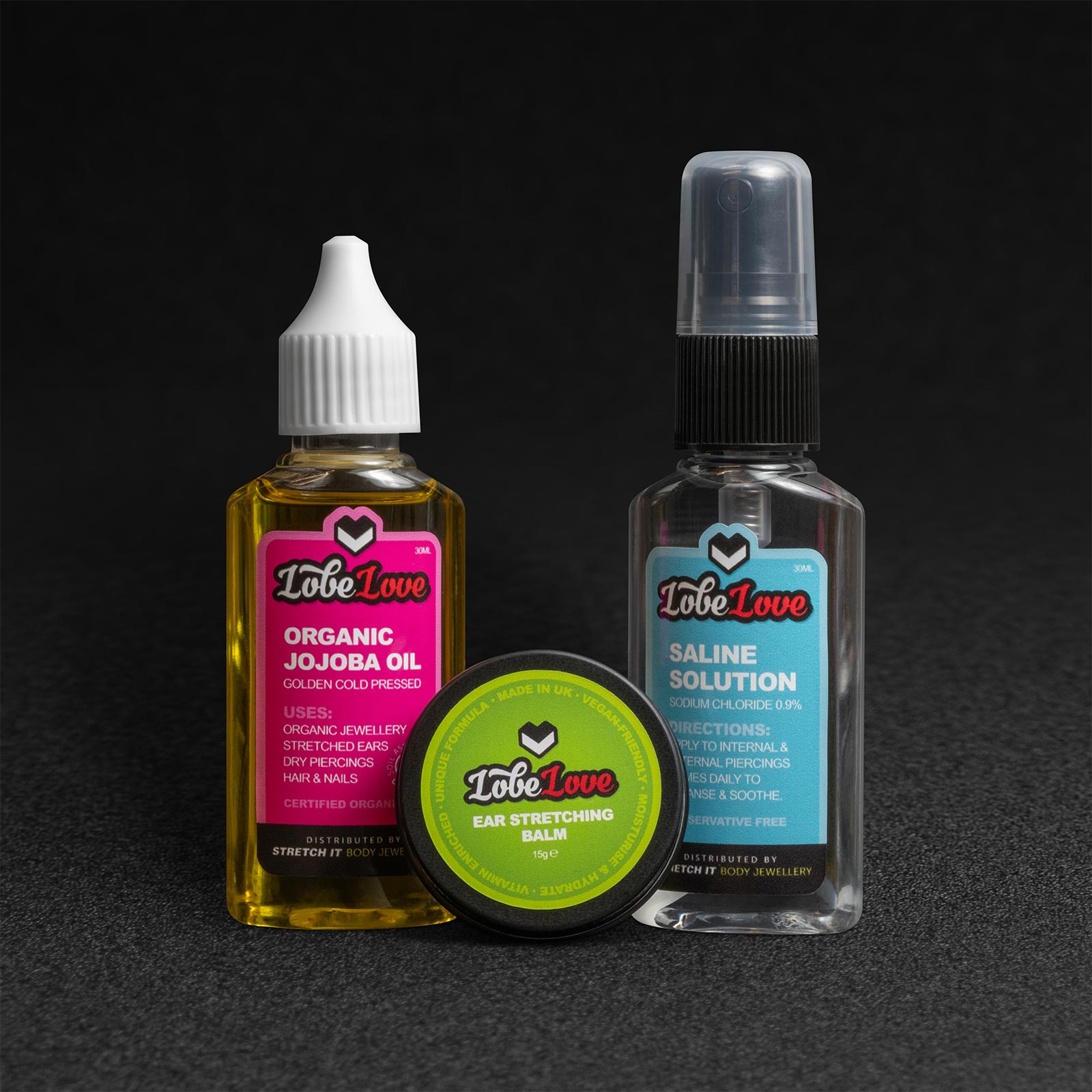
- Regular saline cleaning - Extra pro points for using LobeLove™ Professional Saline Piercing Spray
- Checking the tightness or tension weekly
- Replacing any worn parts - For example, you’ll know the threads are worn if a threaded ball spins without gripping. And a threadless pin’s ready for the bin if it feels too loose, even after you’ve adjusted it.
Your Most FAQs
Q. Do threadless pins fall out easily?
A. Not when fitted properly. The pin should lock in securely if it’s bent correctly. But you might experience a loose fit if you’ve bought poor-quality pins, or you haven’t bent them.
Q. How tight is tight enough for threaded jewellery?
A. Firm, but not aggressive. Use gloves for grip. And stop if you hear grinding or see metal dust, which means you’re stripping the threads.
Q. Can I convert my threaded jewellery to threadless?
A. Not directly, because they're different mechanical systems. Some brands offer adapters. But it’s not universal.
Q. Are externally threaded barbells safe?
A. You might get away with them in healed piercings if you’re careful, but they’re not recommended for new piercings. Internally threaded and threadless body jewellery is always better.
Q. Which is more secure, threaded or threadless?
A. It depends. Threaded is best for heavy pieces or high movement areas. Threadless is secure for everyday wear and small to medium tops.
So, Threaded or Threadless?
The threaded vs threadless jewellery debate rages on. But the truth is this. Both systems are brilliant in different scenarios. As a golden rule, choose:
- Threadless body jewellery for cartilage, style swaps, comfort, and easy alignment
- Internally threaded for new piercings, heavy pieces, stretching, or anything that needs extra security
And when you’re ready to start or upgrade your collection, Stretch It Body Jewellery is the spiritual home of safe, stylish, alternative body jewellery for both beginners and long-timers.
Visit our website to explore our full range of threadless labrets, interchangeable tops, internally threaded barbells, titanium posts, and everything else you need to build your dream curated ear… or septum… or nipple.
Subscribe To Our Awesome Mailer
No spam. Just discounts, exclusive promotions and ear stretching tips & tricks you won't want to miss.
Our Best Selling Products
Our Favourite Products
Ear Stretching Inspo