





Stretch It Body Jewellery
SIBJ is one of the world's leading online specialist retailers and wholesalers in ear stretching kits, plugs, aftercare and body jewellery. We have over 10 years of experience in selling high-quality, unique ear stretching jewellery providing the knowledge, expertise and tools to stretch up confidently and safely.
"Your ear stretching journey might be slower than your mate’s. But slow ear stretching, slow healing, and slow progress will reward you with thick, healthy, comfortable gauges you’ll love for years."
Experiencing a slow ear stretching journey while your mate’s slaying it? It might feel rubbish. But the process and the ear stretching healing time are subjective. It literally is a case of your lobes, your timeline – not your pal’s.
So, you and your mate might both start stretching your ears at roughly the same time. Perhaps you’re even using the same size plugs and following the same aftercare routine. Yet somehow, their lobes size up for fun, while yours are firmly deflecting any sense of urgency.
And you’re left wondering, “Why are my ears taking FOREVER?”
Well, hold it right there. Put down that taper. Step away from Reddit. And take a moment to digest the reality…
Discussed In This Post
Fast or Slow Ear Stretching Is What It Is
Here’s the truth you need to understand when you start stretching:
- Ear stretching isn’t a race - Slow ear stretching isn’t any better or worse than fast stretching. (In fact, it’s often much safer to be slow and steady than to chase pace.)
- Comparison is the thief of joy - In addition, it can also cause uneven ear stretching or worse if you let it get to you and go off on one.
- Your body sets the pace - Not your mate, not a chart, and not a TikTok tutorial.
You see, your lobes have their own vibe, ear elasticity, blood flow, thickness, medical history, quirks, and drama.
For all these reasons, some ears fly through the early sizes. Conversely, other ears treat every 0.5mm stretch like a deeply personal violation. And both are perfectly normal.
By the end of this guide, you’ll be clued up on:
- The real reasons behind slow ear stretching timelines - and why it varies
- The science stuff
- The lifestyle stuff
- The technique stuff
- Plus, how to support your lobes so they grow thicker, stronger, healthier, and happier
Let’s get into the biology, the behaviour, the warning signs you’re stretching too fast, and all the other good stuff you need to know.
Why Ear Stretching Healing Time Varies

Think of ear stretching like a lesson in lobe science, with multiple factors all having a say:
Skin thickness
Thick lobes typically stretch more easily, because there’s more tissue to work with. On the other hand, slow ear stretching is often the norm with thin lobes, which need more time, patience, and gentle handling.
Ear elasticity
Your lobes rely heavily on collagen for strength and elastin for bounce-back-ability. Some people are bursting with the stuff. Others, not so much. And low elastin means slow ear stretching. But it’s not a flaw. Just anatomy.
Blood flow
Healthy circulation supports a faster ear stretching healing time. So, if your ears get Baltic and take longer to warm up in cold weather? Prepare for a slow ear stretching journey.
Age
It’s a fact that 20-year-old skin behaves differently from 50-year-old skin. Accordingly, ear stretching healing time slows with age.
Hormones
Stress, menstrual cycles, medication, and anxiety all influence your inflammatory and healing response.
Scarring
Old piercing scars, previous blowouts, and childhood injuries or illnesses affect ear elasticity. As a result, they can cause potential uneven ear stretching and slower healing.
At the end of the day, there’s little you can do about what nature gave you. As for healing as safely as possible? That’s a different matter.
Realign Your Lifestyle and Habits to Boost Progress
What if your ears aren’t slow, but your life is fast?
Your lifestyle can impact ear stretching healing time. But you can make tweaks to help a slow ear stretching journey along the way, without taking any risks. For example:
Sleeping on one side
Sleeping on your favourite side compresses the lobe and causes pressure. Pressure causes irritation. And irritation causes delayed healing. Try sleeping on a travel pillow to remove pressure and aid smooth healing.
Headphones, hats, and hoods
Constant rubbing or pressure keeps your tissue inflamed. So, be careful with headwear. And swap heavy headphones for earbuds while healing.
Hair snagging
Long hair snagging in your jewellery is a recipe for aggravation. And lots of micro tugs can add up to something more sinister. Keep it tied back to avoid any issues.
Stress
It’s psychosomatic. Stress absolutely slows healing.
Smoking and vaping
Nicotine reduces blood flow. And you know what reduced blood flow means. Slow healing.
Hydration
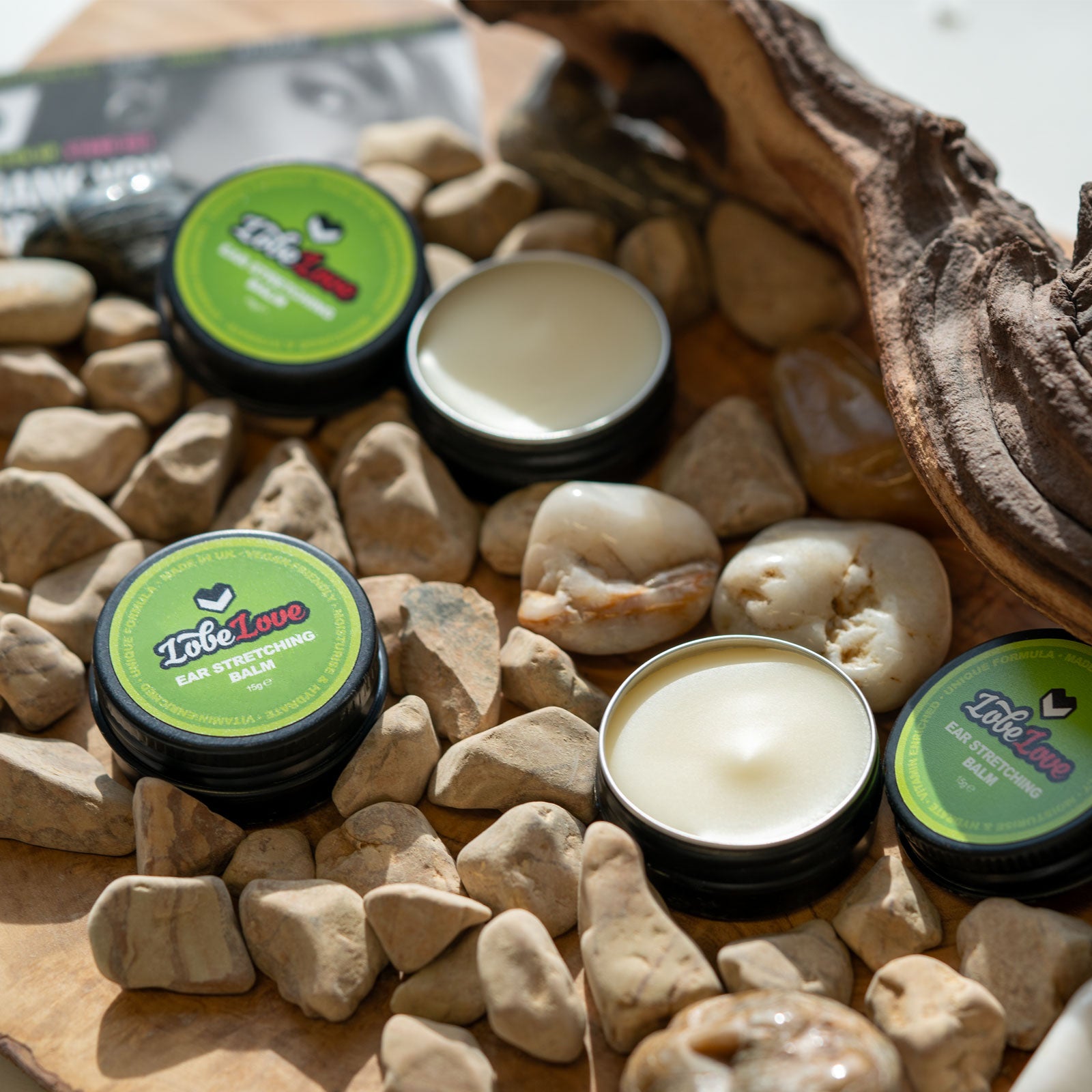
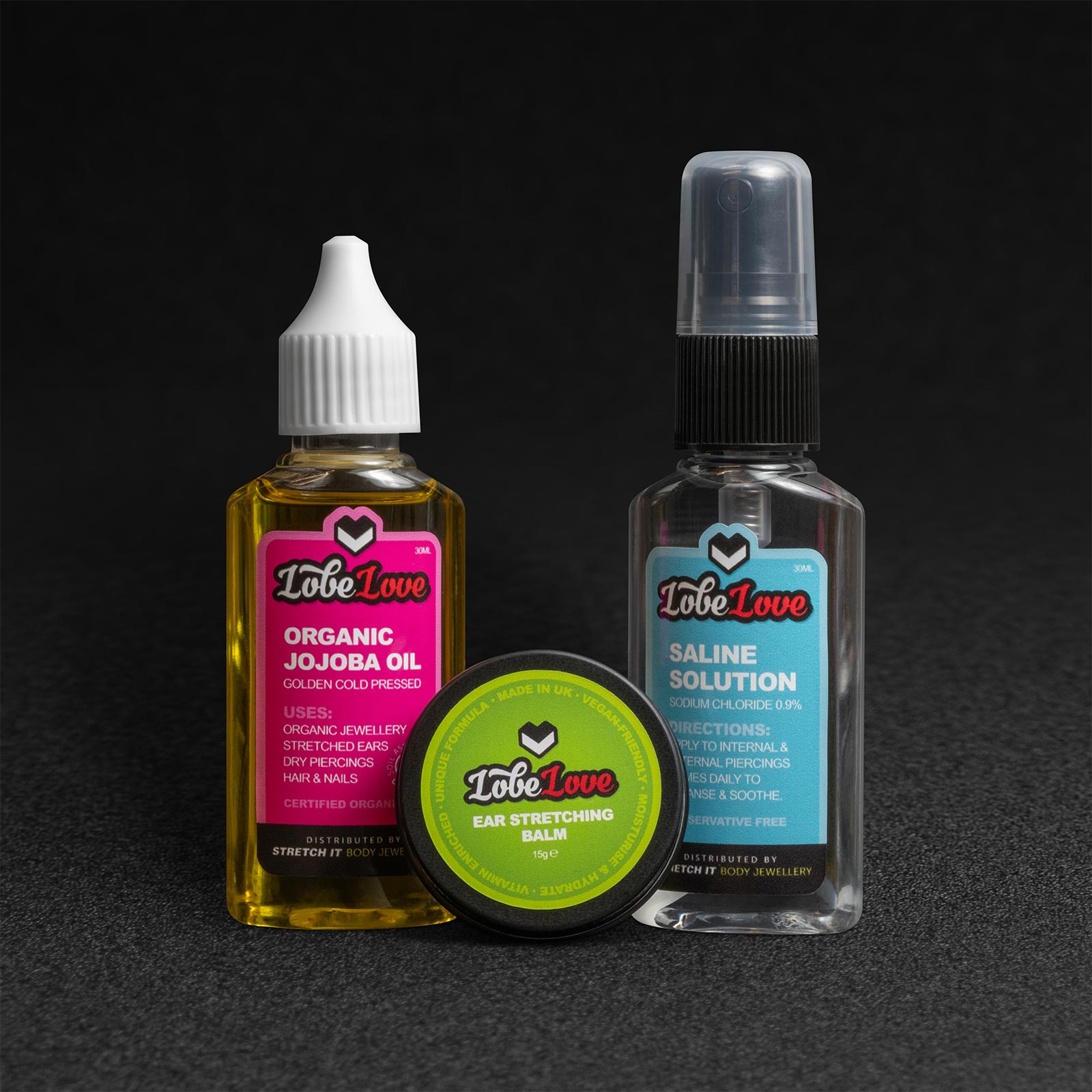
Having hydrated skin boosts ear elasticity. Whereas dry skin is cranky and causes both slow ear stretching and healing time. But it doesn’t have to be like this when you drink plenty of water and slather on LobeLove™ Premium Ear Stretching Balm to moisturise, hydrate, and nourish your ears.
Nutrition
Protein, vitamins, and good fats matter. Oppositely, expect slower healing if your diet is 90% coffee, cigarettes, and vibes.
But it’s not just a case of what you do. There’s also the way you do it.
Find a Safe Stretching Formula - and Stick with It Like Glue
People are always asking how to speed up healing safely. The answer is slow ear stretching, which is a paradox.
Thankfully, you can avoid unknowingly sabotaging yourself when you follow these golden rules:
Waiting windows
- Early sizes - Wait two months.
- Larger sizes (from 6mm or 2g upwards) - Four - six months between stretches, because your lobes need longer breaks the bigger they get.
Never skip sizes
Skipping is the fastest way to incur a blowout. So, take it slow at 0.5mm at a time, or definitely no more than 1mm, but only if you know what you’re doing and you’re sure your ears can take it.
Make lubing mandatory
Warm shower → LobeLove™ Premium Ear Stretching Balm → massage → gentle movement → attempt stretch. This combo maximises circulation and ear elasticity for hassle-free dead stretching.
Choose the right jewellery
Go for no flare or single flare plugs or tunnels for fresh stretches. You can graduate to double flares when your lobes are healed.
Use tapers and taping sparingly
We’ve said this a million times and we’ll say it again. Tapers are only for inserting jewellery, not as jewellery! And taping? It’s great for micro-stretches, but go slow.
See a pro if your ears have got form
A professional piercer will guide you if your lobes have a past, e.g. scar tissue, blowouts, uneven ear stretching, or trauma.
One Ear Healing Faster Than the Other?

Welcome to the club. But it’s totally normal, even though you might be a bit freaked out about the different ear stretching healing time on the same head.
There are a few potentially guilty culprits, such as:
- Dominant hand insertion - Most people insert jewellery more smoothly on one side.
- Sleeping habits - Tend to sleep on one side? If so, you’ll always get slow ear stretching on the side you’re putting pressure on.
- Scar tissue and piercing history - Ever had a piercing that’s too high, too low, too angled, or too deep? These anomalies affect ear elasticity and, in turn, ear stretching healing time.
The good news is it’s simple enough to get them back in sync again. Just:
- Pause the faster ear
- Let the slow ear catch up
- Micro-stretch the slow ear with 0.5mm dead stretches or tape wraps
And remember, your ears are siblings rather than twins. So, there’s bound to be a bit of individuality at play.
How Long Between Stretches?
Here’s the rough timeline experienced by real members of the ear stretching community. But, take this as guidance rather than gospel, because everybody’s body is different.
As a rule:
- Wait a minimum of eight weeks (two months) for smaller stretches
- Wait four - six months between larger stretches (6mm or 2g +)
And here’s an example timeline of how long between stretches by gauge size:
- 1.6mm - 2mm - Eight weeks
- 2mm - 3mm - 8 - 10 weeks
- 3mm - 4mm - Two - three months
- 4mm - 5mm - Two - three months
- 5mm - 6mm - Three months
- 6mm - 7mm - Four - six months
- 7mm - 8mm - Five - six months
- 8mm - 9mm - Six+ months
- 9mm - 10mm - Six+ months
Micro-stretches at 0.5mm are the holy grail for all sizes!
And always remember, these are guidelines, because your lobes decide the real timeline when it comes to deciding how long between stretches.
Signs You’re Stretching Too Fast
If your lobes had a red light guide of signs you’re stretching too fast, it would read like this:
- Pain - Stretching should never hurt. Discomfort is to be expected. But pain is bad.
- Redness and heat - Warm, angry lobes indicate inflammation.
- Swelling - Classic blowout sign, especially if the soreness is throbbing away at the back of your ear.
- Bleeding - This is a hard no. Bleeding happens when your lobe is torn, which probably means you’ve either stretched too soon or forced the stretch.
- Ridges, lumps, and cat butt - Meet the infamous blowout ring. And it’s not cute. So, stop what you’re doing, immediately.
- Thinning skin - This is how long-term damage begins.
Here’s what to do if you see or feel any of these signs you’re stretching too fast:
- Rinse with LobeLove™ Professional Saline Piercing Spray
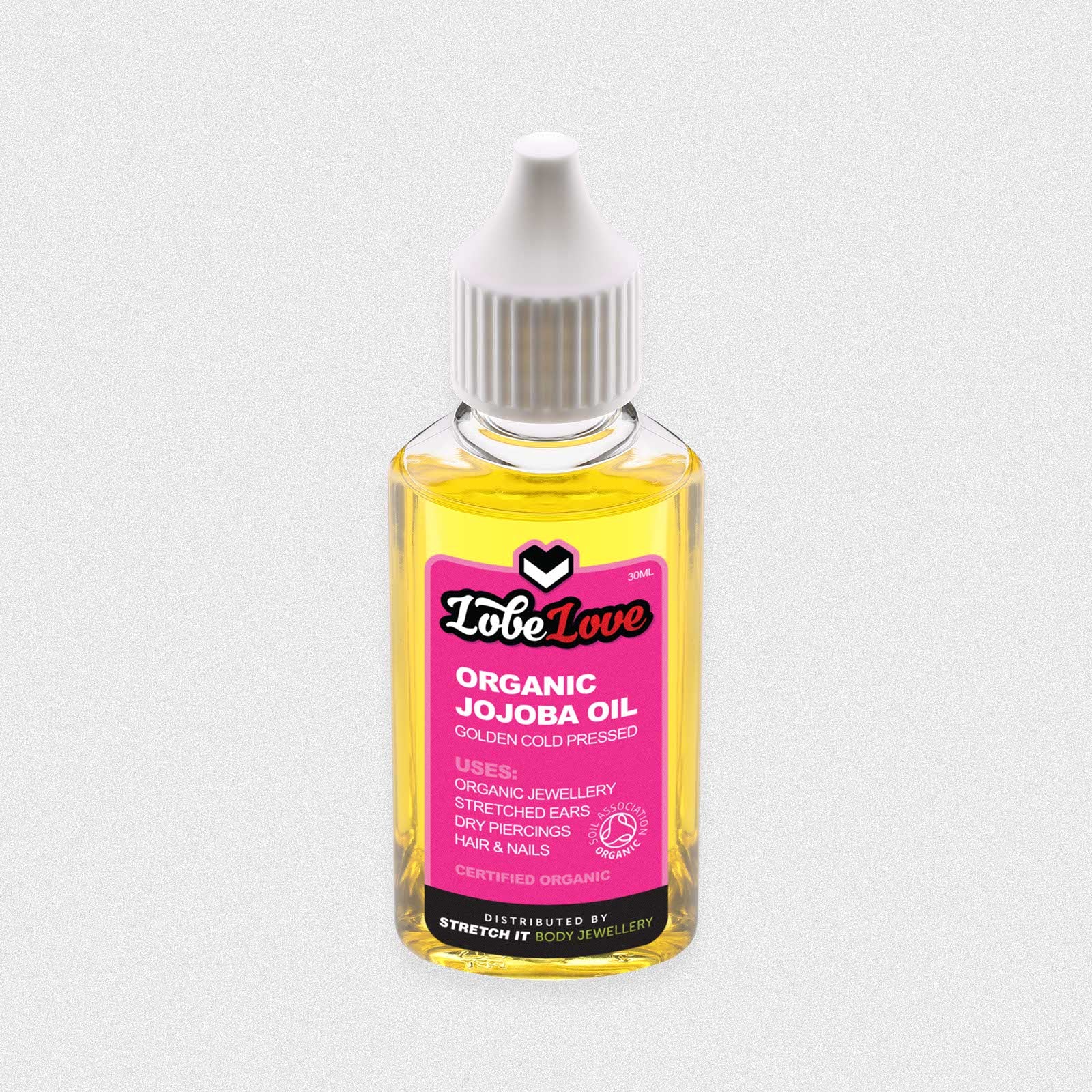
- Massage with LobeLove™ Organic Golden Jojoba Oil
- Start downsizing your stretched ears straight away
- Give your lobes two – six weeks of peace
- DON’T stretch again until they’re 100% recovered
How to Speed Up Healing Safely
You can’t rush biology. But you can support it.
Here are a few hints and tips from people who’ve been there, done it, and worn the saddle fit double flare tunnels:
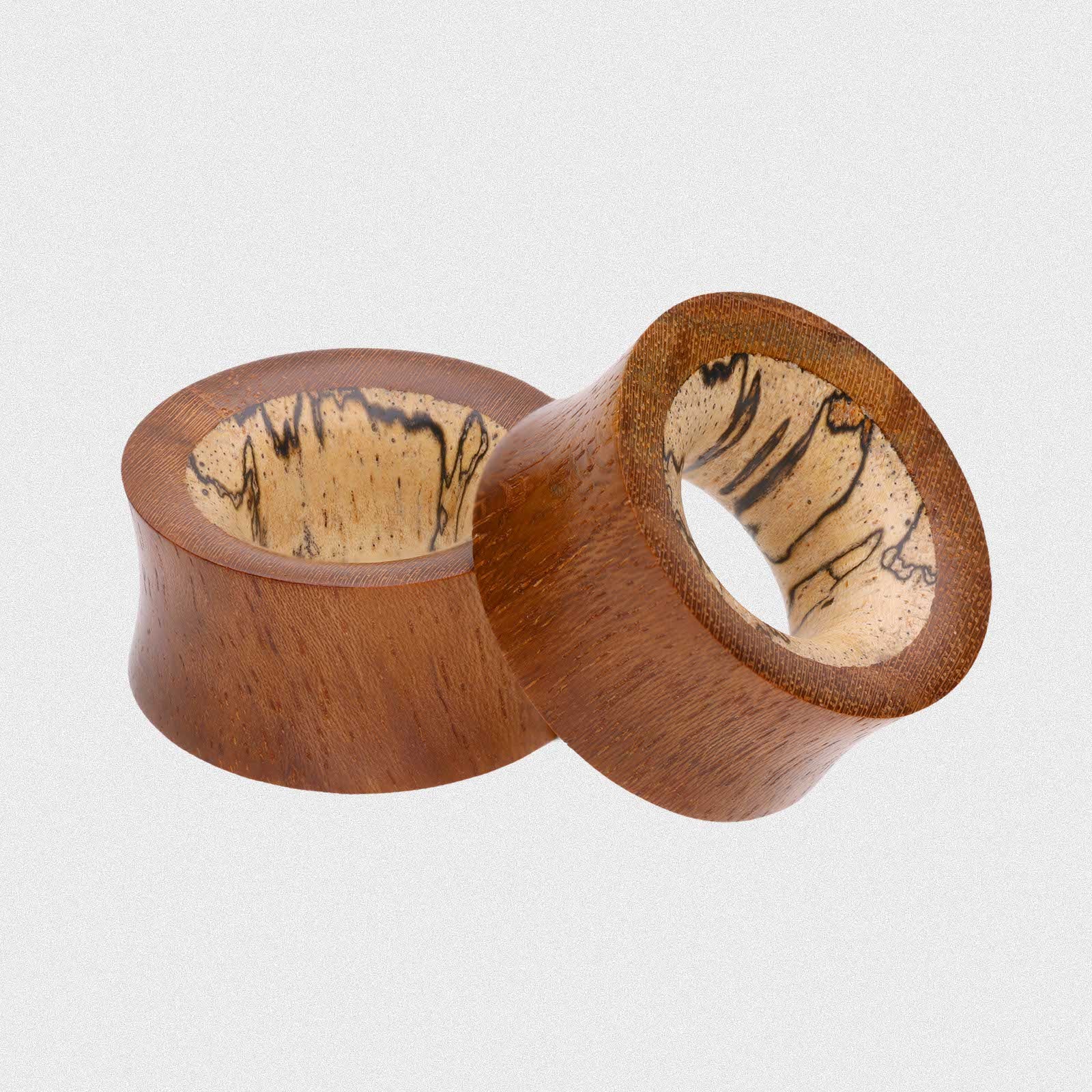
- Switch to lighter materials - Titanium and surgical steel are the champions of fresh stretches. Save the heavy stone or wood pieces for healed lobes.
- Change pillowcases often - Bacteria breed in fabric. In contrast, fresh pillowcases support fresh lobes.
- Gentle movement - A little wiggle during massages boosts circulation. Just don’t force anything.
But, what if all else fails and you’re faced with downsizing stretched ears?
Downsizing Stretched Ears for Long Term Success
Downsizing lets your lobes thicken, rebuilds collagen, and calms inflammation, like a spa break for burnt-out stretches.
And to be clear, downsizing stretched ears is a comeback, not a setback:
- After a blowout
- If the lobe feels thin
- If there’s ongoing pain
- If redness doesn’t settle down
- If your ear simply needs a break
Yes, it’s going to result in slow ear stretching compared to your mate or your own initial expectations. But you can resume stretching when your lobe is buttery soft, pain-free, and pliable again.
Track the Progress You Can’t See
The outsides might look healed after a week. But internal healing takes weeks to months. This is why slow ear stretching works, and fast stretching can break things.
So, how do you maintain a positive mental attitude when you can’t see tangible progress? Try these things:
- Take photos every fortnight
- Focus on thickness, not speed
- Celebrate small wins
- Remember that slow stretches shrink better later
Rest assured, your lobes are doing more behind the scenes than you realise.
FAQs: Slow Stretching Edition
Q. How long between stretches?
A. Eight weeks minimum for early sizes, and three - six months at larger sizes. Or more if your lobes ask for it.
Q. Why does one ear hurt more?
A. Sleeping habits, scar tissue, insertion angle, and circulation can all differ between ears.
Q. Can I skip half sizes?
A. We don't recommend it, and there’s no particular reason why you should, apart from being a keen bean). Half sizes are your best friend for baby steps, which is always recommended for comfort and safety.
Q. Can I sleep in double flares?
A. Only if the stretch is fully healed. And never use double flares to stretch.
Q. What if I plateau?
A. Pause for a month. Massage daily. Try 0.5mm micro-stretches. Switch to lighter jewellery. And hydrate.
Forget Their Timeline and Own Your Slow Stretch
Your ear stretching journey might be slower than your mate’s. But slow ear stretching, slow healing, and slow progress will reward you with thick, healthy, comfortable gauges you’ll love for years.
Stretch It Body Jewellery is the home of the ear stretching community, from day one noobs to 20mm legends. And you’re welcome.
Browse here for size charts, half-size plugs, stretching kits, oils, balms, and everything you need to get started or level up an ongoing stretch.
Subscribe To Our Awesome Mailer
No spam. Just discounts, exclusive promotions and ear stretching tips & tricks you won't want to miss.
Our Best Selling Products
Our Favourite Products
Ear Stretching Inspo