







Stretch It Body Jewellery
SIBJ is one of the world's leading online specialist retailers and wholesalers in ear stretching kits, plugs, aftercare and body jewellery. We have over 10 years of experience in selling high-quality, unique ear stretching jewellery providing the knowledge, expertise and tools to stretch up confidently and safely.
"Ask yourself this: Are piercing retainers starting to feel like your everyday jewellery? If so, the least you can do for your body is use the best materials for the job."
Piercing retainers what? Not come across them? Well, picture this. Your boss hates your septum piercing. But you and your septum couldn’t give a f**k.
You've spent months, maybe even years, curating a piercing collection you're proud of. Then you get the dream job… or a new term starts… or a hospital letter drops on your doormat.
And the words "Remove jewellery" are glaring at you with intent.
So, what do you do? Take everything out and pray your holes will forgive you? Or keep the sparkle and risk incurring the wrath of HR or the principal? It’s a tough choice, but one you might not have to make at all, thanks to a clear piercing retainer.
This article covers everything you need to know about keeping your piercings incognito, including typical questions like:
- Can you wear a retainer in a fresh piercing?
- How long can you leave a piercing retainer in?
- Can I keep my piercing in for an MRI or surgery?
- What size retainer do I need?
Discussed In This Post
What Is a Piercing Retainer?

Think of a retainer as invisible jewellery.
It's clear, skin-toned, or so low profile you’d hardly notice it. And when you’re wondering how to hide a piercing without it closing up? Retainers do exactly what they say on the tin.
To be clear (pun intended), there’s no aesthetic at play. It’s purely a matter of using piercing retainers to place hold until you can pop your usual pieces back in.
In terms of variety, you'll find piercing retainers for the most popular piercings. Alternatively, a similar style might work if there's nothing for your specific placement.
The Main Reasons to Reach for Piercing Retainers
There are three very specific occasions when a retainer can save the day:
The dress code dodge
Many community members we speak to use piercing retainers for work or school, to comply without agonising about how to keep a piercing open.
The medical MO
It’s highly likely you’ll need a piercing retainer for MRI scans, X-rays and some surgical procedures. This is because the equipment and metal don’t mix. So, a bioflex, PTFE or glass piercing retainer might be allowed to stop your piercing or stretch closing while you're being scanned or operated on.
The sporty situation
High-energy contact sports like football, gymnastics, martial arts, netball and rugby don’t go hand-in-hand with protruding jewellery. The good news is flexible retainers are kinder to your body if you take a knock, so you don't have to sacrifice your hobby or your piercings.
In any event, the materials piercing retainers are made of make a gigantic difference.
Why the Material Really, Really Matters
Not all retainers are created equal, and this largely depends on what they’re made of. Here’s why:
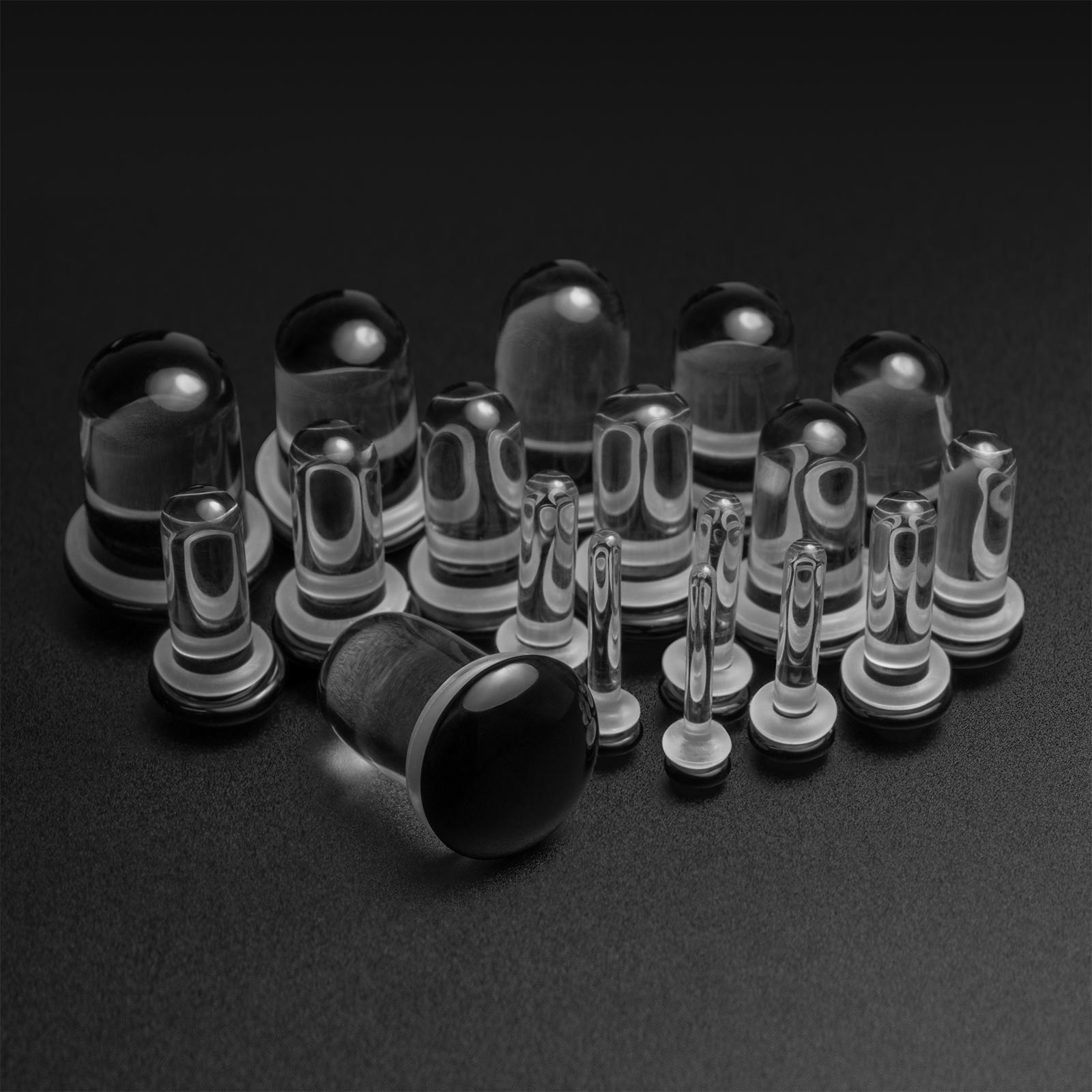
Glass piercing retainer -
In its favour, glass is smooth, non-porous and body-safe, because bacteria have nowhere to hide. It's also non-conductive and non-magnetic, making it a potential option for scans and procedures. But there’s just one small catch. It's glass. And glass breaks if it takes a bump or gets dropped.
PTFE piercing retainer -
This flexible, medical-grade plastic bends with you. It's body-safe and suitable for long-term wear. But it slowly degrades over time, so you’ll need to replace it every six to twelve months.
Silicone skin-tone ear retainers -
They’re soft, comfy and ideal for sleeping or sport, with the added bonus of skin-toned camouflage. For all these reasons, they’re a winner among ear stretchers who need a discreet plug.
Bioflex retainer -
It’s light, flexible and metal-free = nickel-free and MRI-friendly. Better still, it’s often clear, so it’s great for hiding a piercing. But a word of warning. Some blends contain more acrylic. This makes them sturdier but less bendy, and best treated as a shorter-term solution than a BFF.
Acrylic -
Cheap, cheerful, and often found in multipacks. It's ok for a short stint in a fully healed piercing for something like an interview or a match. But not for the long haul.
And here’s an interesting twist in the tale. Piercing retainers are available in both titanium and surgical steel. You’ll hear us talking about these as material masterstrokes for many body modifications. But not so for retainers, which we’ll come on to shortly.


Which Retainer Materials Should You Use or Avoid - and Why?
The glass piercing retainer is typically thought of as the reigning champion for the following reasons:
- Silky smooth, non-porous, and doesn't harbour bacteria
- Inert and hypoallergenic, so it's kind to sensitive skin
- Safe piercing retainer for MRI scans and surgery
- No issues with long-term wear in healed piercings
Conversely, it loses points on fragility. But that's pretty much the only pitfall.
As for the others:
- Cheap plastic and acrylic piercing retainers - You’ll find these on the shelves of fashion accessory shops. But they don’t come highly recommended by the body mod community. This is because these pieces get minute surface scratches over time, which trap bacteria and raise the risk of irritation and infection. You definitely shouldn’t trust them for sensitive or long-term wear.
- Medical-grade PTFE piercing retainer - It’s in a different league from the high street tat, thanks to its biocompatibility and flexibility.
Accordingly, the recommended duration of wear is largely material-dependent.
How Long Can You Leave a Piercing Retainer In?
It honestly depends on the material. But here’s the general MO:
Long-term in healed piercings:
- Glass piercing retainer - Non-porous and hypoallergenic, so it's fine to wear indefinitely
- Silicone skin-tone ear retainers - Ideal for long-term wear, as long as you clean it regularly
- PTFE piercing retainer - No problems long-term, but swap it every 6 to 12 months because your body chemistry gradually erodes it over time
Short-term only:
- Acrylic or Bioflex retainer or other plastic clear piercing retainer - Think light use only, for something like a job interview, formal wedding or sports. All these materials are porous, so they can harbour bacteria. And they also degrade, so you should be mindful to replace them every three to six months
Ask yourself this: Are piercing retainers starting to feel like your everyday jewellery? If so, the least you can do for your body is use the best materials for the job.
What About Using Retainers in Fresh Piercings?
Smooth, safe implant-grade titanium is the benchmark for fresh piercings.
Then there’s the 316L surgical steel retainer, which is also preferred over plastic by many customers we speak to. All the same, even surgical-grade stainless steel contains small amounts of nickel. So, you’ll probably want to look elsewhere if you’ve got a nickel allergy or sensitive skin.
BUT there’s a major drawback with titanium and surgical steel. THEY’RE NOT CLEAR.
Titanium is silver-grey and can’t be made into a clear piercing retainer, although it can be anodised into different bronze and gold tones for a closer skin match. Similarly, you can get surgical steel retainers in fun colours.
But cheap clear acrylic retainers are porous, trapping bacteria and irritating or infecting delicate tissue. So, plastic should never go into an unhealed piercing.
Swapping jewellery too early is also risky, because it can cause trauma, hinder slow healing and even cause what you're trying to prevent - a closed-up piercing.
All in all, try to avoid switching to a retainer until you're fully healed if you can. Although this isn’t always possible when medical matters dictate otherwise.
What About a Piercing Retainer for MRI or Surgery?

A piercing retainer for surgery or an MRI scan can be a lifesaver. But you must check the rules first.
In any event, a glass piercing retainer or a PTFE or Bioflex retainer is preferred, because they’re non-metallic and don't conduct electricity. This lowers the risk of burns from electrical surgical equipment and won't interfere with imaging.
But:
You need approval -
Policies vary, so ask your surgical team if piercing retainers are allowed. Some are fine with non-metal retainers to stop holes closing, while others insist everything comes out to reduce infection, equipment interference or snagging risks.
Mouth, face and airway = usually no -
Retainers are almost never allowed if your procedure involves these areas.
General anaesthetic adds an additional layer of risk -
Jewellery or retainers near the mouth pose a risk of swallowing or aspiration. This is why many medical teams prefer everything out.
Get it sorted early -
Swap your metal jewellery for an appropriate retainer beforehand, as long as your medical team has given the green light. Don't leave it to the morning of the op to experience any issues; there’s no wriggle room to deal with.
And if the answer’s no? Suck it up. It’s a safety decision for your health and wellbeing.
What Retainer Size Do I Need?
An ill-fitting retainer is less than useless. This is why it’s vital to measure piercing retainers before you buy. Here are a few tips:
- Match your current size - Bar thickness matters most. So, go for the same thickness as your usual jewellery.
- Can't find your exact length? - A slightly longer bar is fine for a short period.
- Not sure what size you wear? - Don’t rely on guesswork. Measure your existing jewellery before ordering.
And think about aftercare too, once you’ve got the size right.
Keep It Clean
Approach your retainer like wearing a tiny bit of tech which needs keeping clean if you're wearing it for any length of time:
- Wash it weekly with mild soap and warm water.
- Listen to your body, and speak to your piercer or a medical professional if you experience any redness, swelling or irritation.
When to Ditch the Retainer Altogether
Typical red flags you and your retainers aren’t gelling include the following:
- Irritation, soreness or swelling
- Using piercing retainers in holes that aren’t yet fully healed
- Materials look cloudy, scratched or worn, indicating it’s time for a replacement
- You've been told by your medical team it's not allowed
FAQs and Expert Answers
Q. What is a piercing retainer?
A. It’s a clear, skin-toned or low-profile piece of substitute jewellery to keep your piercing open, while staying discreet for work, school, sport and medical situations.
Q. Can you wear a retainer in a fresh piercing?
A. Generally no. Plastics and acrylic should never go into unhealed piercings. What’s more, changing jewellery too soon can cause trauma or closure.
Q. How long can you leave a piercing retainer in?
A. It depends on the material. A glass piercing retainer can be worn long-term in healed piercings. Silicone skin-tone ear retainers work if you keep them clean. And a PTFE piercing retainer should be replaced every 6 to 12 months. Notably, an acrylic or Bioflex retainer is for short-term wear only.
Q. Can I keep my piercing in for an MRI or surgery?
A. Only if your medical team says you can. Non-metal materials like a glass or PTFE piercing retainer are sometimes permitted. But some teams insist on full removal, especially for oral or airway piercings.
Q. Are glass retainers better than plastic?
A. Yes, in most cases. Glass piercing retainers are smooth, non-porous, hypoallergenic, kinder and cleaner in the long run. The main disadvantage is the risk of breakage.
Go Forth and Retain
Ultimately, piercing retainers are unsung heroes when life, HR and hospitals get in the way.
But always, always play by these non-negotiable rules:
- Pick the right material
- Get the size right
- Keep it clean
- Never rush a fresh piercing
Head to Stretch It Body Jewellery for everything you need to know about the processes and products.
And remember, rules and policies vary between workplaces, schools, hospitals and piercing studios. For this reason, always check with your employer, your medical team or your piercer before you swap anything.
This isn't medical advice. We’re not qualified to give that. But we’re more than expert enough in the body mod arena to point you in the right direction.
Subscribe To Our Awesome Mailer
No spam. Just discounts, exclusive promotions and ear stretching tips & tricks you won't want to miss.
Our Best Selling Products
Our Favourite Products


Ear Stretching Inspo


