


Stretch It Body Jewellery
SIBJ is one of the world's leading online specialist retailers and wholesalers in ear stretching kits, plugs, aftercare and body jewellery. We have over 10 years of experience in selling high-quality, unique ear stretching jewellery providing the knowledge, expertise and tools to stretch up confidently and safely.
"Choosing the best nostril jewellery types means comfort, anatomy, and timing first, then style second."
All nostril jewellery types aren’t created equal. This is why studs can disappear as if by magic while you sleep. It’s why you can get stabbed inside your beak by a rogue nose bone. And it might also be the reason your hoop looks like it’s trying to escape from your face.
So, welcome to your cheeky deep dive into nostril jewellery types, with comfort, fit, healing, and vibe all covered. Style is a massive factor, after all. But so is not irritating the hell out of your piercing with badly chosen nostril jewellery types.
Right. Let’s get nerdy about nose bling, in a good way.
Discussed In This Post
Your Nose Knows Nostril Jewellery Types Wear Differently
Nostril piercings look tiny. But they’re deceptively high maintenance, because:
- The skin’s delicate
- The placement is awkward
- The inside of your nose isn’t exactly a calm, dry environment
Add into the mix movement, makeup, masks for work or health reasons, and life in general. Your choice of nostril jewellery types isn’t to be taken lightly.
But first, two things you need to always bear in mind:
- The inside of your nostril is curved and soft, not a straight tunnel
- The back style of your jewellery matters just as much as the front
And here’s why:
- The post spins if the nostril jewellery types are too long.
- It digs in if they’re too short.
- It causes irritation if they’re the wrong shape.
- It throws a hissy fit if it doesn’t like the material.
So, let’s talk function before you choose what you think is the best jewellery for nose piercing based purely on aesthetics.
Most Popular Types of Nostril Jewellery Demystified
Nose stud vs hoop? L-shape vs screw nose stud? Nose bone vs screw? Flat-back nose stud?
Let’s compare properly so you don’t have to guess.
L-Shape Nose Stud
Most people instantly recognise this easy-going classic, with its straight post and little bend at the end.
Why people love it:
- Easy to insert and remove
- Sits flush on the outside of the nostril
- Doesn’t bulk up the inside of your nose
The downsides:
It can rotate or pop out if the post’s too short or thin
Less secure than a nose screw or flat-back nose stud
Best for:
- Healed or nearly healed piercings
- Minimal, everyday wear
- Fast jewellery changes without fiddling
Fit tips:
- Top size - 2 - 3mm is the sweet spot for subtle visibility
- Gauge - 18g or 20g – these are the most common sizes for all nostril jewellery types
- Post length - You’re in spin city if it’s too long. So, don’t guess.
Verdict:
Not flashy, but scores high amongst the best jewellery for nose piercing, because it just gets on and does its job.
Nose Screw
Think of it like a security blanket, curving inside your nose like a little pig’s tail. This is the main difference between an L-shape and a screw nose stud. And this is why it stays put like it means it.
Why people swear by it:
- Very secure nostril jewellery types, even during sleep or workouts
- Less likely to accidentally fall out
- Great for long wear without checking the mirror every hour
The downsides:
- Insertion is fiddly, especially at first
- Can feel twisty in a fresh piercing
- Wrong bend direction can be annoying
Best for:
- Active lifestyles
- People who constantly lose other nostril jewellery types
- Long working days, sleeping in studs, daily bump and grind
Fit tips:
- Choose left bend or right bend based on your piercing side
- Don’t ever force it. Stop if it doesn’t glide in
- Titanium only when you’re choosing nostril piercing jewellery for healing, or you’ve got sensitive skin
Verdict:
There’s a slight learning curve to overcome. But it’s not going anywhere once it’s in.
Nose Bone
Wondering whether to go for a nose bone vs screw? There’s plenty to think about here.
You’ll recognise the nose bone by its straight post with a tiny ball on the inside, slightly wider than the post. This sounds innocent. But it’s not entirely. Here’s why.
Why people buy them:
- Quick in, quick out
- Usually cheaper
- No twisting required
The reality:
- That little ball can hurt like hell going in or out
- Can tear irritated tissue
- Falls out more than you’d expect
- Absolutely not the first choice of nostril piercing jewellery for healing
Best for:
- Fully healed piercings only
- Occasional wear
- People who are pain-averse when whipping nose bones in and out
Fit tips:
- Never force removal
- Stop and switch nostril jewellery types if it hurts
- Not suitable for swelling or fresh piercings
Verdict:
Fine for some people, but definitely not until your piercing’s fully settled in.
Flat-Back Nose Stud
This comfy little number was originally designed for lips. But the flat-back nose stud has since become a nostril favourite for people who prioritise calm over chaos.
Why it wins favour:
- Its flat disc back = zero poking
- Ideal with masks, helmets, glasses, and sleeping
- Supremely stable when correctly sized
- Threadless ends make swaps easier
Downsides:
- Needs the right post length or you’re screwed (pun intended)
- Jewellery changes happen from the front, which can feel weird at first
Best for:
- Nostril piercing jewellery for healing
- Side sleepers
- Not getting stabbed inside the nose
Fit tips:
- It’s key to downsize the post once swelling settles
- Threadless tops are easiest for beginners
Verdict:
Once people try a flat-back nose stud, many never go back. They’re converted by the comfort factor.
Hoops and Clickers
Hoops are an aesthetic icon. And there’s no shortage of sick nose ring types to vibe with. But timing and nose hoop size are both key considerations.
Why hoops rock:
- Clean, minimal, timeless
- Tons of styling options
- Comfortable once healed
- Superior airflow when properly fitted
Where people mess up:
- Wearing them too early as nostril piercing jewellery for healing
- Choosing the wrong diameter
- Constant movement causing irritation bumps
Best for:
- Fully healed nostril piercings
Rundown of Nose Ring Types:
Seamless - Sleek, but can be tricky to open until you get the hang of it
Clicker/Segment - Cleaner join, beginner-friendly, still subtle, satisfying snap closure commonly used for septum piercings, but some simpler styles are suitable nostril jewellery types
BCR (Ball Closure Ring) - Secure, sassy, but bulkier due to its style
Nose hoop sizes:
- Typical diameters are 6 - 10 mm
- Smaller = snug look
- Larger = softer healing curve
- 18g vs 20g nose ring - Leave this in your piercer’s capable hands and stick with it unless you’re advised otherwise
Verdict:
Now you’ve seen the pros and cons, it’s your decision to choose between a nose stud vs hoop. Just be mindful that all nose ring types are earned with patience and aren’t suitable nostril piercing jewellery for healing.
Best Jewellery for Nose Piercing to Suit Your Lifestyle
Your nostril jewellery doesn’t live in a vacuum. It lives in your actual life, which might include:
- Sleeping face down like a starfish
- Wearing glasses that slide down from the bridge of your nose
- Long hair that gets everywhere
- Touching your face without realising (we all do it)
Here’s how these things play out in the real world:
If you’re a side sleeper
The flat-back nose stud is your best mate. Its smooth disc means no stabbing or no waking up with a sore nostril, wondering what you did wrong. Most nose ring types also work once healed, if the diameter isn’t too tight.
If you’re active and on the move
In terms of an L-shape vs screw nose stud, screws are the outperformers. This is because they’re harder to knock loose when you’re pulling clothes over your head and racing around. You’ll know what we mean if you’ve ever lost a stud during the day and spent hours feeling oddly naked.
If you change jewellery often
Nose bones are technically quick, but the repeated friction can irritate even healed piercings over time. Convenience is only convenient if your nose agrees. For this reason, L-shapes and threadless flat-backs win.
If you’re fashion first but healing
Go for small, flat-fronted tops on L-shaped labrets or nose screws for a killer vibe, without constant movement causing bumps and redness.
The bottom line is this. Your lifestyle should inform your nostril jewellery types before Instagram does. Capiche?
Material Matters More Than You Might Think
To be clear, what often gets passed off as bad healing is actually bad jewellery material.
So, what should you be wearing for happy healing?
Implant Grade Titanium
It’s:
- Hypoallergenic
- Lightweight
- Doesn’t react with skin
- Ideal for fresh piercings and for hitting the reset button on sensitive, temperamental, or randomly angry noses
Gold
- Solid gold only, ideally 14k+Not gold-plated, which can flake
- Fine for healed piercings, but not recommended for nostril piercing jewellery for healing
What to avoid while healing
- Mystery metals
- Cheap alloys
- Anything you can’t confidently identify
Don’t Forget to Downsize
Here’s a common timeline:
- You get pierced
- Your piercer fits nostril jewellery types with a longer post to allow for swelling
- Healing settles
- You never change it
And the helpful extra length now causes:
- Spinning tops
- Added movement
- More irritation
- Increased snagging
For all these reasons, downsizing your post length once swelling reduces is one of the best things you can do for long-term comfort.

The Nose Stud vs Hoop Debate
The post-healing switch from a stud to a hoop feels like a milestone. After all, the stud phase is practical, while the hoop phase is expressive.
The key to a successful transition between the main nostril jewellery types is patience - a term you’ll hear us repeating till we’re blue in the face about piercing.
Premature, forced transition often leads to:
- Irritation bumps
- Redness
- The need for constant adjusting
So, approach with caution, because wearing a hoop too soon makes your nose work harder than it might be ready for.
Gauge and Diameter Guidance
Don’t know your 18g nose ring from your 8mm diameter? Let’s translate the jargon.
Gauge Basics
- 20g/0.8mm - Thin, delicate, common for studs
- 18g/1mm - Slightly thicker and more durable
- 16g/1.2mm - Occasionally used, but less common
Diameter Guide
- Small nostril - 6 - 7 mm
- Average nostril - 8 mm
- Wider placement – 9- 10 mm
Think of it like this. If your hoop pinches, it’s too small. If it droops, it’s too big.
When to Wear Nostril Piercing Jewellery for Healing
It can be a minefield knowing what nostril jewellery types to wear and when. But the golden rules go something like this:
Fresh or healing (0 - 6 months)
- Implant-grade titanium
- Flat-front studs and L-shapes
- No nose bones or hoops
Fully healed
- Nose ring types and nose screws with decorative tops
- Gold and other materials (if tolerated)
- Experiment responsibly to avoid unnecessary disasters after getting this far
Common Problems and Fixes
Shit happens, no matter how well you look after your piercing. Thankfully, there are usually hassle-free solutions:
- Jewellery keeps spinning - The post is too long. Downsize.
- Irritation bumps - Switch back from a hoop to a stud to reduce movement. Our LobeLove Healing Discs will also help with those pesky irritation bumps!
- Hoop feels too tight - Increase the diameter by 1mm.
- Lost jewellery - Choose a nose screw or flat-back nose stud.
How to Care for and Clean Your Nostril Piercing
It’s simple and effective to get into a consistent aftercare routine for your nostril piercing:
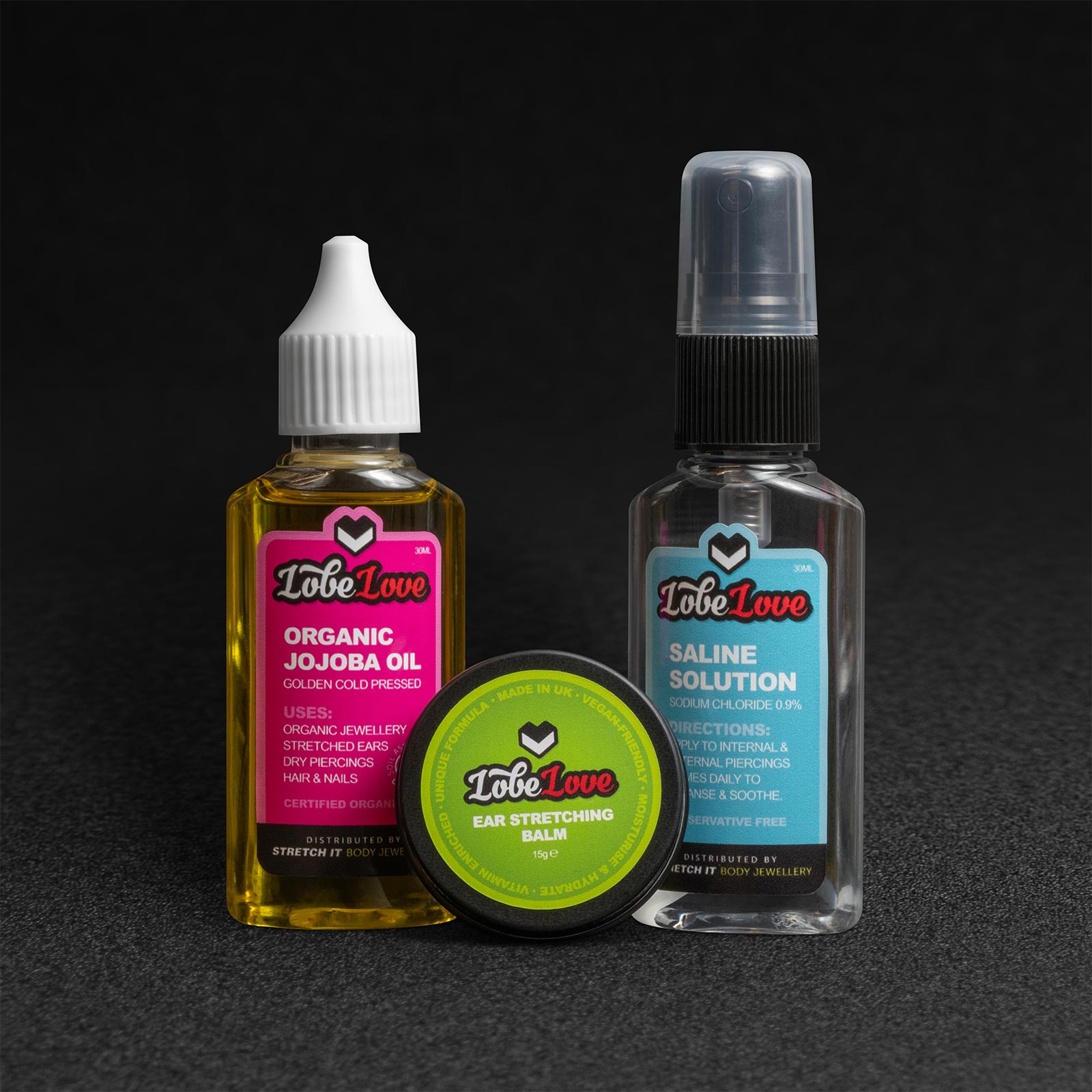
- LobeLove™ Professional Saline Piercing Spray once or twice daily
- Clean with lint-free cloths
- Keep makeup away while healing
- Don’t twist or check constantly
FAQs
Q. Which nostril jewellery types are most secure?
A. Nose screws and flat-back nose studs lead the pack for staying power.
Q. Can I sleep in any nose ring type?
A. Yes, you can sleep in any nose hoop size once your piercing’s fully healed.
Q. What nose hoop size should I start with?
A. 8mm is a safe starting point for most noses.
Q. When can I switch from a stud to a hoop?
A. Usually after 3 - 12 months, depending on how your healing journey comes along.
Q. Are nose bones bad?
A. Absolutely not bad, just not nostril piercing jewellery for healing, and not for everybody’s body.
Your Nose Deserves Better Than Trial and Error
Everything else falls into place once your nose is happy.
For this purpose, choosing the best nostril jewellery types means comfort, anatomy, and timing first, then style second.
Follow your nose to Stretch It Body Jewellery when you’re ready to upgrade, experiment, or stop guessing.
Subscribe To Our Awesome Mailer
No spam. Just discounts, exclusive promotions and ear stretching tips & tricks you won't want to miss.
Our Best Selling Products
Our Favourite Products
Ear Stretching Inspo