





Stretch It Body Jewellery
SIBJ is one of the world's leading online specialist retailers and wholesalers in ear stretching kits, plugs, aftercare and body jewellery. We have over 10 years of experience in selling high-quality, unique ear stretching jewellery providing the knowledge, expertise and tools to stretch up confidently and safely.
"The smiley piercing is discreet, playful, full of personality, and a Marmite body mod for many people."
Some piercings shout, but the smiley piercing - also known as the frenulum piercing - whispers. It’s tiny but mighty, and threads through the thin strip of tissue connecting your upper lip to your gum, inside your mouth.
This being the case, your smiley piercing jewellery is like your cheeky little secret, flashing when you smile, laugh, or talk in an animated fashion.
And it’s become a cult favourite for people who want something different without going full face metal.
But there’s stuff you really need to know about the smiley piercing before you book in and start browsing jewellery, like:
Whether your anatomy even allows it
- Smiley piercing pain levels
- Smiley piercing healing time
- Best jewellery for smiley piercing
- Smiley piercing risks to your teeth and gums
This smiley piercing guide breaks it all down properly. So, you can decide if the upper lip frenulum piercing is worth the commitment.
Discussed In This Post
What Is a Smiley Piercing?
First up, let’s get anatomical.
A smiley piercing - also known as an upper lip frenulum piercing or simply a frenulum piercing - goes through the tiny strip of tissue just inside your top lip.
This strip is called the frenulum. It’s a delicate part of your mouth, and comes with just one small catch… Not everyone’s kissing tackle is suitable for this piercing, for the following reasons:
- Your frenulum needs to be visible and thick enough
- Thin tissue means a higher risk of tearing or rejection
In fact, it’s one of the most anatomy-dependent piercings. And a good piercer will refuse to do it if they can see potential smiley piercing risks ahead, which is exactly what you want.
So, don’t take it personally if your piercer says no to a frenulum piercing. It’s for your own health and well-being.
What’s the Smiley Piercing Pain Level?
Perhaps surprisingly, the smiley piercing is one of the least painful piercings you can get, given the delicacy of the area. But it’s not completely sensation-free.
It’s relatively chill because:
- The frenulum is super thin
- There aren’t loads of nerve endings there
- The upper lip frenulum piercing procedure takes seconds
Most people rate smiley piercing pain at around a 2 - 4 out of 10. Blink and you’ll miss it.
But the after effects might catch you off guard, due to:
- Smiley piercing jewellery rubbing
- A weird awareness of a foreign body in your mouth
- Irritation when you’re eating or talking
So yes, low smiley piercing pain. But a bit annoying for a few days while you adjust.
What to Expect of the Upper Lip Frenulum Piercing Process

Relax if you’re picturing drama, needles flying, and tears streaming down your cheeks. This is one of the quickest piercings going.
Here’s the typical MO:
- Your piercer checks your anatomy for suitability for a smiley piercing
- The area is cleaned
- You lift your lip while they mark placement
- A clamp might be used, or they’ll work freehand if they’re experienced enough
- A sterile hollow needle goes through the frenulum
- Smiley piercing jewellery is inserted straight away
A few minutes from start to finish, with the actual piercing done in seconds.
As for the best jewellery for smiley piercing? Take a look at:
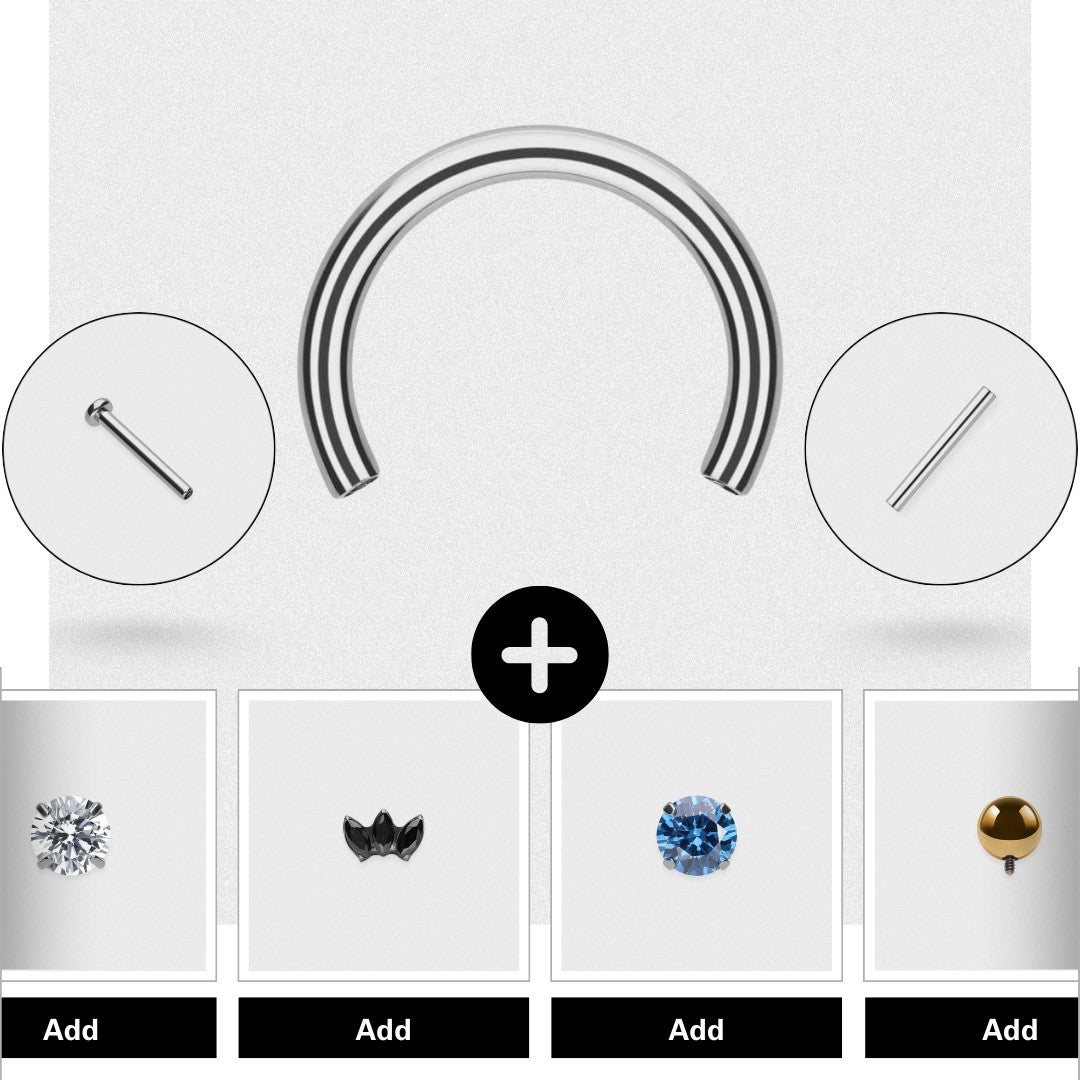
- Ball closure rings or captive bead rings, as they’re also known
- Circular barbells or horseshoes, as they’re also known
- Seamless rings
And to be crystal clear, frenulum piercing should never be done with a piercing gun.
Smiley Piercing Healing Time
The smiley piercing gets hyped up for healing fast.
Typical smiley piercing healing time is around 4 - 12 weeks, and sometimes much speedier than you’d expect.
There’s a good reason for this. Oral tissue regenerates faster than skin or cartilage. This makes your mouth a highly efficient healing machine.
Early healing signs include:
- Slight swelling
- Tenderness
- More saliva production than usual
- Constant awareness of smiley piercing jewellery
That said, it’s not necessarily fully stable just because it feels healed. And there are some definite no-nos during this phase, like:
- Don’t play with it
- Don’t flip it with your tongue
- Don’t change jewellery too early
In short, give you and your gums time to settle properly.
Can a Smiley Piercing Damage the Teeth?
There’s no question the smiley piercing looks as cool as. All the same, it comes with some very real risks, like:
Gum recession
Smiley piercing jewellery sits right against your gum line. The constant contact can cause irritation over time, leading to gum recession if left long enough. And this isn’t something you can casually fix.
Enamel damage
“Can a smiley piercing damage the teeth?” is an FAQ. And the answer is yes. Metal + teeth = friction = Chipping, scratching, and long-term wear. Like it or not, damage is pretty much inevitable when your jewellery knocks your teeth regularly.
Migration and rejection
The frenulum is extra thin. This means your body might push the jewellery out. Alternatively, the tissue can tear. Or a frenulum piercing can shift or reject completely. Your piercing won’t last if your frenulum isn’t strong enough. It’s that simple.
Make Eating and Talking Adjustments
Wondering what to expect when you first get a smiley piercing? It’s typical to experience the following oddities:
- Slight awkwardness when eating
- A bit of a lisp during the adjustment period
- Being hyper aware of your mouth
Most people adapt quickly, but it’s worth knowing upfront that an upper lip frenulum piercing is fun, while not always a forever piercing.
Best Jewellery for a Smiley Piercing
Less is more when it comes to smiley piercing jewellery, because who wants hefty chunks of metal in their mouth?
Some of the most commonly worn and popular styles include:
- Ball closure rings or captive bead rings - Classic, secure, and easy to customise with different beads
- Circular barbells or horseshoes - More statement-making and giving more attitude than other subtler styles
- Seamless rings - Clean, minimal, no visible joins
Do Materials Matter for Frenulum Piercing?
This is inside your mouth. So, it’s not the place for shortcuts.
The best jewellery for smiley piercing is made of:
- Implant-grade titanium - It’s lightweight, hypoallergenic, and resistant to corrosion. It won’t react with saliva or irritate sensitive oral tissue.
- High-quality gold - Offers a smooth finish that reduces friction against teeth and gums - but only when it’s solid, nickel-free, and correctly fitted.
Conversely, it’s sensible to avoid:
- Cheap mystery metals
- Coated jewellery, such as gold-plated, which can flake and cause complications
- Acrylic or porous materials, which can be bacteria magnets for fresh piercings
Then there’s size and fit to think about, so:
- Keep it small
- Keep it light
- Avoid oversized or heavy pieces
At the end of the day, bigger smiley piercing jewellery hits your teeth and gums harder. And we know how it can end.
Aftercare to Avoid Smiley Piercing Risks
Oral piercings are high maintenance at the start. This doesn’t mean difficult. But consistency is vital.
Daily Routine
- Rinse with salt water solution twice a day
- Use alcohol-free mouthwash after eating or drinking anything other than water
- Brush your teeth carefully twice daily, taking extra care
What to Avoid
- Alcohol-based mouthwashes
- Fiddling with your smiley piercing jewellery, particularly with unclean hands
- Clicking it against your teeth with your tongue
- Changing jewellery too early
Food and Lifestyle Tweaks During Smiley Piercing Healing Time
- Skip spicy, acidic, crunchy foods
- Avoid alcohol
- Smoking slows healing, so it’s best avoided if you can
An ice pack on the outside of your lip can help if swelling happens.
Otherwise, stay consistent, and your smiley piercing will settle way faster. But slack off, and you’re asking for trouble.
Who Does Smiley Piercing Jewellery Work Best For?

As we’ve already explained, the frenulum piercing isn’t for everybody.
It might be ideal if you:
- Love subtle, hidden piercings
- Want something playful and different
- Have suitable anatomy
- Understand the smiley piercing risks to your teeth and gums
- Are OK with it not being forever
Perhaps skip it if you:
- Already have gum recession
- Grind your teeth
- Have thin frenulum tissue
- Want a lower risk, longer-term oral piercing
It’s one of those piercings you choose knowing the trade-offs.
Smiley vs Other Lip and Oral Piercings
Trying to decide between options? Here’s how the smiley piercing compares to alternative lip and mouth piercings:
Medusa or philtrum piercing
Centre of the upper lip, more visible, more stable tissue, less tooth contact
Labret piercing
Lower lip, more versatile, better suited for long-term wear
Vertical labret piercing
Fully external, no inner mouth contact, lower dental risk
Tongue piercing
Completely different placement and oral risk, faster healing, but higher initial swelling
Overall, the smiley wins on subtlety. But it loses points on longevity and dental safety.
FAQs About Smiley Piercings
Q. Does a smiley piercing hurt?
A. Not much. Most people rate smiley piercing pain as low. The healing irritation is more noticeable than the piercing itself.
Q. Can anyone get an upper lip frenulum piercing?
A. No. Your frenulum needs to be thick enough. Many people simply don’t have the right anatomy.
Q. What’s the average smiley piercing healing time?
A. Typically 4 - 12 weeks. It can feel healed sooner. But don’t take this as a sign to start changing your smiley piercing jewellery prematurely.
Q. Can a smiley piercing damage the teeth?
A. Yes. Long-term contact can cause enamel wear, chipping, or gum recession.
Q. What’s the best jewellery for smiley piercing?
A. Small, lightweight implant-grade titanium rings are usually the safest options, especially for fresh piercings.
Q. Can you hide it?
A. Yes. This is the whole point. It’s only visible when you laugh, smile, or curl your lip.
Q. Do smiley piercings reject easily?
A. They can do. The tissue is thin, so migration and rejection are more common than with many other piercings.
Set Your Smiley Up to Last
The smiley piercing is discreet, playful, full of personality, and a Marmite body mod for many people.
Love it or loathe it, the frenulum piercing comes with genuine considerations in terms of anatomy, dental health, and lack of guarantee of long-term wear.
For all these reasons, the importance of a reputable piercer can’t be overstated, not somebody who says yes for the sake of a few quid. And don’t gamble with smiley piercing jewellery either.
Head over to Stretch It Body Jewellery for:
- The best jewellery for smiley piercing
- Implant grade options
- Everything you need to know about piercing processes, aftercare, and levelling up your look
You couldn’t be in a better place for smiley piercing info and jewellery to ensure you get it right.
Subscribe To Our Awesome Mailer
No spam. Just discounts, exclusive promotions and ear stretching tips & tricks you won't want to miss.
Our Best Selling Products
Our Favourite Products
Ear Stretching Inspo