






Your Practical Guide to a Vertical and Transverse Lobe Piercing
In this post Jump to a section
A vertical or transverse lobe piercing is a sneaky shortcut to looking like you’ve got a seriously curated ear, without signing up for the eye-watering pain of a full cartilage collection.
Quick answer
- A transverse lobe piercing runs side to side through your earlobe, while a vertical lobe piercing runs top to bottom. Both use a barbell rather than a stud.
- Pain is mild. Most people put it around 4 to 6 out of 10, a step up from a standard lobe’s 1/10 on our pain meter.
- A transverse usually takes 2 to 10 months to heal, sometimes up to a year. A vertical needs around 6 months. Stacked standard lobes heal in roughly 6 to 8 weeks.
- Start with an implant-grade titanium straight barbell, usually 1.6mm (14g), clean with sterile saline, and talk to your piercer first if you stretch or plan to.
They’re edgy, they’re relatively unusual lobe piercings, and they’re the perfect antidote for bored lobes.
Truthfully, standard lobe piercings are the sensible shoes of the body mod world. They’re reliable, but they’re hardly a unique ear piercing. Practically everybody had their ears pierced with a piercing gun in a shopping centre back in the day.
Well, here’s the twist you’ve been craving. The same squishy bit of flesh can be pierced sideways. Or top to bottom. Or stacked like a tiny metal constellation. Yes, the same easy-going tissue can create a completely different vibe.
So, pull up a chair. There’s something in here for you if you’re a first-timer looking for alternative earlobe piercing ideas. Or if you’re wondering if vertical or transverse lobe piercing can work on stretched ears.
In this article, we’re breaking down:
- Placement
- Transverse and vertical lobe piercing pain
- Vertical and transverse lobe piercing healing time
- Aftercare
- All the other stuff nobody tells you until it’s too late
First Up, What Is a Transverse Lobe Piercing?

A regular lobe piercing goes front to back. But a transverse lobe piercing flouts tradition by running horizontally, side to side, through the soft lobe tissue.
Forget a stud sitting on the front of your ear. Instead, you get a barbell travelling through the inside of your lobe, with a ball or decorative end peeking out at each side.
Square on, it looks like two beads sitting on the inner and outer edges of your ear. This is precisely what makes people do a double take.
Not Every Lobe Gets an Admission Ticket for Horizontal Lobe Piercing
The transverse lobe piercing needs a decent amount of flesh to work with. For this reason, thicker, fleshier earlobes are the ideal canvas. A titanium barbell needs enough tissue to sit in snugly, without pushing too close to the surface or wandering into cartilage territory.
So, it might not be a goer if your lobes are on the dainty, thin or attached side.
It’s disappointing if you’ve set your mind on it. But it’s the job of a good piercer to save you from a wonky result, lobe piercing rejection, or migration.
How Much Does a Transverse Lobe Piercing Hurt?
Good news if you’re unashamedly wimpy. Lobes have far fewer nerve endings than cartilage. So, the needle moment is pretty manageable. Most community members we speak to put it around 4 to 6 out of 10, a step up from a standard lobe’s 1/10 on our pain meter.
Obviously, a transverse lobe piercing is a longer channel than a standard lobe piercing. This is why you’ll feel more of a drag-through sensation during the procedure. But it’s over fast.
Somebody we came across described it a bit like having a blood test, although they said it got spicier when the needle reached a bit of cartilage higher up their ear.
The lesson here is classic lobe placements are the gentle option. But your nerves will let you know about it if you venture anywhere near cartilage.
Transverse Lobe Piercing Healing Time
A transverse lobe piercing trades pain for patience.
The reason for this is that a horizontal lobe piercing takes significantly longer to heal than a regular lobe piercing, because the needle travels through a longer, deeper tunnel of tissue.
Realistically, you’re looking at anywhere from 2 to 10 months, and closer to a full year for some people.
Pro tip: It might look sorted after a few weeks. But don’t let this lull you into a false sense of security. The outside heals first while the inside is still doing the hard graft. So don’t get cocky and start swapping your jewellery too early.
What’s the Best Transverse Jewellery?

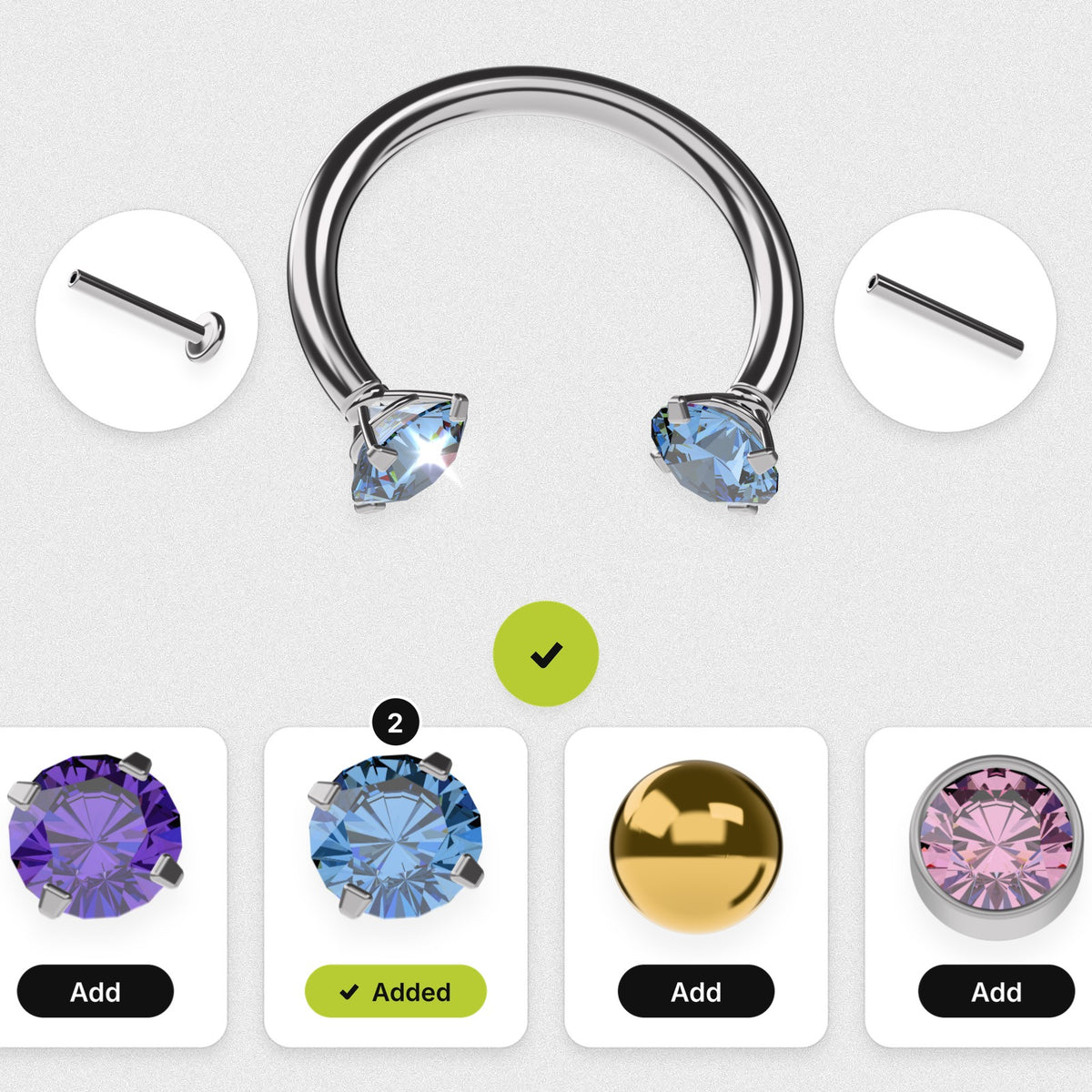
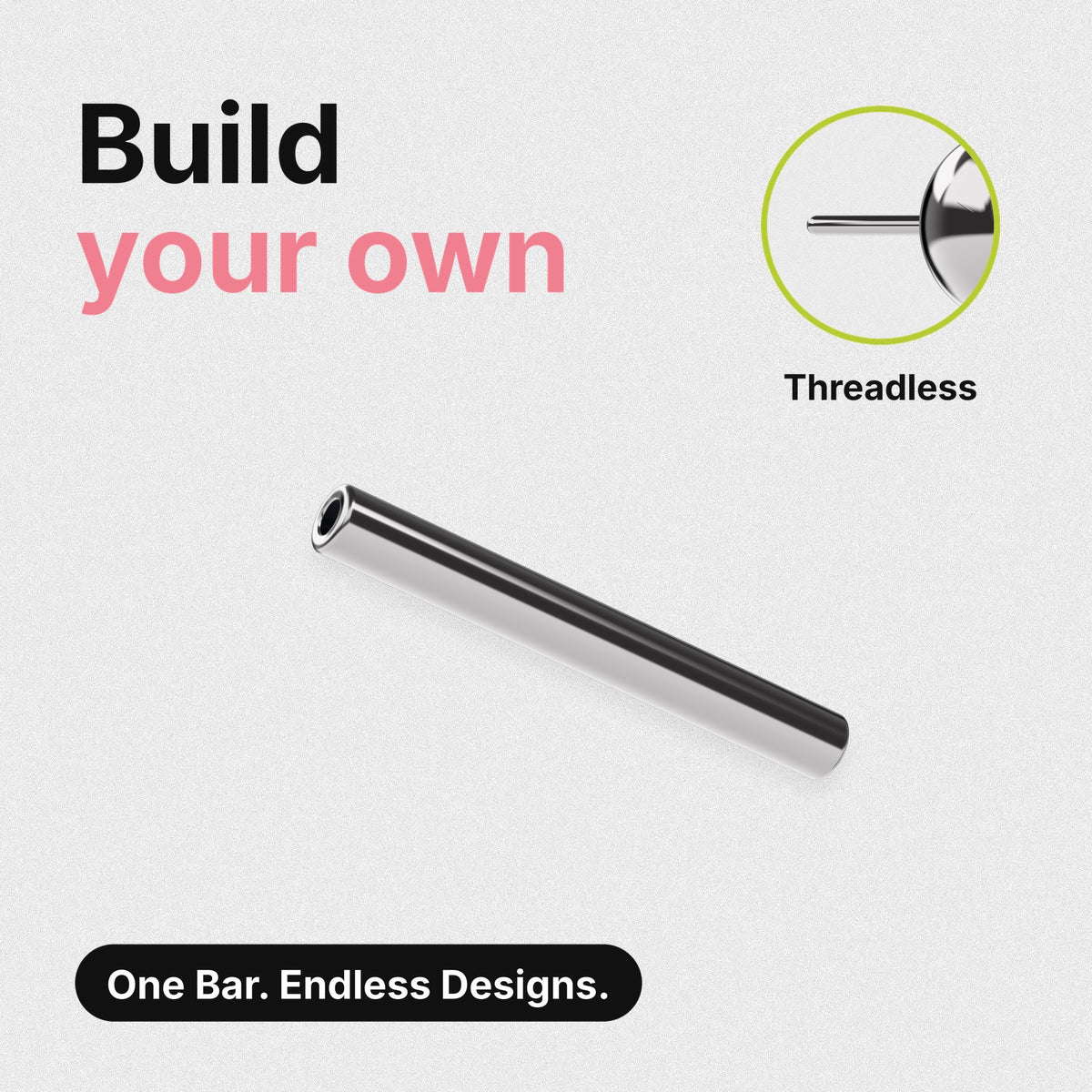
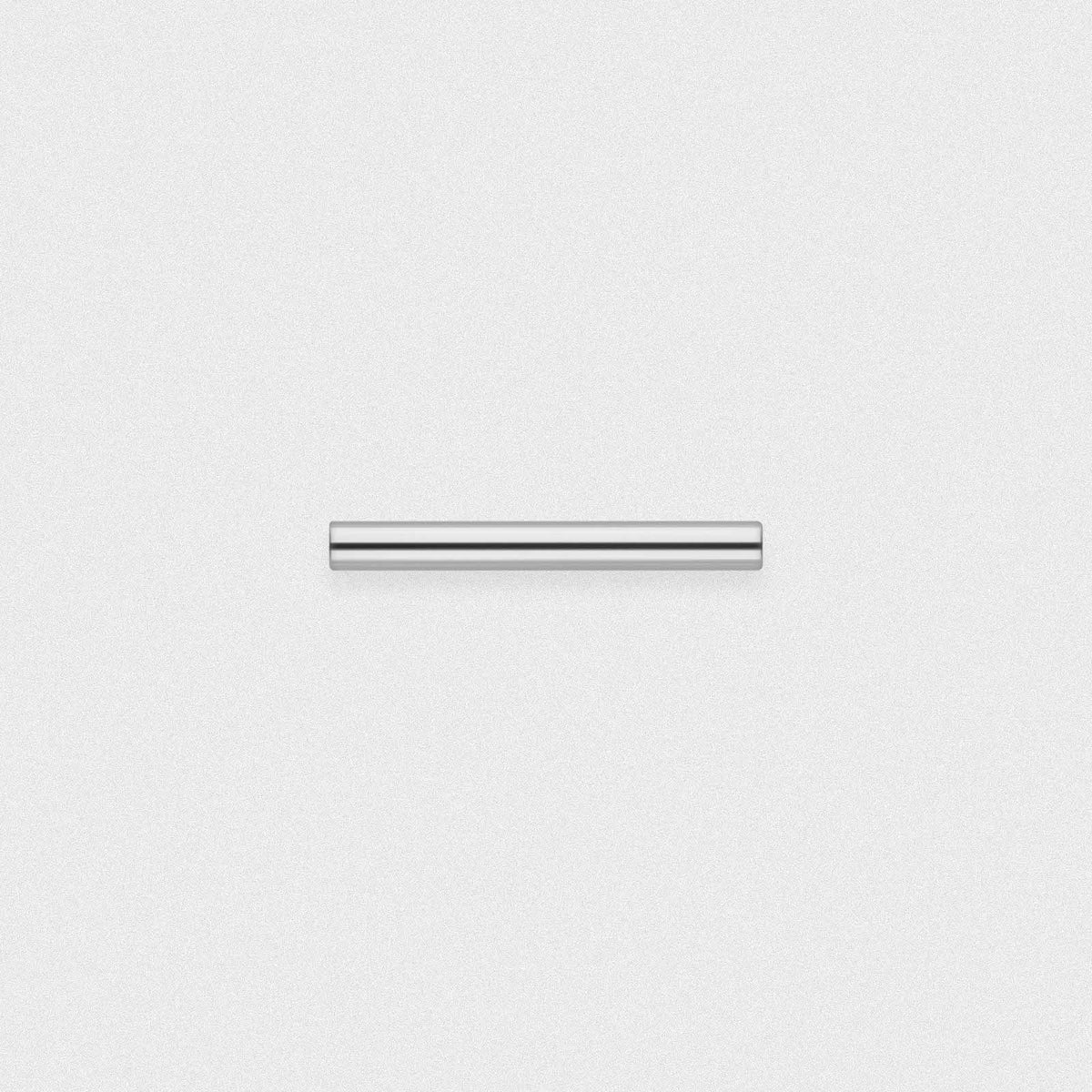
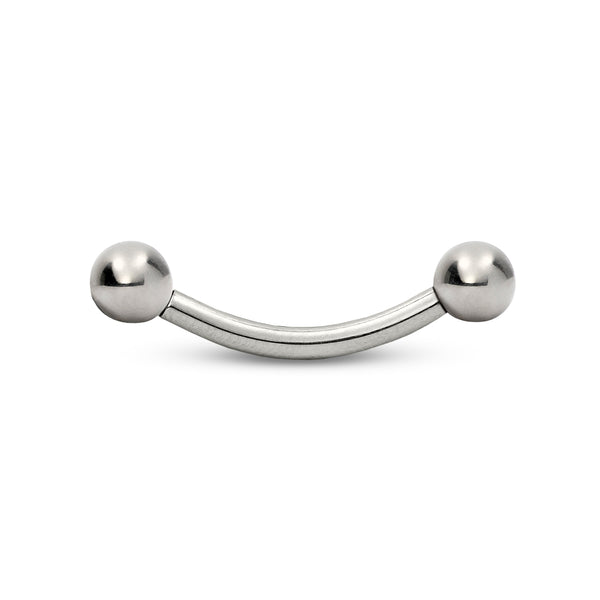
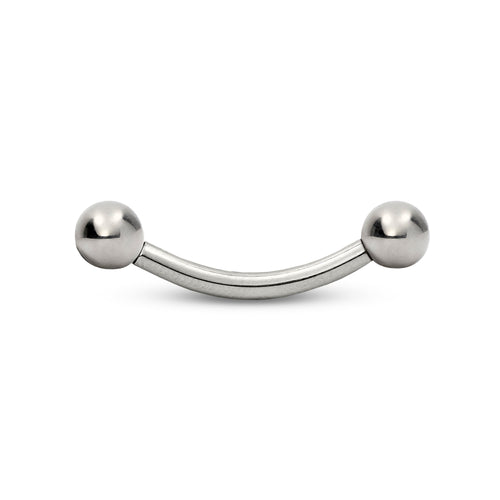
Go for a straight or slightly curved titanium barbell, with a ball, gem or decorative end on each side.
Gauge size also matters when you’re having a transverse lobe piercing:
- 14g (1.6mm) - Most are done with this size.
- 12g (2mm) - Chunkier barbells might be used, depending on lobe thickness and tissue consistency.
Just to reiterate, always, always stick with an implant-grade titanium barbell for your starter jewellery. It’s lightweight, body-friendly and unlikely to kick off irritation. Save the fancy upgrades and mystery metal for when you’re fully healed.
Flip It with the Vertical Lobe Piercing
As you’re now aware, a transverse lobe piercing runs sideways. Conversely, a vertical lobe piercing is the same idea but rotated 90 degrees.
The jewellery runs from top to bottom, entering at the upper part of your lobe and exiting near the bottom edge.
It’s rare enough to claim its place alongside unusual lobe piercings. But technically it’s still a standard lobe placement.
These combined factors make it a cracking shout if you want a statement piercing without committing to something painful or awkward.
Why Vertical Lobes Need a Skilled Piercer
It might only be a lobe. But don’t let it fool you into booking with the cheapest place on the high street.
The vertical lobe piercing is a tricky placement that goes something like this:
- Your piercer will usually mark you up
- The area is clamped
- The needle is guided through the lobe at precisely the right depth
Lobes are thinner than they look, so accuracy really is key. You’re more likely to suffer lobe piercing rejection if it’s too shallow. On the other hand, it won’t sit well if it’s too deep.
Vertical Lobe Pain and Healing
The vertical is a relatively simple affair, same as the transverse lobe piercing. This is because lobes are fleshy and low on nerve endings. So, they offer little resistance to a needle.
Expect a quick pinch and some pressure.
In contrast, healing is a different story, because it’s a longer piercing than a standard one. This is why you need to give it around six months to fully settle.
A bit of bruising in the first few days is normal. And drainage is a big deal, because the channel runs downwards. Keeping it clean helps stop gunk lurking.
What Vertical Lobe Piercing Jewellery Should I Choose?
Keep it simple but effective. A straight titanium barbell is the comfiest, most practical choice for healing, with plain, unfussy ends while things settle.
Hold your horses before swapping into anything heavier or more decorative until your piercer gives the green light.
Beware the Stacked Lobe Plot Twist

This is where piercing terminology gets messy.
Loads of people and studios also use the term “stacked lobe piercing” for vertical lobe piercing.
But a stacked lobe piercing most commonly refers to two or more standard front-to-back piercings stacked in a line, one above the other. NOT one long piercing running top to bottom.
What’s more, the stacked lobe piercing has become massively popular for the following good reasons:
- It fixes dodgy old placements - Got a childhood lobe piercing sitting a bit low or off-centre? Adding a second hole above it can rebalance the whole look.
- It’s beginner-friendly - Healing is much quicker, roughly 6 to 8 weeks for standard lobes.
- It’s dead easy to style - Match studs for a cleaner, more classic look. Put a bigger stud on top and a smaller one below. What about a hoop at the bottom? There are no right or wrong answers.
And if you’re feeling extra bold? Add a third to make it a constellation in a cluster or a pyramid lobe piercing in a triangle.
But bear in mind more holes mean more swelling. So, your piercer might suggest doing them in stages.
How Far Apart Should Stacked Lobe Piercings Be?
Brilliant question. Stacked lobe piercing spacing should be close enough to look intentional, but far enough to wear your jewellery well.
A loose rule is at least 8mm between holes.
Your piercer will work out the exact spacing based on the shape of your ear and the look you’re going for, and placement doesn’t have to be dead straight.
In fact, slight angles or side-by-side placements can look sweet.
Will Transverse and Vertical Piercings Mess with My Stretched Lobes?
Think carefully before getting a transverse lobe piercing if you’ve stretched your ears, or you’re planning to.
Why? Because a long barbell running through your lobe tissue comes with the following implications for our ear stretching brothers and sistas:
- Complicates future stretching
- Affects how the tissue behaves as it thins and stretches
- Limits the jewellery you can wear in your main hole
Ultimately, an already stretched lobe might no longer have the depth needed for a transverse lobe piercing.
But never say never. Some people rock a sick combo of stretch and unusual lobe piercings. All the same, we’d suggest taking common sense precautions, such as:
- Decide your endgame first - Have a chat with a piercing professional before adding extra holes, especially if you’re planning to stretch big.
- Don’t stretch through a healing piercing - Fresh piercings + stretching = irritation city.
- Ask your piercer directly - “Is my lobe tissue suitable for both?”
Planning ahead now saves heartache - and blowouts - later.
Form Solid Transverse Piercing Aftercare Habits

Long piercings need extra love. Here’s the MO:
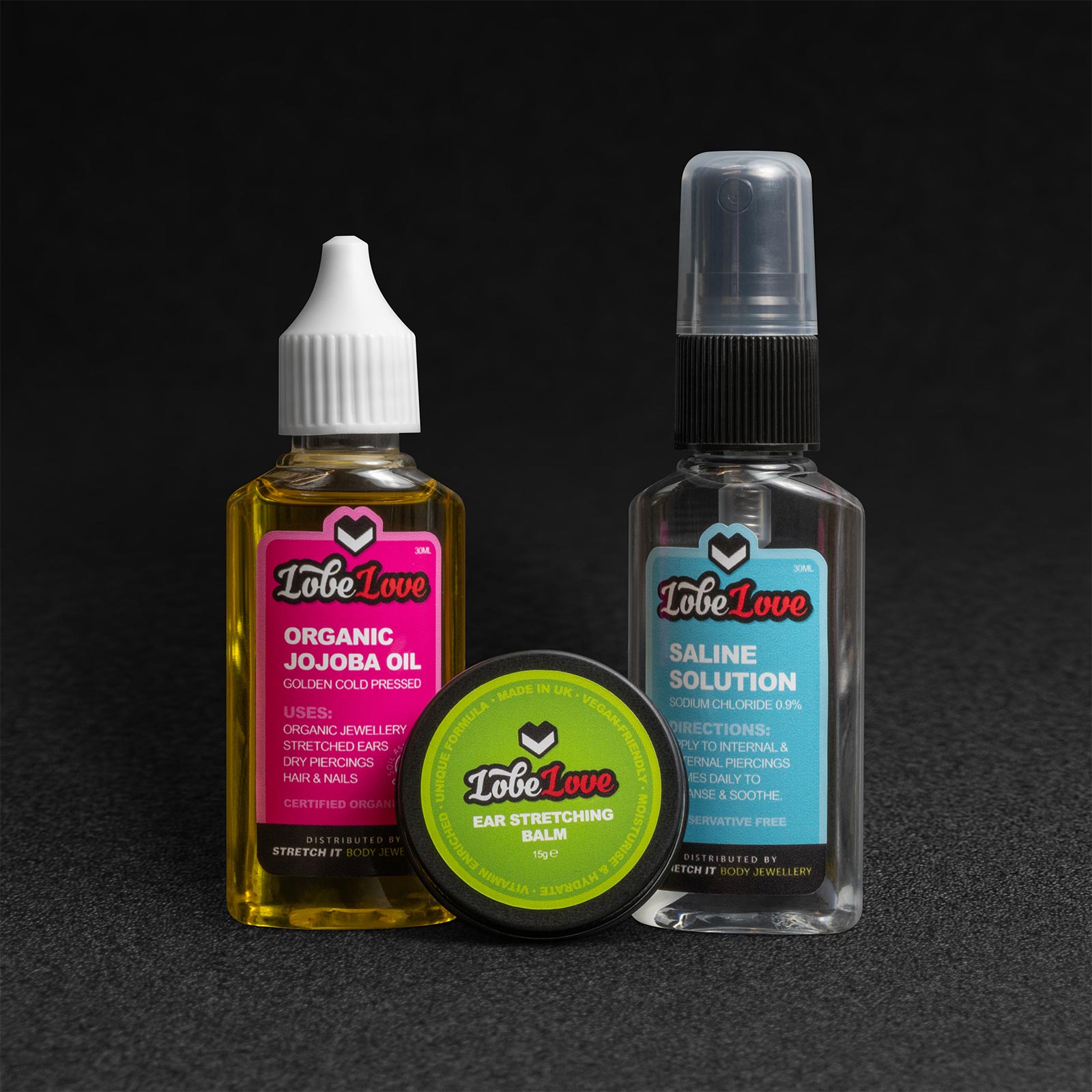
- Clean with sterile saline once or twice a day - Spray with a pro-grade product like LobeLove™ Professional Saline Piercing Spray or BPA Safe Solutions™ Piercing Aftercare, gently pat dry with clean non-woven gauze or a paper towel to prevent snagging, and let it do its thing.
- Keep your hands off - Don’t risk irritating the channel by twisting, turning or rotating your jewellery.
- Don’t sleep on it - Travel pillows with a hole in the middle are a lifesaver during vertical and transverse lobe piercing healing time.
- Avoid harsh stuff - No alcohol, hydrogen peroxide, antibacterial ointments, cotton buds or perfumed soaps. They’re all bad news for any piercing.
- Stay out of the water - Skip swimming pools, hot tubs, lakes, rivers, and the sea for at least six to eight weeks.
- Watch out for snag risks - Keep long hair tied back. Be careful pulling tops and hoodies over your head. And give earphones and headphones a rest while you heal.
- Downsize when told to - Your piercer will probably fit a longer bar initially, to allow for swelling. But swap it for a shorter one once things calm down. Don’t ignore this step and think it doesn’t matter, because a titanium barbell that becomes too long can snag, shift, and end up causing lobe piercing rejection.
FAQs You Should Know About These Unusual Lobe Piercings
Which hurts more, a transverse or vertical lobe piercing?
Both are fairly mild, because lobes don’t have many nerve endings. A transverse lobe piercing can feel slightly more intense. This is due to the needle travelling through more tissue. But it’s over quickly. You might experience a pain spike if a placement strays near cartilage.
How long does a transverse lobe piercing take to heal?
Usually between 2 and 10 months, and sometimes up to a year. It can look healed on the outside long before the inside catches up. So, don’t swap your jewellery too early.
Can anyone get a transverse?
Not always. You need a reasonably thick, fleshy lobe. A reputable piercer might suggest a stacked lobe piercing instead if yours are thin or small. This style suits most ear shapes.
What gauge is a transverse lobe piercing?
Most are done at 14g (1.6mm), with some at 12g (2mm) depending on your anatomy. Your piercer will choose based on lobe thickness.
Can you stretch a transverse lobe piercing?
It’s possible to have both. But it needs careful planning. A long titanium barbell through your lobe can complicate stretching, whereas stretched tissue might become too thin for a transverse. Talk to an experienced piercer before committing to either.
From Basic Lobe to Main Character Energy
The transverse, vertical and stacked lobe piercings are proof the humble earlobe still has plenty of tricks up its sleeve, with added bonuses like:
- Low on pain
- High on personality
- A genius way to curate intentional earology
All the same, it’s vital to respect vertical and transverse lobe piercing healing time. And whatever you do, plan around any stretching ambitions before you dive in headlong.
Last but not least, visit Stretch It Body Jewellery for implant-grade titanium barbells and aftercare essentials, plus in-depth guides on stretching and piercing processes, jewellery and healing. Come say hi, and bring your lobes with you.
Heads up: Healing times and suitability vary from person to person. Always chat with an experienced, reputable piercer about your anatomy before you book.
Featured in this post
Shop this post



Ready to shop?
Barbells & Bars
34 styles. Implant-grade titanium, steel and gold. Free UK delivery over £30, 7,000+ five-star reviews.
Shop barbells & bars

Shop the range
Barbells & Bars
34 styles. Implant-grade titanium, steel and gold. Free UK delivery over £30, 7,000+ five-star reviews.
Shop now