





Stretch It Body Jewellery
SIBJ is one of the world's leading online specialist retailers and wholesalers in ear stretching kits, plugs, aftercare and body jewellery. We have over 10 years of experience in selling high-quality, unique ear stretching jewellery providing the knowledge, expertise and tools to stretch up confidently and safely.
"Consistent, effective cartilage piercing aftercare is non-negotiable wherever you stand on the rook piercing vs snug piercing debate."
Is rook piercing vs snug piercing the burning issue keeping you awake at night? It’s no wonder, after you’ve scrolled for hours and fallen down a rabbit hole of stunning curated cartilage piercings. And it all comes down to two scene stealers - the rook piercing and the snug piercing.
Both sit in prime ear real estate. And both show off their entrance and exit points from the front of your ear = one puncture for double the drama. Very extra. And you’re down for that.
But here's the thing. These two piercings couldn't be more different when it comes to factors like:
- Rook vs snug piercing anatomy requirements
- Rook vs snug piercing pain
- General life admin for rook piercing vs snug piercing
So, here’s a non-sugar-coated mini cartilage piercing guide to help you get your head around the rook piercing vs snug piercing debate.
Discussed In This Post
What’s a Rook Piercing?

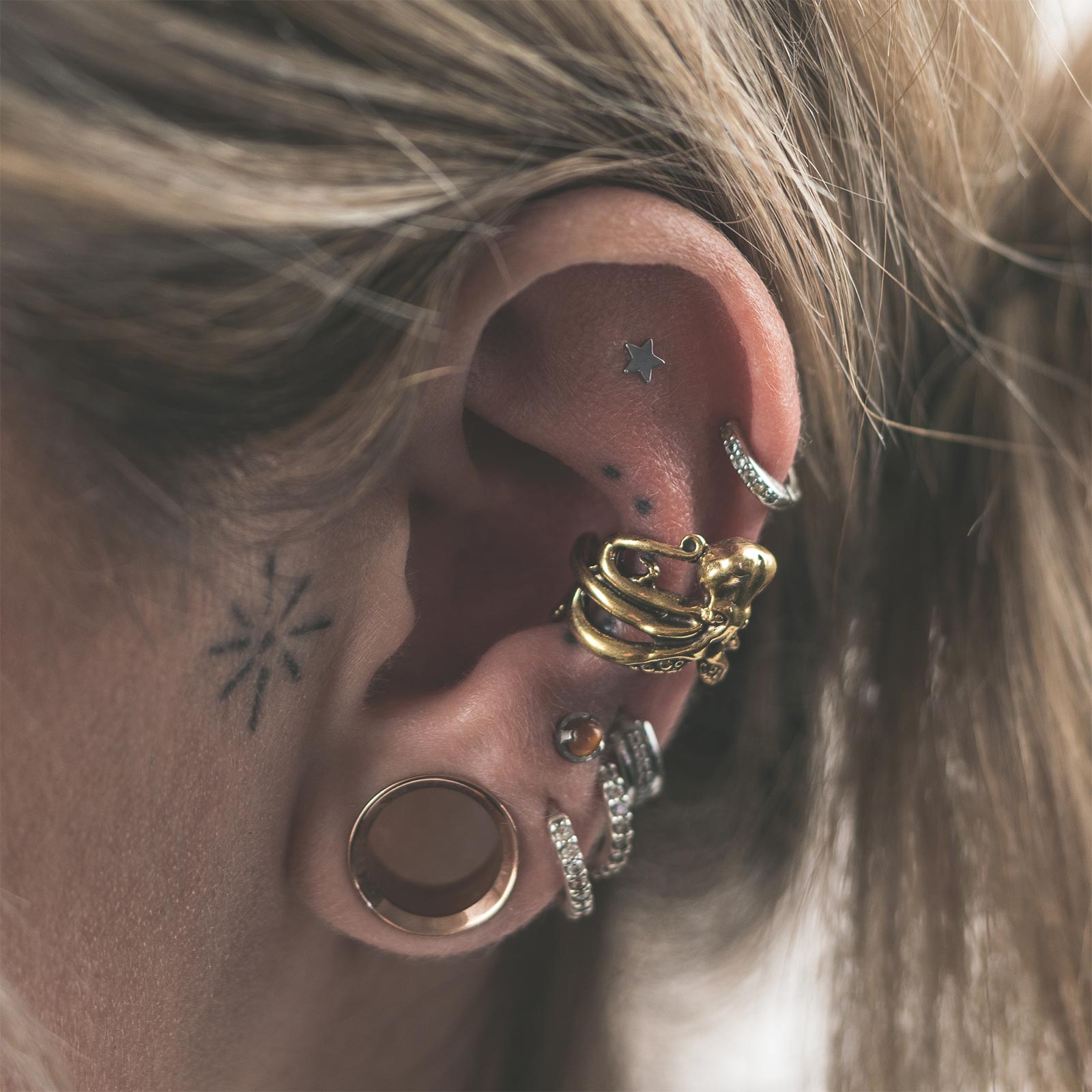
Let's start with the cooler, more understated sibling in this duo. The rook piercing sits through the inner ridge of the ear known as the anti-helix - the little fold of cartilage tucked between the outer rim and the inner bowl of your ear.
It goes vertically through that ridge, so both ends of your rook piercing jewellery face forwards. This makes it a great team player for curated ear builds, by dressing it up or keeping it minimal.
One massive surprise to a lot of people? You often can't see your own rook piercing in the mirror. This is because the forward helix can hide it, depending on your ear shape.
You'll be standing there wondering if it’s just a figment of your overactive imagination, while everyone else is clocking your gorgeous curved barbell.
Rook Piercing Placement
Does your ear have the goods? Suitable anatomy for a rook piercing is common, but not a given. Your piercer will be looking for a well-defined anti-helix ridge to pierce cleanly.
It needs to be:
- Not too shallow
- Not buried too deep
- Enough structure to hold rook piercing jewellery comfortably
The thing is, everyone's ears are completely different:
- Some anti-helix ridges are nearly horizontal
- Some tilt upwards
- Some are practically vertical
A good rook piercing placement balances in the ridge, with neither end exiting from the middle. This is a common mistake, leading to migration and a tragic piercing journey.
So, listen to your piercer if they say you don't have enough ridge definition, because a forced rook piercing placement can give you grief for months.
Rook Piercing Healing Time, Pain, and What to Expect
The rook is somewhere in the mild-to-moderate zone in terms of pain, roughly a 6 - 8 out of 10, depending on your personal threshold.
This is because the cartilage is on the thicker side. So, your piercer needs to apply a bit more pressure. The process itself is a white-knuckle moment. But once it’s done, it’s done. Most people say the initial sting eases off in half an hour or so.
Rook piercing healing time
Typically 6 to 12 months. Some people heal faster, some slower. Health conditions, sleep habits, and rook piercing jewellery choice all play a role.
Initial rook piercing jewellery
Usually a curved barbell. The curve sits square to the tissue, leaving room for any initial swelling. Keep it simple during healing. Fancy decorative ends are fab, but they can make cleaning trickier. And a snag-happy charm during rook piercing healing time isn’t the best. You can go all out once fully healed.
Also, no rings in a fresh rook piercing. They move around more, catch more easily, and generally make healing harder. A ring looks cute on healed piercings though.
Moving swiftly on through the rook piercing vs snug piercing dilemma…
What’s a Snug Piercing?

The snug piercing is mean and moody, and you don’t want to mess with it.
It's a horizontal piercing through the anti-helix, which is the thick cartilage fold midway down the outer edge of your ear. The entrance and exit points are both visible from the front. For this reason, it gives a double jewel look and earns its place as a key player for curated ear piercings.
You might also hear it referred to as an anti-helix piercing due to its placement.
By most accounts, it’s one of the most painful cartilage piercings you can get. In fact, snug piercing pain ranks a consistent 8 - 9 out of 10 on the pain scale.
This is because the cartilage is dense in this area and it takes real force to pierce cleanly through it. So, there's usually heavy, intense pressure, and the insertion of the jewellery can be its own adventure.
Is the snug piercing worth it? Absolutely, if your anatomy cooperates and you're committed to solid cartilage piercing aftercare. But you’ve been forearmed and forewarned.
Snug Piercing Anatomy Requirements
The snug is a real anatomy-dependent ear piercing. You need a well-defined anti-helix fold to support it. And truthfully, plenty of people don't. This is why a snug piercing might not be viable if your ear is relatively flat in the anti-helix area.
But don't panic. This is where the faux snug piercing comes in. Two separate flatback studs are placed strategically to mimic the look of a snug piercing.
It's increasingly popular and a brilliant alternative if your ear isn't built for the real thing.
Once again, take notice if your piercer says your ear isn't suited to a snug. Yes, you’ll be gutted for 24 hours. But they're saving you from potential snug piercing migration, rejection, or a nightmare to heal.
Snug Piercing Pain, Healing and What to Expect
We've covered snug piercing pain. Now let's talk healing. This is where the snug's reputation earns its stripes.
Snug healing time -
Anywhere from six months to a year, and sometimes longer. The snug passes through dense cartilage in a high-movement area. It takes pressure every time you sleep, wear headphones, or press a phone against your ear. And it's notoriously prone to irritation, which makes healing slower and fussier when you’re comparing rook piercing vs snug piercing.
Initial snug jewellery -
A small curved barbell or micro barbell. And just like the rook piercing, you don’t ever start a snug piercing with a ring. A ring shifts around, applies pressure in the wrong places, and increases the risk of irritation bumps, snug piercing migration, and general misery.
Symptoms to expect -
More swelling than other cartilage piercing types, redness, soreness, and throbbing for the first few days to weeks. These are completely normal. But keep a close eye out for the more problematic stuff, like intense and persistent redness, cracked skin, unusual discharge, or snug piercing migration. These are signs something's off, and you should get back to your piercer sooner rather than later.
Cartilage Piercing Aftercare
Consistent, effective cartilage piercing aftercare is non-negotiable wherever you stand on the rook piercing vs snug piercing debate.
And the good news is it’s not challenging. You just need saline, patience, and willpower, including:
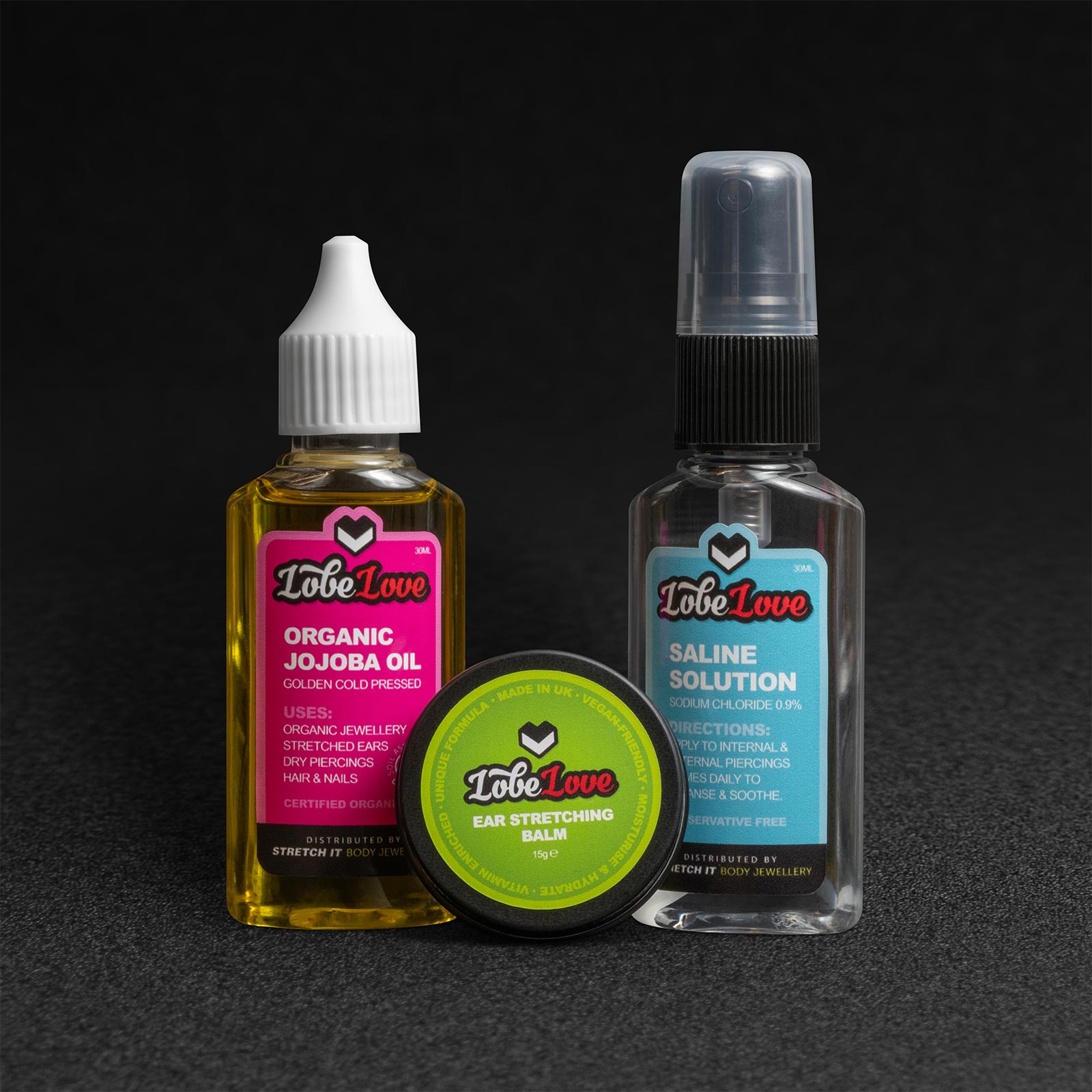
- Sterile saline spray - LobeLove™ Professional Saline Piercing Spray twice a day, every day, until fully healed. Regular use helps flush away dirt, oil, and bacteria that can build up around fresh piercings. It also supports the healing process and reduces the risk of irritation or infection as your ears adjust to their new hole.
- Don't touch it unnecessarily
- Don't sleep on it
- Keep it away from dirty pillowcases, earbuds, woolly hats, and your phone screen, which can be grimier than you think
- No alcohol-based products or harsh chemicals
- No rotating the jewellery
Side-by-Side Breakdown of Rook Piercing vs Snug Piercing
Still undecided on the rook piercing vs snug piercing question? Here's a straight-up comparison:
Rook Piercing |
Snug Piercing |
|
| Location | Inner anti-helix ridge, upper ear | Anti-helix fold, mid outer ear |
| Pain | 6-8/10 | 8-9/10 |
| Healing | 6-12 months | 6-12+ months |
| Anatomy | Relatively forgiving | Very anatomy-dependent |
| Initial Jewellery | Curved barbell | Curved or micro barbell |
| Difficulty | Moderate | High |
| Not typical | Yes, faux snug available |
They share many characteristics. For example:
- Both are integral to curated ear builds
- Both show off jewellery from the front
- Both call for a committed cartilage piercing aftercare routine
But bear in mind the snug piercing demands more of you physically, both in the chair and during healing. All the same, the payoff’s killer if your anatomy's up for it.
What Snug and Rook Piercing Jewellery Can You Wear?
There’s not really any rook piercing vs snug piercing competition when it comes to jewellery. Both piercings open up a world of options, like:
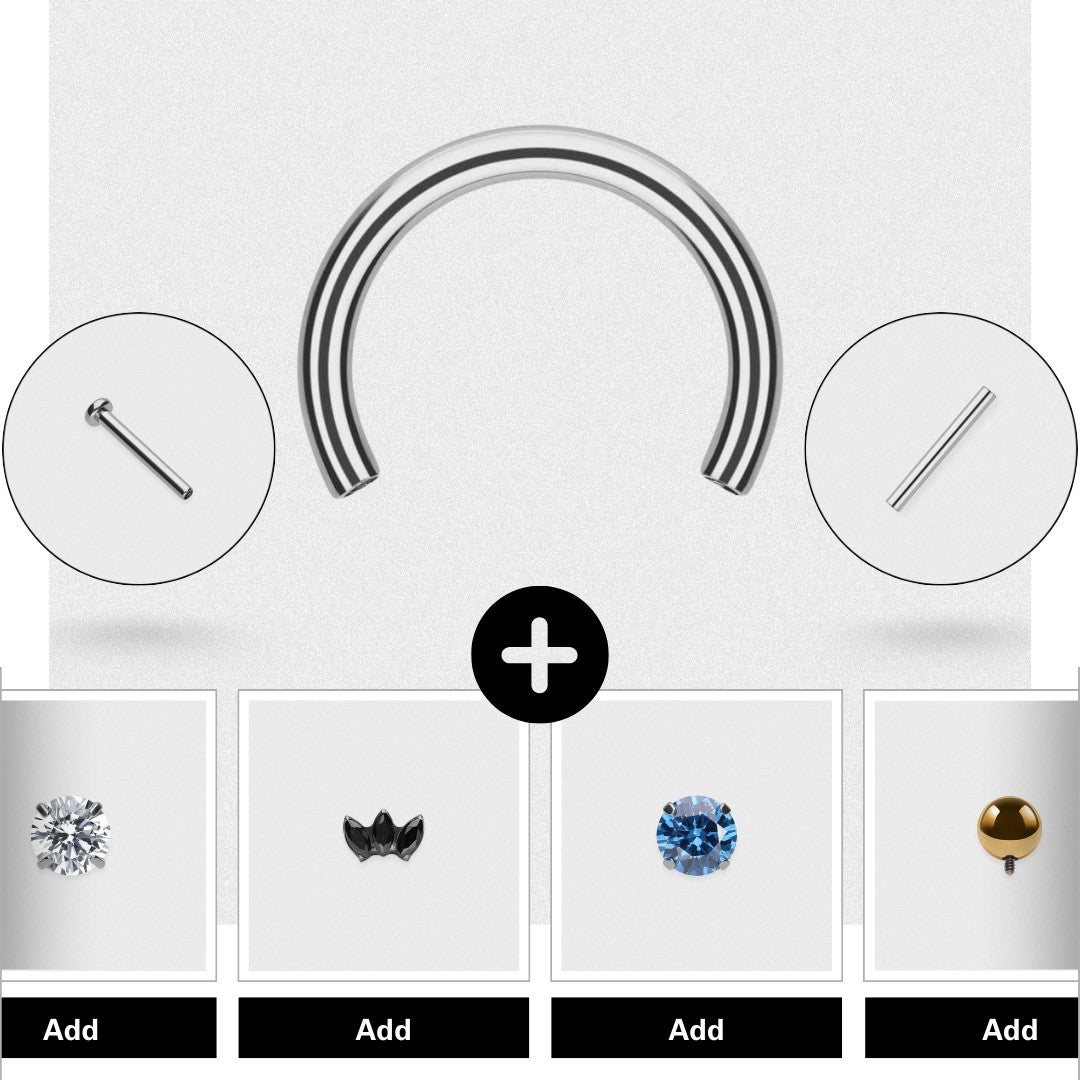
Curved barbells - The go-to for both, and with good reason. They sit well, they're comfortable, and they come in simple and wild styles to suit your vibe. Plus, you get double the jewellery impact with every piece, due to both ends facing forward.
J-bars - Popular for healed rooks. They angle the decorative end forward for better display. But they’re not suitable during rook piercing healing time. The hook part can shift forward through the hole and cause serious irritation.
Ball closure rings and clickers - Can be worn in both piercing types once fully healed, and they look sick.
Materials to look for - Implant-grade titanium is top of the shop. It’s lightweight, nickel-free, and the least likely to cause reactions. Surgical steel and solid 14k+ gold are also sound choices. On the other hand, avoid mystery metals, plated jewellery, or anything from an online marketplace in a plastic bag with no certification.
FAQs About Rook and Snug Piercings
Q. Does a rook piercing hurt more than a helix?
A. Yes, usually. This is because the cartilage through the anti-helix ridge is thicker and denser than the outer helix, so it takes more pressure to pierce. That said, most people rate it as manageable pain, and it's over quickly.
Q. Can everyone get a snug piercing?
A. No. There are specific snug piercing anatomy requirements, like a pronounced anti-helix fold. Your piercer might recommend a faux snug piercing instead if your ear anatomy doesn't support an OG snug. To do this, they create the same visual effect with two separate studs.
Q. How long does a rook piercing take to heal?
A. Most rook piercings heal in 6 - 12 months with proper cartilage piercing aftercare, although you might find it takes longer, especially if you’ve got certain skin conditions or struggle to avoid sleeping on the piercing.
Q. Why is the snug considered so difficult to heal?
A. The snug passes through a thick, high-pressure area of cartilage, and gets knocked around easily during sleep and daily life. It's prone to irritation, and any repeated trauma slows healing, particularly if your anatomy's even slightly wrong for the piercing.
Q. Can I wear a ring in a fresh rook or snug piercing?
A. It’s a no in almost all cases. Rings need extra sizing to allow for initial swelling, which means more movement, more pressure on healing tissue, and greater risk of irritation, migration, and ultimate snug piercing rejection. It’s not the end of the world to wait until you’re fully healed.
Know the Rules, Pierce with Confidence
So, what’s it to be? Rook piercing vs snug piercing? Or are you eyeing both for a curated ear stack? In any event, it’s the right call to do your research first. And you've clearly already got it covered.
The next step?
- Find a piercer with a drool-inducing portfolio and a pristine studio
- Talk to them about your anatomy, lifestyle, healing history, and aesthetic goals
- Visit Stretch It Body Jewellery, the only place to go for snug and rook piercing jewellery for your fresh piercing, the journey, and the glow up once you're ready
At Stretch It Body Jewellery, you’ll find the lowdown on every piercing under the sun. You’ll discover pro-level cartilage piercing aftercare. And you’ll salivate over the best jewellery for rook piercing and slamming snugs.
Not made your mind up just yet about rook piercing vs snug piercing? Seasoned multi-pierced veteran coming back for more? This is the community you want to be part of. You’re welcome.
Subscribe To Our Awesome Mailer
No spam. Just discounts, exclusive promotions and ear stretching tips & tricks you won't want to miss.
Our Best Selling Products
Our Favourite Products
Ear Stretching Inspo